

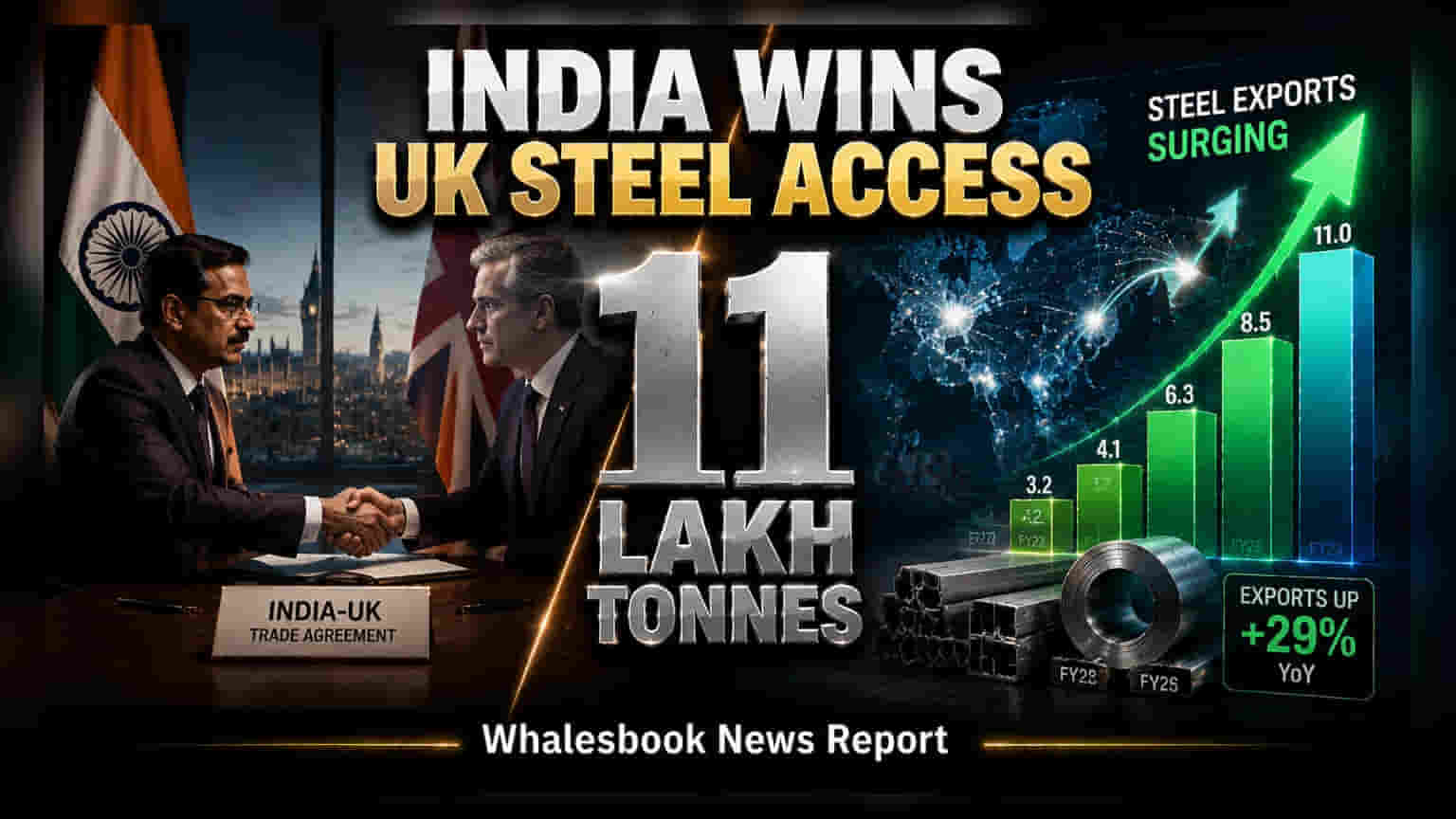
India has secured a new trade agreement allowing over 11 lakh tonnes of steel to be exported to the United Kingdom duty-free annually. This deal resolves long-standing safeguard measure disputes and aims to support domestic producers by easing restrictions on key steel categories.
Indian steel producers have received a significant boost in export potential following a new trade agreement with the United Kingdom. Effective Wednesday, the deal allows India to export more than 11 lakh tonnes of steel annually without facing import duties. This agreement follows the successful resolution of safeguard measures—tariffs originally designed to protect domestic UK industries—that had previously created hurdles for Indian exporters.
Impact of the New Steel Trade Quotas
The deal structure includes a country-specific quota of 1,68,029 tonnes, supplemented by 9.45 lakh tonnes allocated under the United Kingdom’s Authorised Use Scheme. By securing this volume, India has effectively cleared a major barrier that previously affected 188 steel product categories. These items accounted for roughly $137 million of India’s total $960 million steel export value to Britain in 2025. With these measures now resolved, domestic steel companies can plan their export volumes with greater certainty regarding tariff costs.
Gains Across Key Steel Categories
Beyond the total volume, the agreement provides specific relief for high-demand product segments. For instance, the quota for hot-rolled sheets and strips has been increased nearly threefold to 33,456 tonnes. In the non-alloy wire segment, the UK has removed nine commodity codes from the scope of its safeguard measures, which means 95% of India’s exports in this category will now face no restrictions. Additionally, quotas for non-alloy merchant bars, light sections, and various welded tubes have been raised, allowing for better access to the British market compared to the limitations seen in previous years.
Strategic Context for Indian Steelmakers
This development comes at a time when Indian steel companies are focused on expanding their international footprint to diversify revenue beyond domestic demand. While domestic consumption in India remains a primary driver for major players like Tata Steel, JSW Steel, and Jindal Steel and Power, duty-free access to a developed market like the UK provides an alternative channel for high-value products. Investors may monitor whether this increased market access leads to improved export margins for these companies in the coming quarters. A key monitorable for the industry will be whether production costs and global steel prices remain competitive enough to fully utilize these new duty-free quotas, as the actual benefit to company balance sheets will depend on successful shipment volumes and pricing strategies in the UK market.