

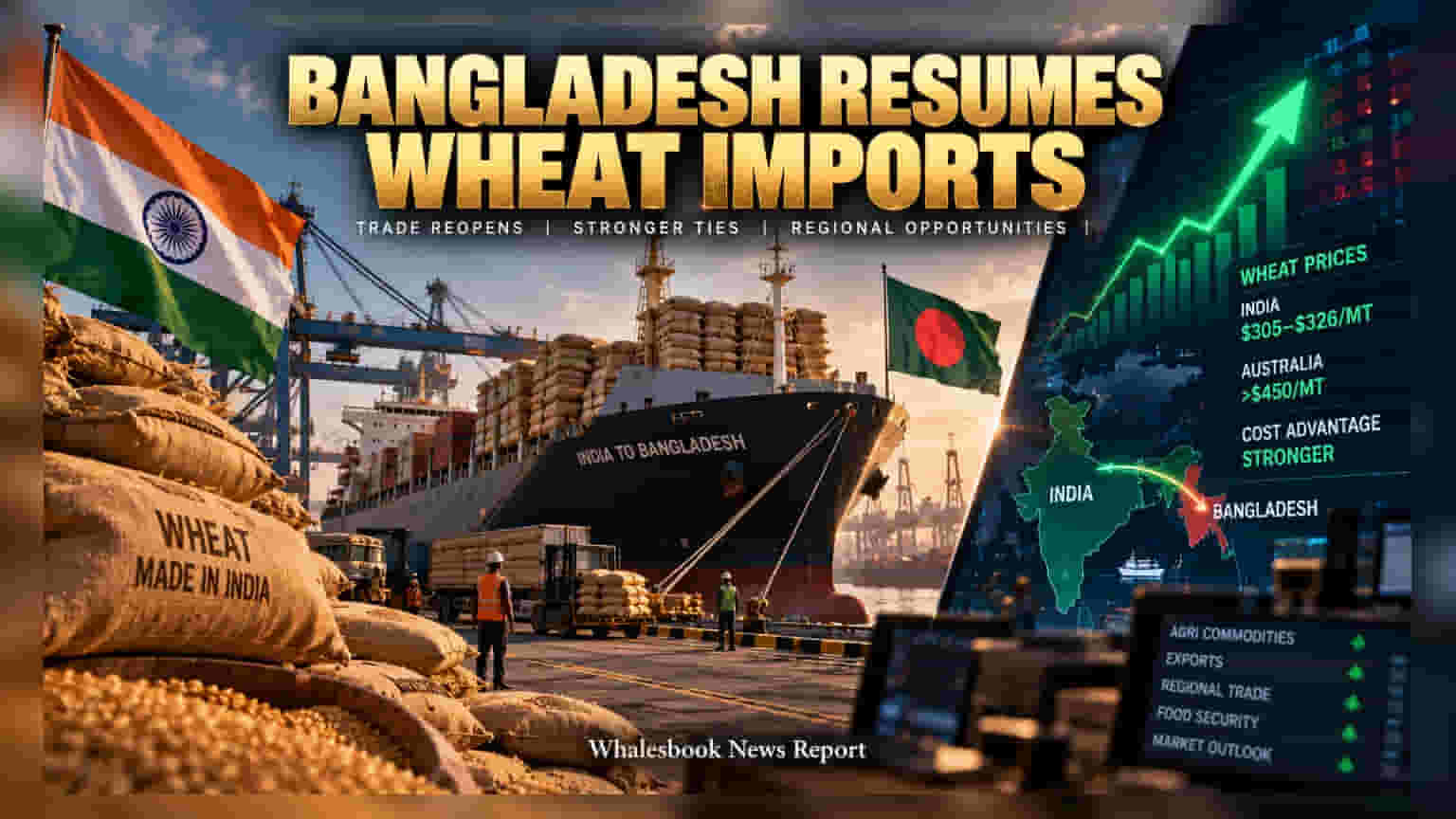
Indian wheat exports to Bangladesh have resumed with over 200,000 tonnes booked since late August. This trade is driven by a significant price advantage over global alternatives, providing a boost to Indian traders. Investors should note that while this opens a revenue channel, domestic wheat pricing and government export policy remain the most important risks to track.
India has re-emerged as a major supplier of wheat to Bangladesh, with importers securing over 200,000 tonnes of grain since late August. This movement marks the first significant volume of trade between the two nations since New Delhi introduced export restrictions in May 2022 to control domestic inflation. The return to active trade is primarily driven by logistics and competitive pricing, as Indian wheat continues to offer a cheaper alternative compared to global supplies currently affected by geopolitical volatility in the Black Sea region.
The Cost and Logistics Advantage
The primary driver for this shift is the cost disparity. Indian wheat is currently priced between $305 and $326 per tonne for delivery to Bangladesh, largely facilitated by efficient rail and road transport links. In contrast, global alternatives, such as Australian wheat, are trading significantly higher, with prices exceeding $450 per tonne due to long-distance freight costs and supply chain constraints. This price advantage has also attracted interest from other regional buyers, including Sri Lanka, which recently secured approximately 60,000 tonnes of Indian wheat.
Policy Sensitivity and Risks
While the resumption of exports is a positive development for agricultural traders and exporters, it carries inherent policy risks. In the Indian context, food security is a top government priority. Historically, the government has moved quickly to restrict or ban wheat exports whenever domestic retail inflation rises or local supply levels tighten. For investors, this creates a policy-sensitive environment. Any sudden spike in domestic wheat prices or a shortfall in the upcoming Rabi crop season could lead the government to tighten export norms again on short notice. Consequently, the sustainability of these export volumes depends heavily on the domestic harvest cycle and the government’s inflation management stance.
Future Outlook
Looking ahead, analysts and industry bodies, including reports citing data from the United States Department of Agriculture, suggest that India’s total wheat exports could potentially scale up to 2 million tonnes by the 2026/27 season. This growth projection assumes that India maintains a price advantage and that export quotas remain stable. Beyond Bangladesh and Sri Lanka, there is potential for increased demand from other neighboring markets like Nepal, Indonesia, and the United Arab Emirates. The key monitorable for the next few quarters will be the government's periodic review of export policies and the stability of domestic supply, which will dictate whether these export windows remain open.