

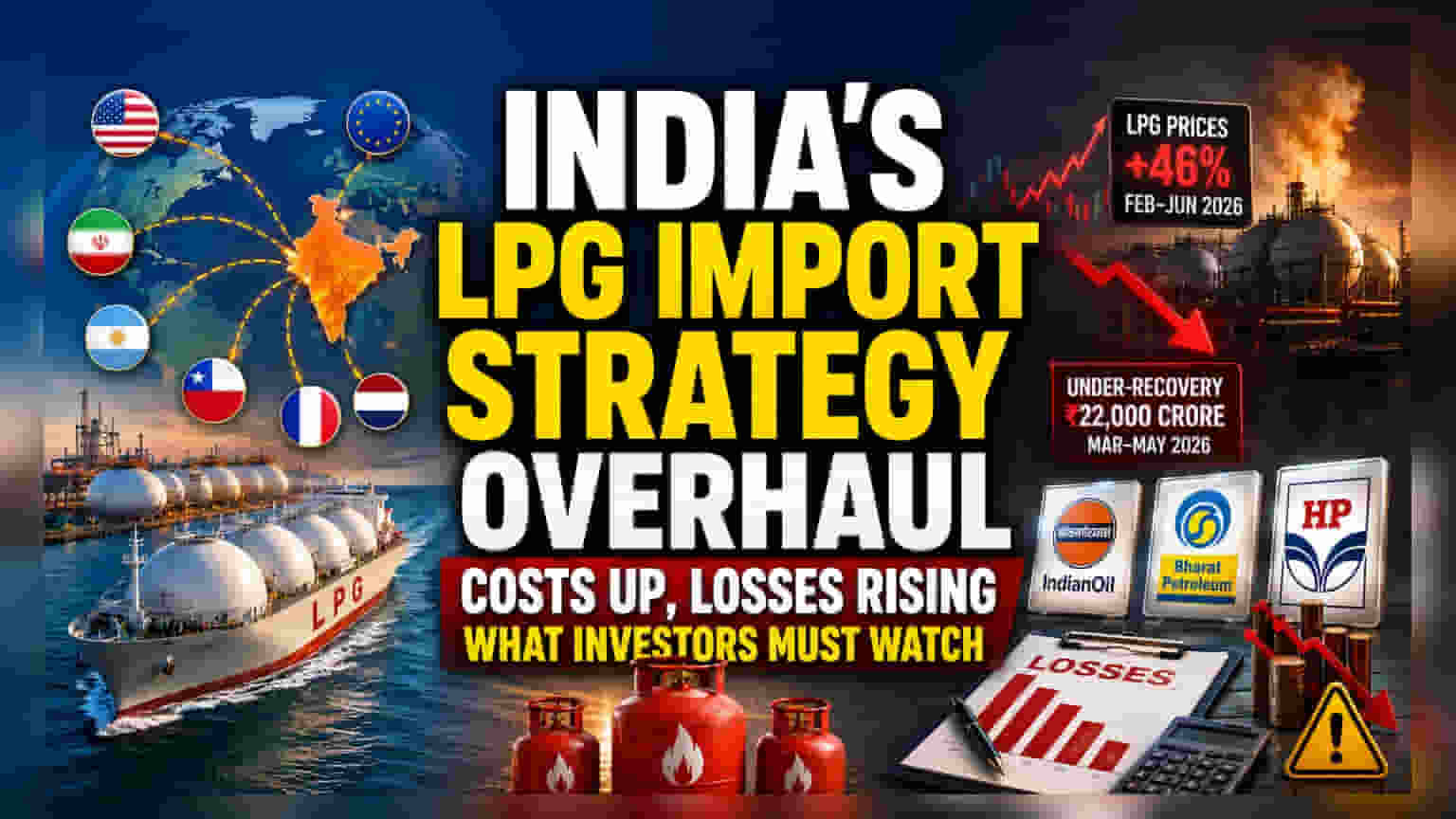
India has diversified its LPG import sources away from the Middle East, moving toward the US, to ensure supply security. This shift, combined with rising global prices, has led to a significant increase in costs for state-run Oil Marketing Companies (OMCs). These companies have reported cumulative under-recoveries of approximately Rs 22,000 crore between March and May 2026 as they absorbed price shocks to shield domestic consumers.
What Happened
India has significantly changed its strategy for importing Liquefied Petroleum Gas (LPG) due to the ongoing conflict in the Middle East. Historically, India sourced nearly 90% of its LPG from the Gulf region. However, as of April 2026, the country has expanded its supplier base to reduce dependence on the region. A major part of this shift includes a large supply agreement with the United States, signed in late 2025, which accounts for about 10% of India’s annual import needs. By April 2026, US-sourced LPG had reached nearly one-third of total imports, up from just 8% in February. The country is also sourcing LPG from other nations, including Iran, Argentina, Chile, France, and the Netherlands, to ensure supply continuity.
The Financial Strain on Oil Marketing Companies
This strategic change has brought financial challenges for India's major state-run Oil Marketing Companies (OMCs), including Indian Oil Corporation, Bharat Petroleum, and Hindustan Petroleum. These companies are responsible for importing and distributing LPG. The conflict in the Middle East caused the benchmark Saudi Aramco Contract Price to rise by 46% between February and June 2026.
While global import costs climbed, domestic retail prices did not rise at the same rate. This gap led to significant under-recoveries, a term used when companies are forced to sell fuel below the cost of purchase or production. By May 2026, the under-recovery per 14.2-kg domestic cylinder was estimated at Rs 651. In total, these companies faced cumulative losses nearing Rs 22,000 crore during the March-to-May period. While the companies have limited the price increase for domestic household cylinders to roughly 10%, commercial and industrial users have seen much steeper price hikes of over 79%.
Logistics and Demand Challenges
Moving away from traditional Middle Eastern suppliers has introduced logistical hurdles. Sourcing LPG from the US, Europe, and South America involves much longer shipping routes compared to the short distance from the Gulf. These longer journeys result in higher freight and transportation costs, which further add to the total import bill.
Additionally, the rise in prices has impacted demand. Consumption figures dropped to 2.47 million tonnes in April 2026, down from 3.2 million tonnes in February. The decline was more pronounced among industrial and commercial users, who are generally more sensitive to price fluctuations than households.
What Investors Should Track
The most important monitorable for investors is the financial health of the OMCs. With high under-recoveries, the primary concern is whether the government will provide compensation or subsidies to cover these losses, or if the companies will have to absorb the full impact, which would hurt their profit margins. Investors should also monitor global LPG price trends and whether trade routes stabilize, as these factors directly influence the cost structure of the OMCs. Additionally, volume trends in commercial LPG usage will provide insight into how sensitive demand is to these ongoing price increases.