

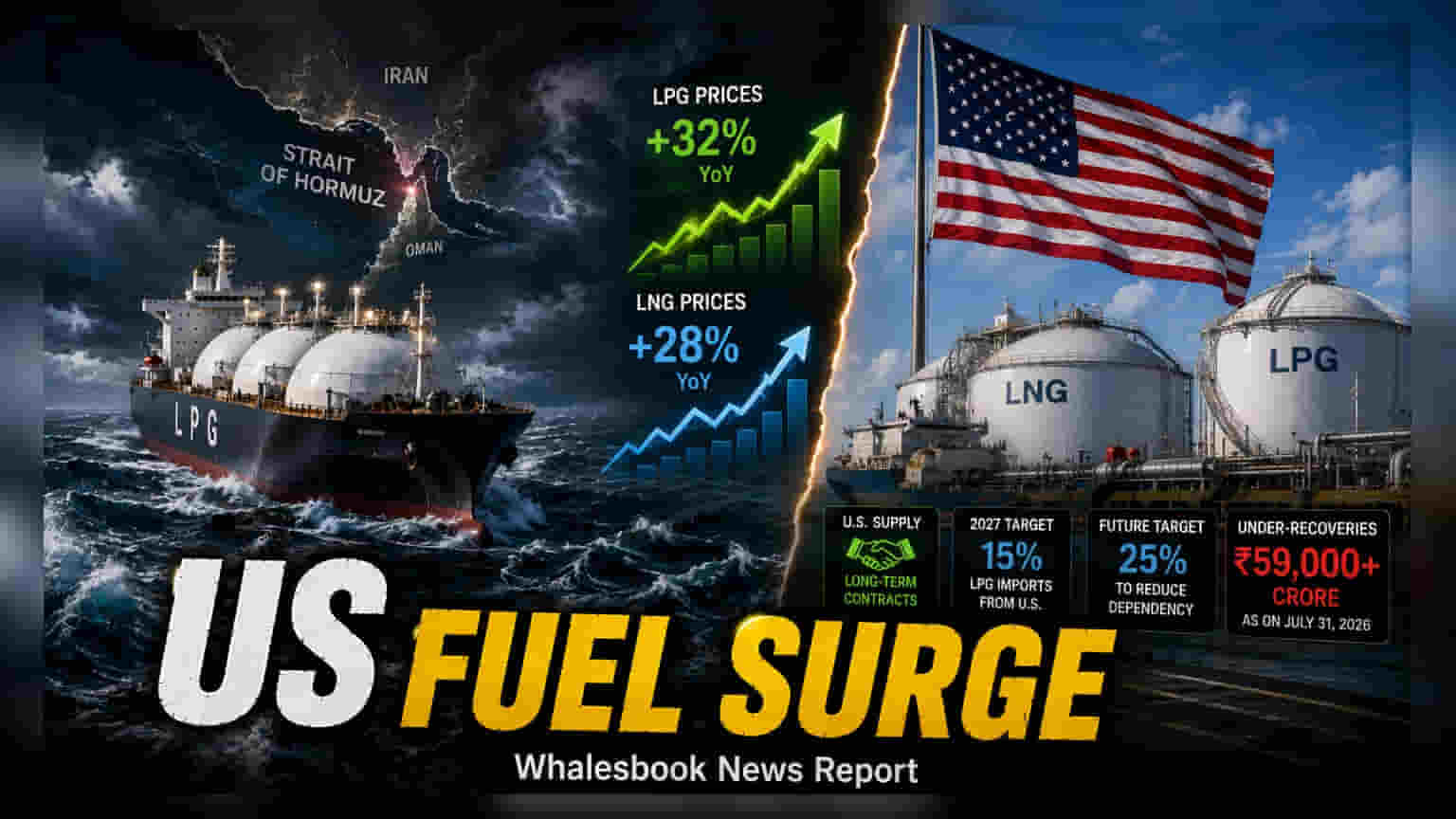
India has shifted a significant portion of its LPG and LNG imports to the United States to secure energy supplies amid the ongoing crisis in West Asia. This strategic pivot, while ensuring availability, is increasing logistics costs and placing financial pressure on state-run oil marketing companies. Investors are monitoring how this change impacts fuel margins and government-controlled pricing.
India is significantly changing its energy procurement strategy as supply disruptions in West Asia, particularly around the Strait of Hormuz, continue to impact global trade routes. To maintain a steady supply of essential fuels, the country has pivoted heavily toward the United States for its LPG and LNG requirements. By August 2026, the US accounted for over 73% of India's total LPG imports, marking a decisive shift from traditional Gulf suppliers.
This change comes at a time when India's energy import bill is rising sharply. Between April and July 2026, the country's net oil and gas import bill climbed by 43.4% to reach $57.8 billion compared to the previous year. While this shift secures vital energy for domestic use, it introduces higher freight and logistics expenses because shipping fuel from the US involves significantly longer voyages compared to the shorter routes from the Middle East.
For state-run oil marketing companies like Indian Oil Corporation (IOCL), Bharat Petroleum (BPCL), and Hindustan Petroleum (HPCL), this situation presents a complex financial challenge. As of July 31, 2026, these companies faced accumulated under-recoveries—the difference between the cost of purchasing fuel and the price at which it is sold—surpassing ₹59,000 crore. These losses often occur when global prices rise but are not fully passed on to domestic consumers, putting pressure on the companies' profit margins.
To manage this transition, the government has directed state-run firms to secure at least 15% of their 2027 LPG imports through long-term supply contracts with US providers, with plans to increase this to 25% over time. These long-term agreements are intended to provide more price stability and reduce reliance on volatile spot markets, where prices can spike rapidly during supply chain crises.
Investors are keeping a close watch on how these companies manage their profitability. While the move helps ensure that India does not face fuel shortages, the combination of higher freight costs and the existing burden of under-recoveries could limit the financial flexibility of these state-run oil companies. Moving forward, the key factor to monitor will be the government's stance on fuel pricing and whether any further support is provided to the oil marketing sector to offset these rising logistical and purchase costs.