

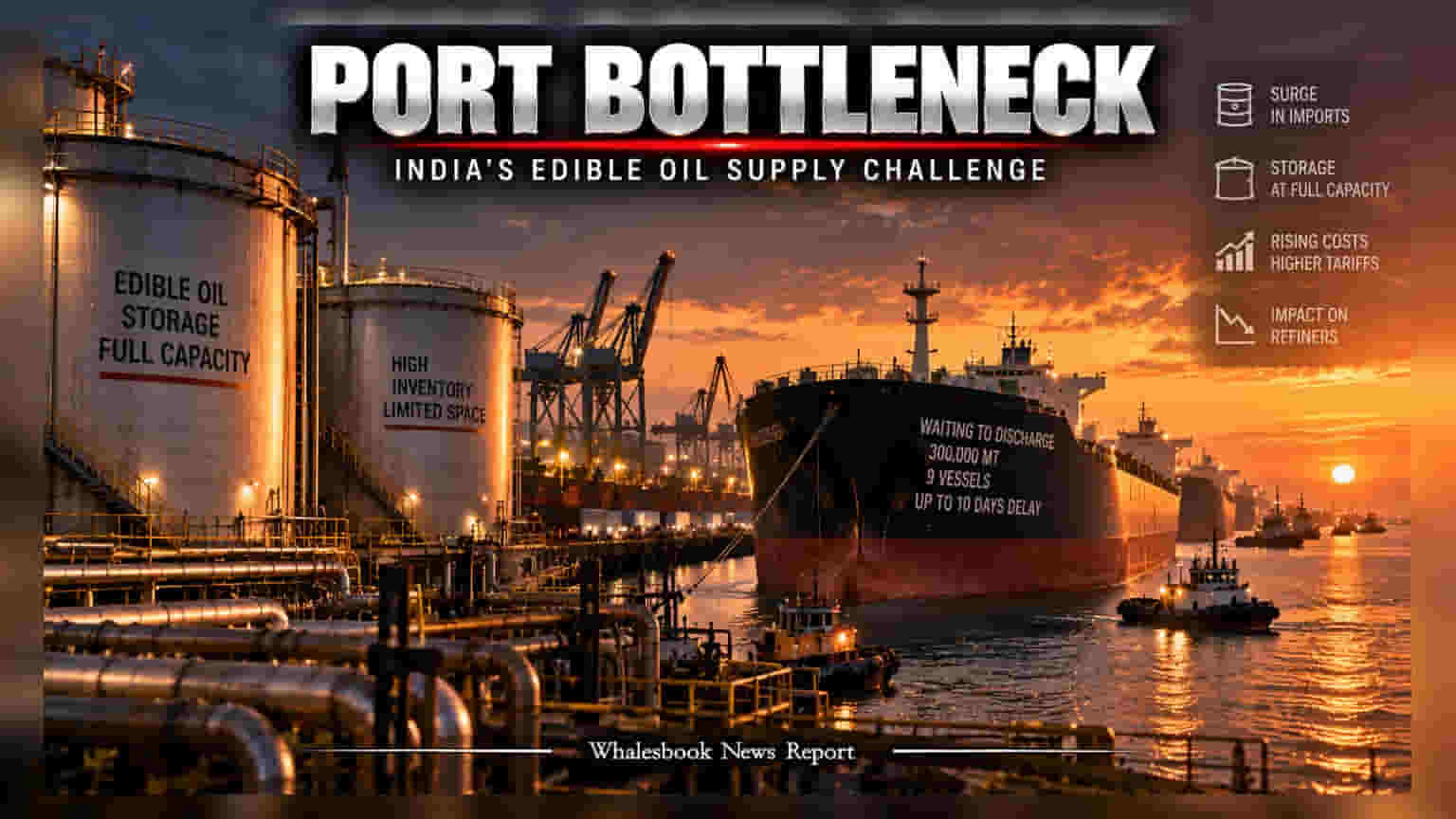
A surge in vegetable oil imports has caused a logistical bottleneck at major ports like Kandla and Haldia, with storage tanks running at full capacity. This delay, combined with weaker-than-expected festive demand, is pressuring refiners and may lead to reduced import orders in the coming months.
India's edible oil sector is facing a significant logistical hurdle as major gateways like Kandla and Haldia report severe congestion. Approximately 300,000 metric tons of cargo are currently held up on nine vessels waiting to discharge, with unloading delays stretching up to 10 days. This bottleneck has occurred because shore-based storage tanks are operating at full capacity, leaving little room for new arrivals.
The current crisis stems from a sharp mismatch between import volumes and domestic consumption. In August 2026, India imported 1.54 million tons of edible oil—the highest level in 11 months—as companies aggressively increased procurement in anticipation of strong festive demand. However, actual market off-take has been weaker than expected, leaving warehouses across the country saturated with inventory.
The situation is further complicated by rising costs. The Indian government increased tariff values for imported edible oils effective September 1, 2026, which has pushed up the landed cost of imports for domestic processors. When combined with the current storage bottleneck, refiners are facing additional financial strain. Importers are now incurring significant demurrage charges—fines paid for failing to unload vessels within the agreed timeframe—which can put direct pressure on the profit margins of these companies.
To manage this inventory glut, refiners are expected to scale back their purchase contracts for the October-to-December period. As India is one of the world's largest importers of vegetable oils, this shift in buying strategy may exert downward pressure on international benchmark prices for palm oil and soyoil.
For investors and industry followers, the primary monitorable will be the pace at which these companies can clear their existing stocks. High inventory levels can tie up working capital and delay future procurement, potentially impacting the financial performance of refining companies in the upcoming quarters. Stakeholders should track domestic demand trends and future import volume data to gauge when the sector might return to normalized operations.