 Whalesbook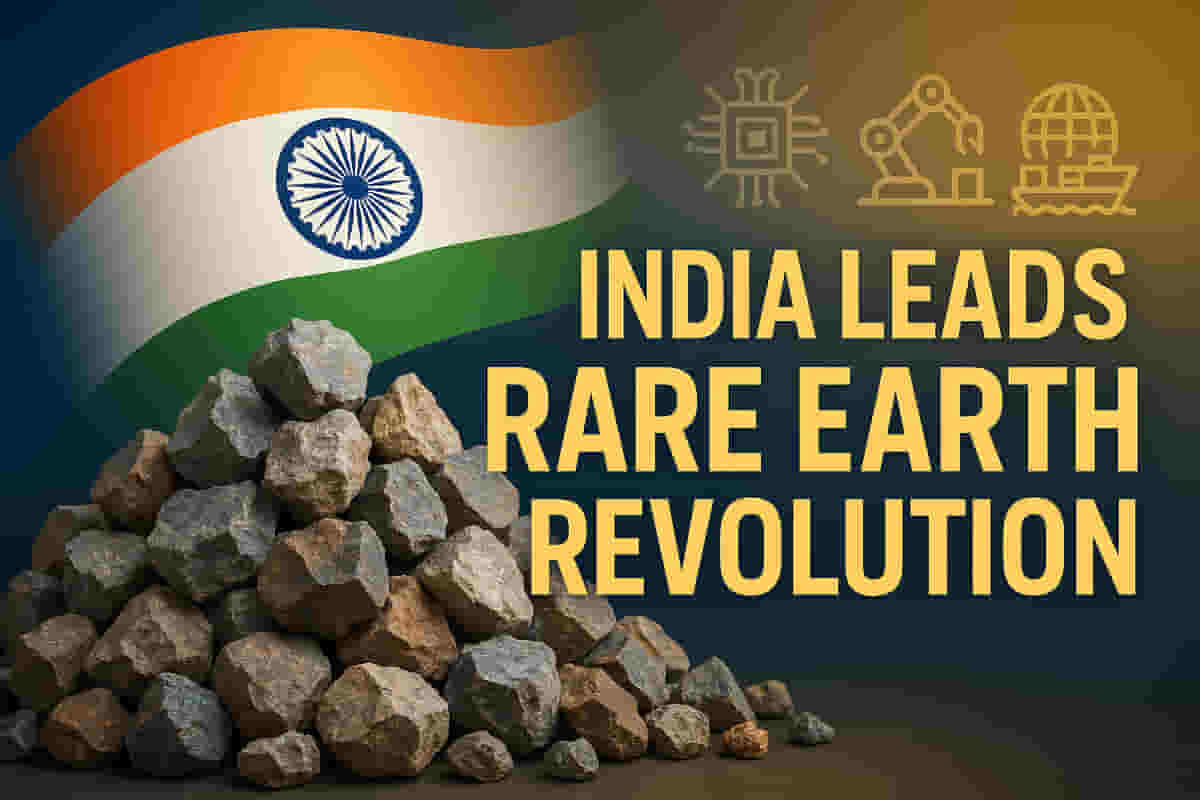
The recent Trump-Xi summit has granted a one-year reprieve from China's export controls on rare-earth materials, creating a strategic opening for India to enhance its role in the global supply chain. India possesses substantial reserves of rare-earth minerals, primarily found in its beach sand deposits, but has historically struggled with refining and processing capacity due to regulatory hurdles. However, this is now changing with initiatives like the National Critical Minerals Mission and fiscal incentives for domestic magnet manufacturing.
Companies like Sona Comstar are developing magnet production lines, and Indian Rare Earths Ltd. is tasked with expanding its refining capabilities. The Indian Space Research Organisation (ISRO) is also contributing by adapting satellite technology for high-purity separation.
India is leveraging global partnerships, particularly through the Quad (India, US, Japan, Australia), to accelerate joint exploration, co-financing, and technology transfer. As the world's fifth-largest economy, India offers the scale and credibility needed to support downstream industries like magnets, motors, and batteries. This strategic alignment is supported by Prime Minister Narendra Modi's "Atmanirbhar Bharat" agenda.
Impact
This development can significantly boost India's industrial and technological sectors, attracting foreign investment, creating jobs, and reducing reliance on single-source suppliers. It positions India as a critical geopolitical and economic partner for the US and its allies, potentially reshaping global supply chains for critical minerals. This could lead to increased valuations for companies involved in mining, refining, and manufacturing related to rare earths.
Rating: 8/10
Difficult terms:
Rare-earth minerals: A group of 17 chemically similar metallic elements with unique properties essential for many modern technologies, including electronics, magnets, and defense systems.
Monazite: A phosphate mineral that is a primary ore for rare-earth elements and thorium.
Bastnaesite: A rare-earth fluorocarbonate mineral, another significant source of rare-earth elements.
Refining: The process of purifying raw ores to extract valuable metals or materials.
Processing: The steps involved in converting raw materials into usable forms, such as manufacturing components from refined metals.
Atmanirbhar Bharat: A Hindi term meaning 'self-reliant India,' referring to a national initiative to promote domestic production and self-sufficiency.