

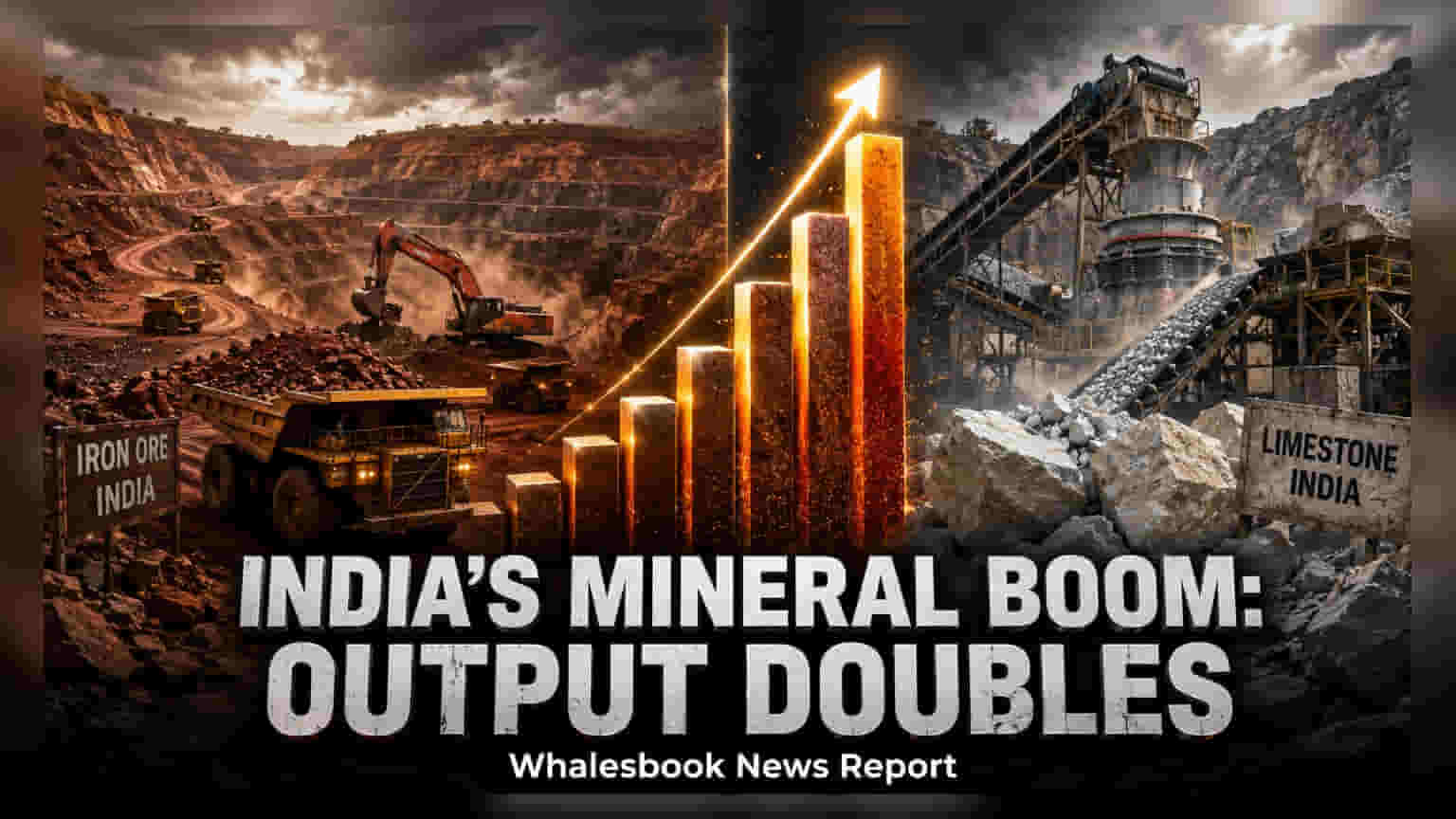
India's iron ore production rose to 312 million tonnes in FY26, nearly doubling from FY16, as a record 200 mineral blocks were auctioned. The auction-based system has stabilized supply, helping industries like steel and cement secure raw materials. Investors are monitoring how high auction premiums and regulatory clearances might impact profit margins for mining firms.
India’s mineral sector has reported significant growth in production over the last decade, driven by structural reforms in the way mining rights are allocated. Iron ore production reached 312 million tonnes in the fiscal year ending March 2026, a substantial rise from the 158 million tonnes produced in FY16. Limestone, a vital raw material for the cement industry, also saw a 57 percent increase in output over the same period, reaching 483 million tonnes.
The core of this growth is the mineral auction regime introduced in 2015. Before this system, the allocation of mining blocks was often opaque and slower. The current framework encourages competitive bidding, which has accelerated the process of bringing new mines into production. In FY26 alone, a record 200 mineral blocks were auctioned, the highest ever in a single year, reflecting the government's push to fast-track resource extraction.
Impact on Industry and Mining Firms
For investors, this shift toward a more transparent and competitive auction system has broader implications for companies in the steel, cement, and mining sectors. Many large players are now looking to secure their own mineral supplies to protect themselves against price volatility. A notable example of this trend is Coal India Limited, which successfully secured its first iron ore asset, the Gadadharpur block in Odisha, in August 2026. This diversification shows how public sector giants are moving beyond coal to secure critical raw materials for long-term growth.
Additionally, the National Critical Mineral Mission, approved by the Union Cabinet in January 2025, is working to secure supply chains for rare and essential minerals. With a budget exceeding ₹34,000 crores, the mission focuses on exploration, mining, and recycling to reduce India's dependence on imported minerals. This has created a new operational pipeline for exploration companies and large industrial houses looking to integrate vertically.
Risks and Monitoring Points
While the increase in output is positive for national industrial capacity, the mining business carries specific risks that investors should monitor. The primary challenge is the cost of acquisition. Companies often pay high "auction premiums" to win mining blocks. If commodity prices remain flat or drop, these high premiums can put significant pressure on the profit margins of mining operations.
Another major factor is the time required for operationalization. Even after a block is auctioned, it requires various statutory clearances, environmental permits, and forest approvals before actual digging can begin. The transition from exploration to commercial production is often lengthy, which can lead to cost overruns.
For the near term, investors should track the pace at which the newly auctioned blocks move from the development stage to active production. While 30 blocks were successfully made operational in FY26, the sector's ability to maintain these production levels will depend on commodity price stability and the industry's ability to manage the costs associated with competitive bidding.