

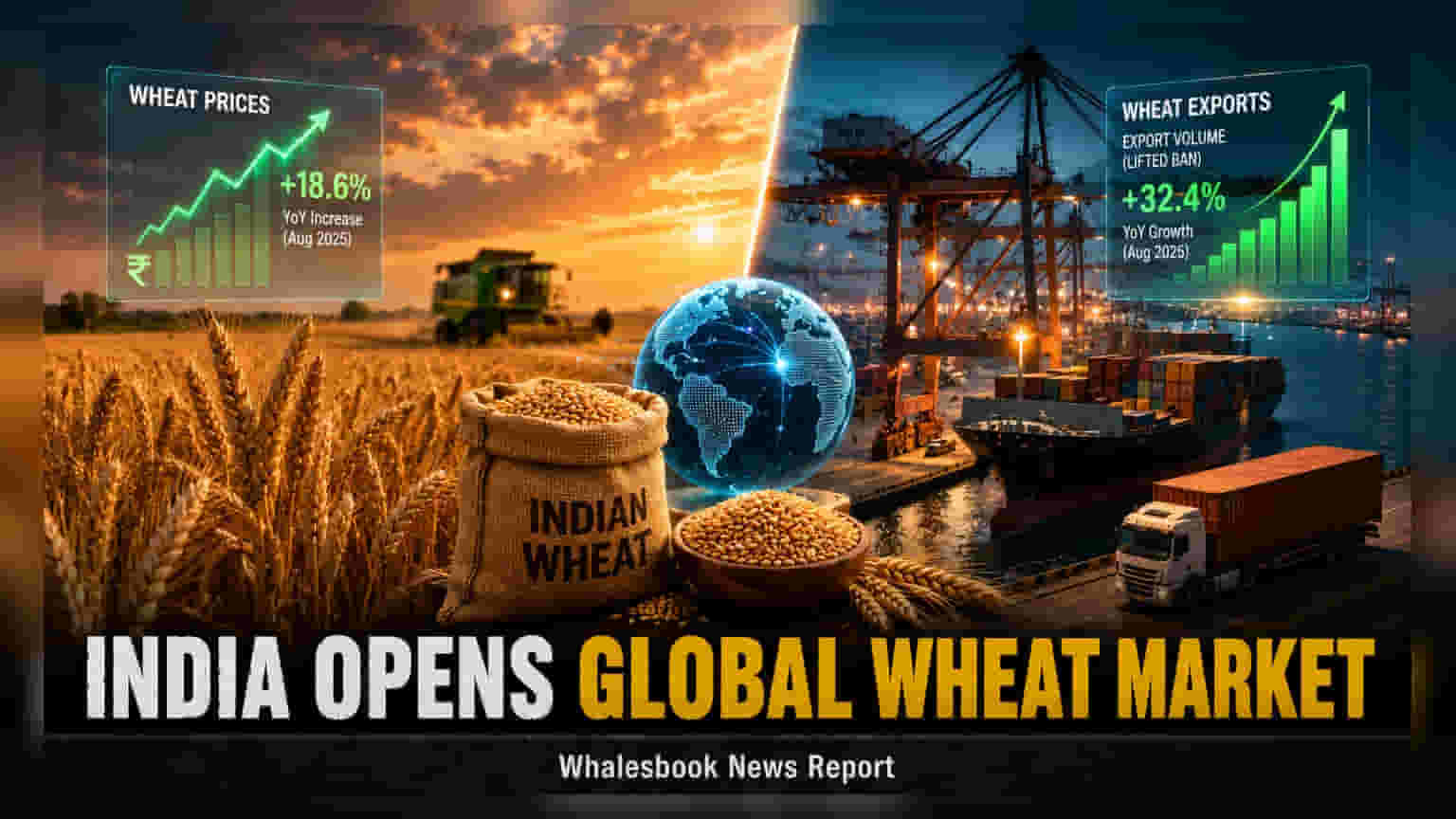
India has moved its wheat and wheat flour export policy from 'Prohibited' to 'Free' as of August 24, 2026. The government cited record domestic harvests and strong buffer stocks as key reasons for the change. While this opens international market access for agricultural exporters, the potential impact on domestic food prices and global price competitiveness are critical factors for investors to watch.
The Government of India has officially removed the export ban on wheat and wheat-related products, including maida, semolina, and wheat flour. According to notifications issued by the Directorate General of Foreign Trade (DGFT) on August 24, 2026, the export status for these items has been changed from 'Prohibited' to 'Free' with immediate effect. This policy reversal marks a significant shift from the restrictive measures that were largely in place since May 2022 to secure local food supplies and manage inflation.
Why the Policy Changed
The primary driver behind this decision is the country's comfortable inventory position. Recent data indicates a record domestic wheat harvest and higher-than-required buffer stocks, which have provided the government with the confidence to resume exports. By shifting the policy to 'Free,' the government aims to help domestic farmers and traders access global markets, potentially aiding in the stabilization of international wheat supplies amid ongoing supply chain volatility.
Market Dynamics and Risks
While the lifting of the ban is a positive development for agricultural trade, investors should consider the broader market dynamics. A major factor is global price competitiveness. Indian wheat is currently estimated to be priced between $270 and $280 per metric tonne on the global market. For exporters to benefit significantly, Indian prices must remain competitive against other global suppliers. If global prices fall or if local costs rise, the export volume might not reach the levels some might expect.
Furthermore, the policy shift carries inherent risks regarding domestic inflation. If large quantities of wheat are diverted to international markets, there is a risk of supply tightening within India. Historically, when export volumes have been high, domestic prices have experienced upward pressure. While the government has expressed confidence that current stock levels are sufficient, the balance between export-led growth and domestic price stability is a delicate one. Policymakers have the option to intervene again if local prices show signs of sharp inflation.
What Investors Should Monitor
Moving forward, the key indicators for investors in the agricultural and commodity sectors will be the monthly export volume data and domestic wheat price trends. It will be important to observe whether the domestic supply chain can sustain both export demand and local requirements without causing a spike in inflation. Additionally, any further government updates regarding duties or new restrictions, if domestic prices do turn volatile, will be essential to track to understand the sustainability of this export opening.