

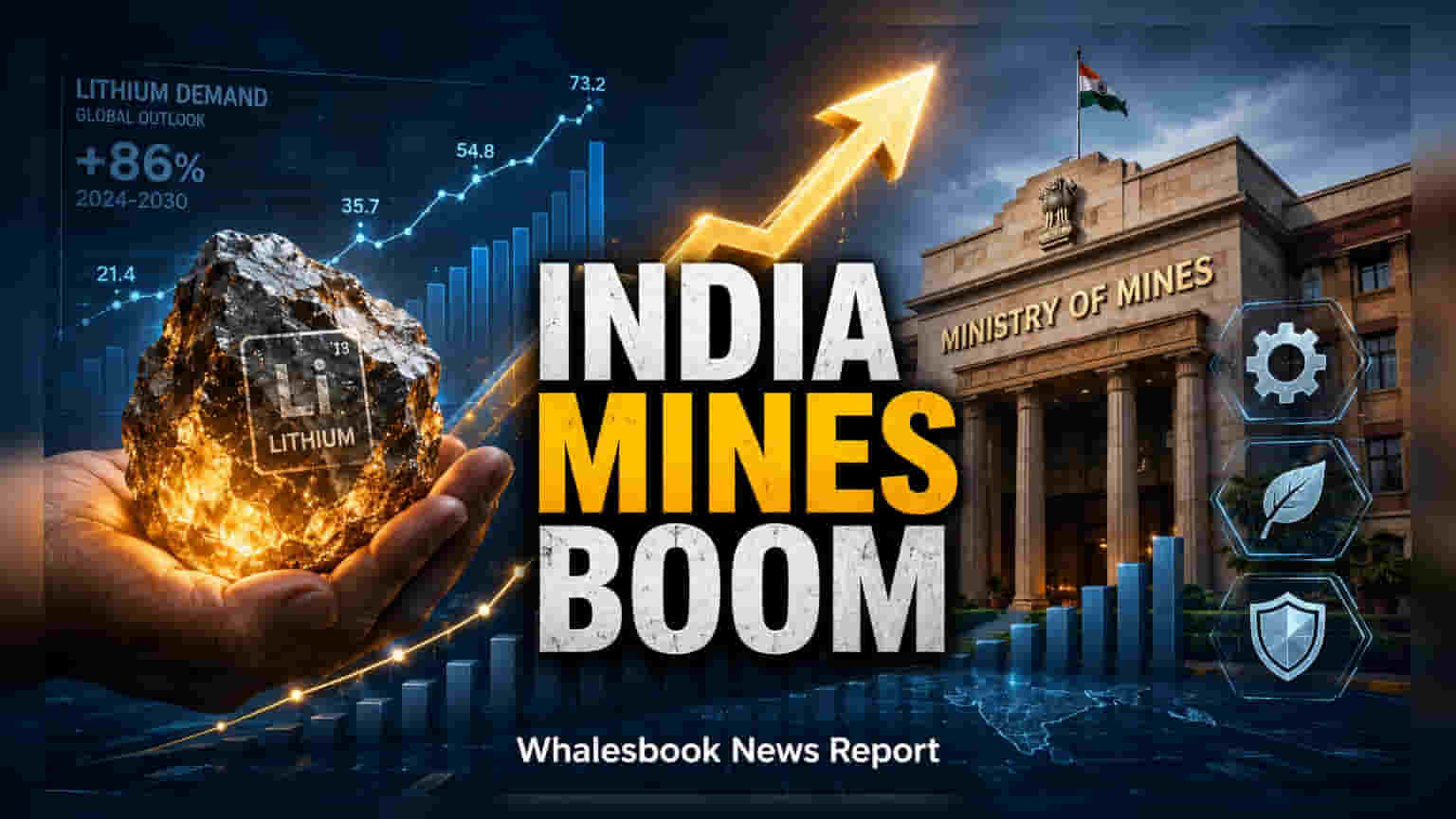
India has opened the eighth round of auctions for 20 critical mineral sites, including lithium and rare earth elements, to boost domestic supply chains. The initiative aims to reduce import dependence for clean energy and defense sectors. Investors can track how successfully these blocks attract private participation compared to previous rounds.
The Ministry of Mines has officially launched the eighth round of auctions for critical and strategic mineral blocks, aiming to strengthen India’s domestic supply chain for high-growth industries. This tranche includes 20 blocks spread across nine states, consisting of 13 newly identified sites and seven that are returning for a second bidding attempt. These minerals, which include lithium, rare earth elements, vanadium, and graphite, are essential for modern industrial applications, including electric vehicle batteries, renewable energy hardware, and national defense manufacturing.
Strategic Importance of Mineral Security
Critical minerals are the backbone of the clean energy transition and high-tech manufacturing. By increasing domestic exploration and production, the government is attempting to reduce India's heavy reliance on imports for materials like lithium and gallium. Historically, supply chain volatility in these commodities has posed a challenge for downstream sectors such as automobile manufacturers, battery producers, and aerospace companies. Developing these resources domestically is a core part of the nation's long-term economic strategy to achieve self-reliance in advanced manufacturing.
Recent Auction Performance
Data from the Ministry of Mines indicates that the auction mechanism has seen a high level of activity recently. With 56 out of 88 critical mineral blocks successfully auctioned in previous rounds, the government maintains a success rate of over 63 percent. The fiscal year 2025-26 set a record, with 212 total mineral blocks auctioned, signaling a shift in momentum for mining exploration in India. While the auction process aims to attract private capital, the ultimate financial impact for companies depends on the cost of exploration, environmental clearance timelines, and the technical viability of the specific blocks won.
Challenges and Monitoring
For investors and industry observers, the primary challenge remains the execution risk associated with mining projects. Converting a block from auction to active production involves significant capital spending, regulatory approvals, and adherence to environmental standards. Unlike traditional commodities, the extraction of rare earth elements often requires specialized technology and significant initial investment, which can pressure short-term cash flows for the winning bidders.
Looking ahead, the market will monitor the response from private sector players during this eighth round to determine the appetite for these specialized assets. The upcoming India Mining Week 2026, scheduled for November in New Delhi, is expected to serve as a key venue for industry participants to discuss technological collaborations and sustainability standards. Investors may track future exchange filings from companies participating in these bids to understand the size of their capital commitments and the expected timelines for project commissioning.