

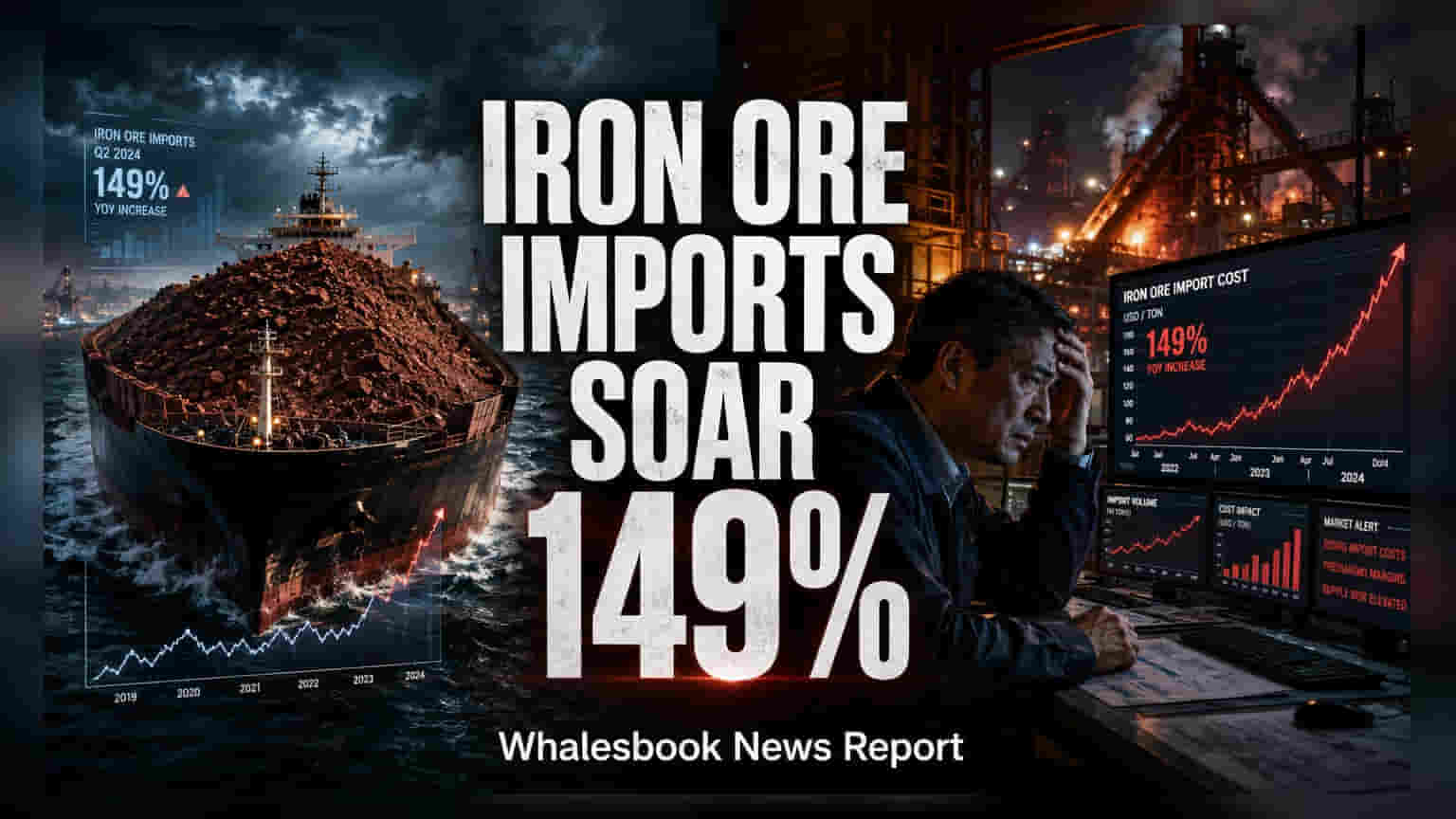
India’s iron ore imports climbed to 12.35 million tonnes in FY26, a seven-year high, as domestic supply of high-grade ore failed to meet rising demand. While this import reliance increases input costs for major producers like JSW Steel, the sector continues to show production resilience. Investors should track how recent mining reforms and cost-management strategies influence steelmaker margins in the coming quarters.
India's reliance on foreign iron ore has reached its highest level in seven years. Exchange and industry data for FY26 show that iron ore imports surged to 12.35 million tonnes. This sharp increase reflects a structural imbalance in the domestic market, where local mines are struggling to produce sufficient quantities of high-grade iron ore required for modern blast furnace steel production.
The trend has been driven largely by the needs of major steel producers, with JSW Steel accounting for a significant portion of these imports. For investors, the reliance on imported raw materials creates a paradox. On one hand, it signals strong domestic demand for steel, with crude steel output growing by 2.6% year-on-year to 56.3 million tonnes during the April–July 2026 period. On the other, it exposes domestic companies to global price volatility and freight costs, which can exert pressure on profit margins.
To address these supply-side challenges, the government introduced the MMDR Amendment Bill in the Lok Sabha on August 10, 2026. This policy move aims to reduce the fiscal burden on mining operations and improve commercial viability for local miners. The government’s goal is to stimulate domestic production, which could theoretically reduce the need for expensive imports in the long run. However, the speed at which this will translate into increased high-grade ore supply remains a key monitorable for the industry.
Despite the higher raw material costs, steelmakers have demonstrated notable resilience. Many companies in the sector managed to maintain healthy EBITDA margins during Q1 FY27 by focusing on operational leverage and selling higher-value products. By shifting their product mix, firms have partially absorbed the costs associated with importing ore and coking coal.
Looking ahead, several risks remain. Geopolitical tensions in regions such as the Middle East continue to pose threats to maritime logistics, which can inflate transportation costs for raw materials. Furthermore, while domestic steel prices have held up well, any narrowing of the spread between domestic rates and import offers could limit the ability of steelmakers to pass on these costs to consumers. Investors should continue to watch the quarterly performance of major steel players, specifically focusing on how management teams balance input cost inflation against production targets and the impact of the newly introduced mining reforms.