 Whalesbook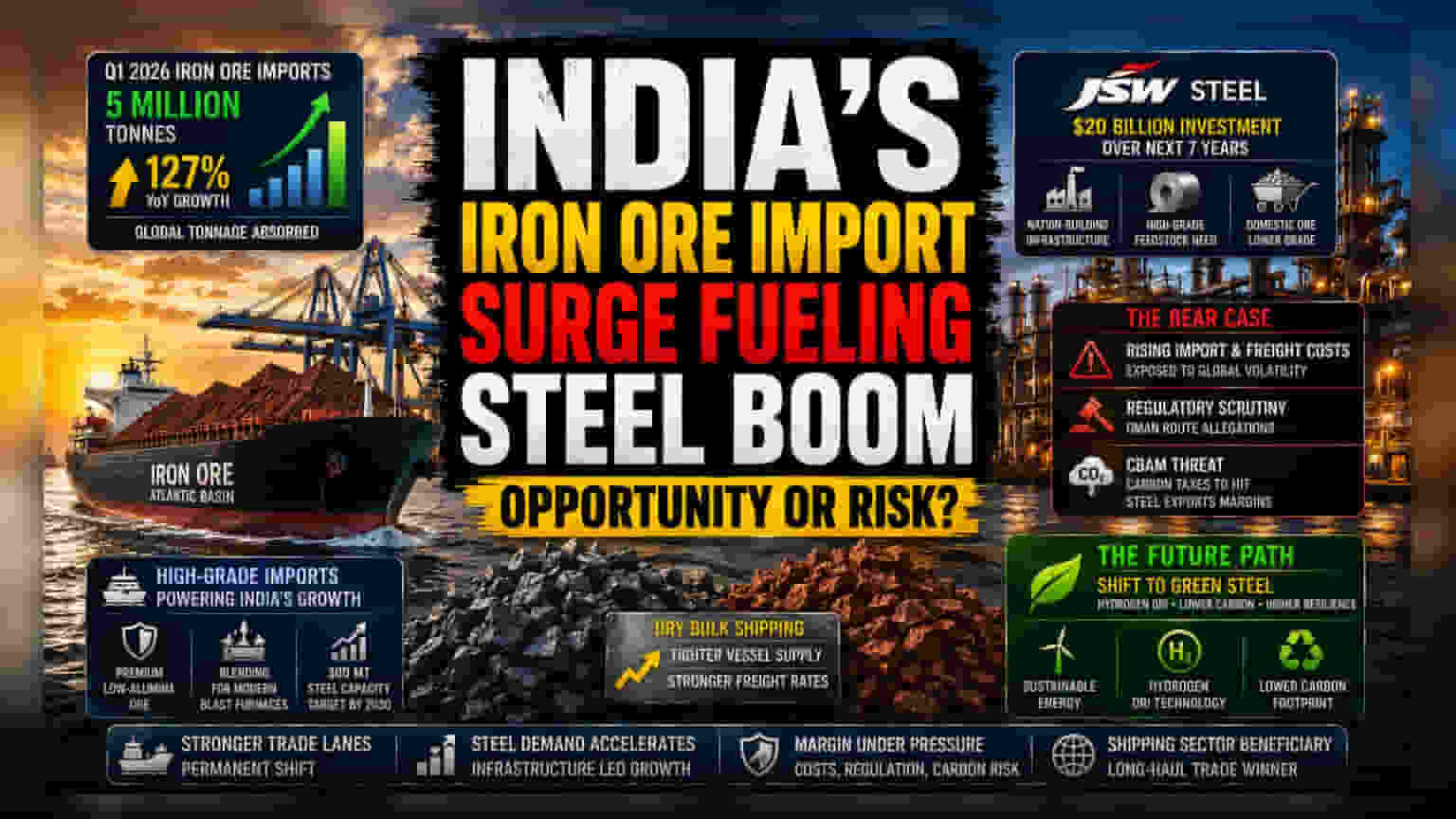


The Logistics Bottleneck
India is rapidly becoming an inescapable force in the global dry bulk sector. The nation’s Q1 2026 iron ore imports reached 5 million tonnes, a 127% leap from the prior year, marking a shift that has begun to absorb significant global tonnage. This surge is not merely a temporary procurement spike; it is the direct result of a structural incompatibility between domestic mineral output and the high-grade requirements of modern blast furnaces. As India moves toward an ambitious 300 million tonnes per annum steel capacity target by 2030, the reliance on long-haul imports—particularly from the Atlantic Basin—has tightened global vessel availability and provided a floor for freight rates.
The Strategic Pivot of Major Steelmakers
At the heart of this trade transformation is JSW Steel, which has aggressively expanded its footprint to meet India's 'nation-building' phase of infrastructure development. With plans to invest $20 billion over the next seven years, the company’s need for premium, low-alumina feedstock has made it the dominant purchaser of imported ore. Because domestic production is often concentrated in lower-grade fines that struggle to meet the strict quality standards of integrated mills, companies are forced to use high-grade Brazilian imports as a blending 'sweetener.' This logistical requirement has established a recurring, high-volume shipping lane that is increasingly viewed by maritime analysts as a permanent fixture in the dry bulk trade map, moving away from the seasonal fluctuations that previously characterized Indian iron ore logistics.
The Forensic Bear Case: Margin & Regulatory Risks
While the surge in imports signals robust industrial activity, it introduces significant structural vulnerabilities for domestic producers. The primary concern is the rising cost of procurement, which now includes volatile international freight expenses. Companies are no longer protected from maritime price spikes, as the transition to global sourcing requires them to navigate higher fuel costs and vessel-availability risks. Furthermore, the regulatory environment remains a constant threat. Allegations regarding the origin of some imports—specifically shipments routed through Oman to bypass potential sanctions—have drawn scrutiny from local pellet producers who fear unfair competition. Additionally, Indian steelmakers face the looming shadow of the European Union’s Carbon Border Adjustment Mechanism (CBAM). As India increases its reliance on energy-intensive blast furnace production to keep pace with demand, the carbon-intensity of its steel exports could face severe punitive taxes, potentially crimping the margins that are currently funding these expensive raw material imports.
Future Outlook and Sector Resilience
Market consensus points toward sustained, if tempered, import demand as India’s capacity expansion continues. While short-term volume may experience month-to-month volatility depending on domestic mining permits and local supply, the long-term trend favors continued import dependence. Analysts suggest that the key to future profitability will lie in the successful shift toward green steel technologies—such as hydrogen-based direct reduced iron (DRI)—which could eventually reduce the industry’s rigid reliance on specific imported ore grades. Until then, the shipping sector remains the primary beneficiary of India's steel-led industrial acceleration.