

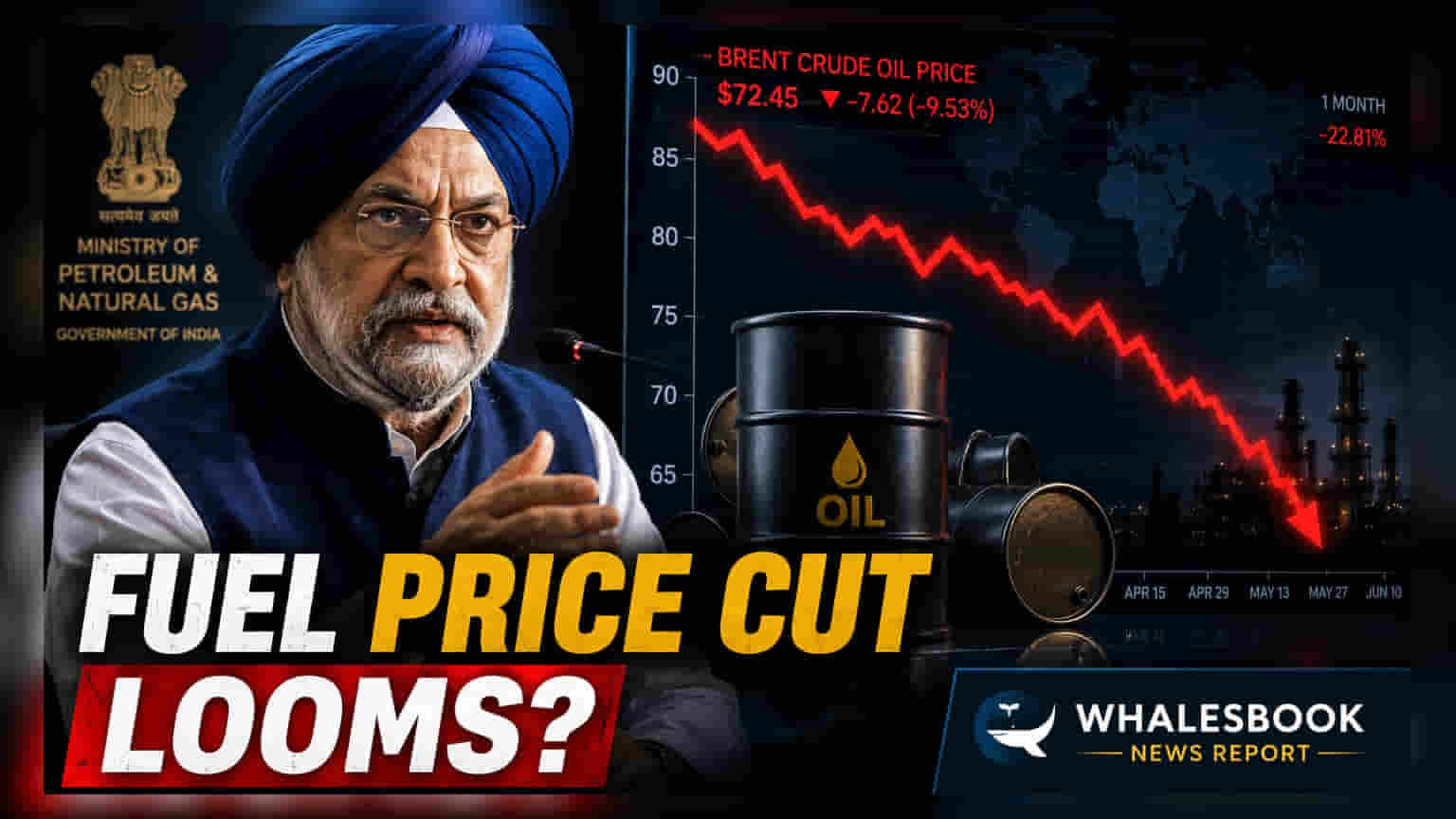
Petroleum Minister Hardeep Singh Puri has indicated that petrol and diesel prices may be reduced if global crude oil rates remain at current lower levels. While this offers potential relief for consumers, it follows a period where Oil Marketing Companies (OMCs) faced substantial financial pressure due to high global crude costs during recent supply conflicts.
What The Government Said
Union Petroleum Minister Hardeep Singh Puri stated on Thursday that a reduction in retail petrol and diesel prices is possible. This development depends on international crude oil prices maintaining their recent downward trend. Prices have eased significantly from the peak levels seen during the recent supply conflict, where Brent crude touched nearly $120 per barrel. With prices now hovering around $70 per barrel, the government is evaluating the possibility of passing on the benefits to consumers.
Why Retail Prices Haven't Dropped Yet
The Minister explained that there is a time lag between global crude price movements and retail fuel price changes in India. Retail prices at the pump reflect the cost of crude oil purchased by refineries months in advance. Because OMCs were processing and selling fuel that was procured at much higher costs during the peak of the West Asia conflict, retail prices remained elevated. This mechanism prevents immediate fluctuations for the consumer but also means that drops in crude prices take time to reflect at the pump.
Impact On Oil Marketing Companies
The financial health of state-run Oil Marketing Companies (OMCs)—including Indian Oil Corporation (IOCL), Bharat Petroleum (BPCL), and Hindustan Petroleum (HPCL)—is closely linked to these price dynamics. During the high-price period, these companies absorbed significant financial hits, with government data citing under-recoveries totaling Rs 74,781 crore up to June 30. An under-recovery occurs when the cost of producing and selling fuel is higher than the price at which it is sold to the consumer. As crude prices stabilize at lower levels, these companies are better positioned to restore their marketing margins.
Peer And Competitive Context
Private fuel retailers are often more agile in adjusting prices based on market conditions. For instance, Nayara Energy has already started reducing prices, cutting petrol by Rs 5 per litre and diesel by Rs 3 per litre across its network. Investors often look at how quickly different players adjust to global trends, as this influences market share and profitability in the fuel retailing sector. While state-run OMCs often wait for government guidance or a sustained trend before modifying prices, private players may react faster to competitive dynamics.
What Investors Should Monitor
Investors in the energy sector should continue to track the sustainability of crude oil prices. The primary risk remains the volatility of the global oil market; if geopolitical tensions flare up again, crude prices could rise, potentially putting pressure back on OMCs. The key monitorable for shareholders is whether these companies can maintain their refining and marketing margins without government intervention. Future quarterly earnings reports will be the primary indicator of how well these companies are managing their costs and recovering from the recent period of high under-recoveries.