 Whalesbook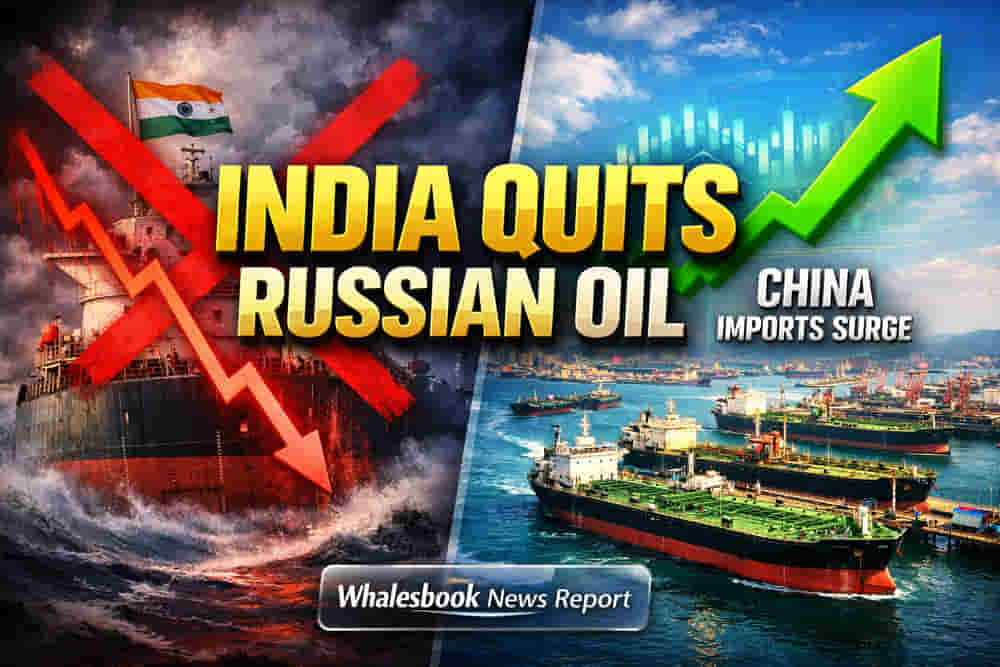


China's Record Russian Crude Intake
China's imports of Russian Urals crude have reached their highest point since June 2023, with volumes this month hitting 405,000 barrels per day. Total seaborne imports from Russia are nearing 1.4 million barrels per day. Data from Vortexa indicates that December saw seaborne Russian crude imports exceed 1.5 million barrels per day, a substantial increase from the roughly 1.2 million barrels per day averaged over the first eleven months of last year.
India's Sanctions-Driven Retreat
The shift is largely attributed to India's decision to scale back its purchases. Indian refiners, pressured by tougher Western sanctions and the looming European Union ban on products made from Russian oil effective January 21, have sought alternatives. Reliance Industries, India's largest refiner and a significant exporter to the EU, halted Russian oil imports in January. December saw Indian Urals imports fall to 929,000 barrels per day, the lowest since December 2022, down from an average of 1.36 million barrels per day in the preceding year.
Discounted Oil Flows East
Urals crude has fallen out of favor with Indian and Turkish refiners whose diesel production targets the European market. These refiners must cease using Russian crude for at least two months prior to the EU product ban. China, exporting minimal refined products to Europe, faces no such restrictions. This dynamic allows Chinese refiners, particularly in Shandong province, to acquire Urals crude at significant discounts, often below the price of Iranian oil. Discounts for Urals delivered to China recently widened to as much as $12 per barrel below ICE Brent. Shandong Yulong Petrochemical, for instance, has fully transitioned to Russian crude, increasing its demand by approximately 250,000 barrels per day since November.
Market Rebalancing
This redirection of Russian oil to China offers Beijing a vital buffer, especially as Venezuelan oil shipments to China decline. The increased availability of discounted Russian crude is influencing pricing dynamics, putting pressure on other suppliers like Iran and reshaping trade flows in the global energy market.