

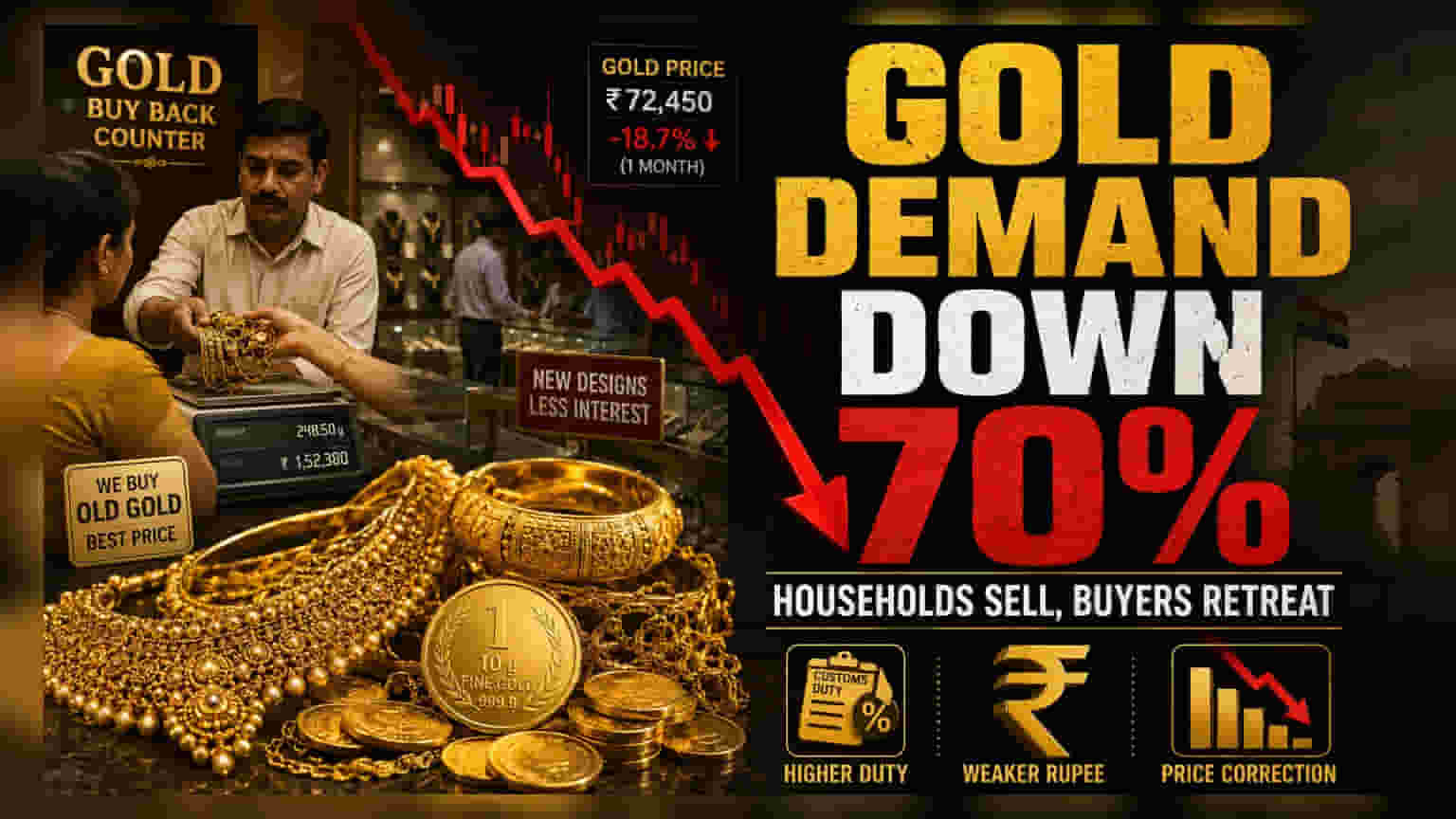
Gold demand in India has fallen by 70% as consumers pivot from buying to selling their old jewelry. A mix of sharp price corrections and increased customs duties has dampened market sentiment, creating uncertainty for retail jewelry businesses.
What Happened
Gold demand in India has witnessed a sharp decline, dropping by over 70% according to the India Bullion and Jewellers Association (IBJA). This is a significant shift in consumer behavior. Instead of purchasing new gold, a growing number of households are choosing to sell their existing jewelry. This trend comes after a period of intense price volatility where gold corrected from its record highs.
The Price and Policy Squeeze
Multiple factors are driving this change. The government increased the customs duty on gold from 6% to 15% in May, which has directly increased the cost of importing gold. This higher cost, combined with the appeal from government leadership to postpone non-essential gold purchases, has cooled off buyer interest. The price of gold on the Multi Commodity Exchange (MCX) has seen a major correction from its recent peak of ₹1,92,991 per 10 grams, leading many to reconsider their investment strategy.
Impact on Jewelry Retailers
For listed jewelry companies like Titan Company and Kalyan Jewellers, this shift in consumer behavior is critical to watch. When gold demand drops, retail footfall typically declines, affecting top-line revenue growth. Furthermore, jewelry retailers hold significant gold inventory. A rapid price correction can impact the value of this inventory, potentially putting pressure on operating margins. Retailers often rely on consistent demand to manage their working capital and inventory cycles. A sudden move by consumers to sell old gold rather than buy new products alters the supply-demand balance in the local market.
Global Pressure on Prices
The trend is not limited to India. Globally, gold prices have struggled, with spot prices dropping below the $4,000 per ounce level. Expectations that the US Federal Reserve will keep interest rates high for a longer period have strengthened the US dollar. When the dollar is strong, gold—which does not pay interest or dividends—becomes less attractive to global investors. This global environment has contributed to the price correction being felt by Indian consumers.
What Investors Should Track
Investors in the retail and jewelry sector may want to monitor several factors in the coming months. First, keep an eye on volume growth in the upcoming quarterly results of major jewelry retailers, as this will show if the demand slump is temporary or prolonged. Second, watch for any updates on customs duty or government policies regarding gold imports, as these directly affect the cost structure. Finally, watch the trend in gold prices and global interest rate decisions, as these will continue to dictate whether consumers return to the market or continue to hold back.