

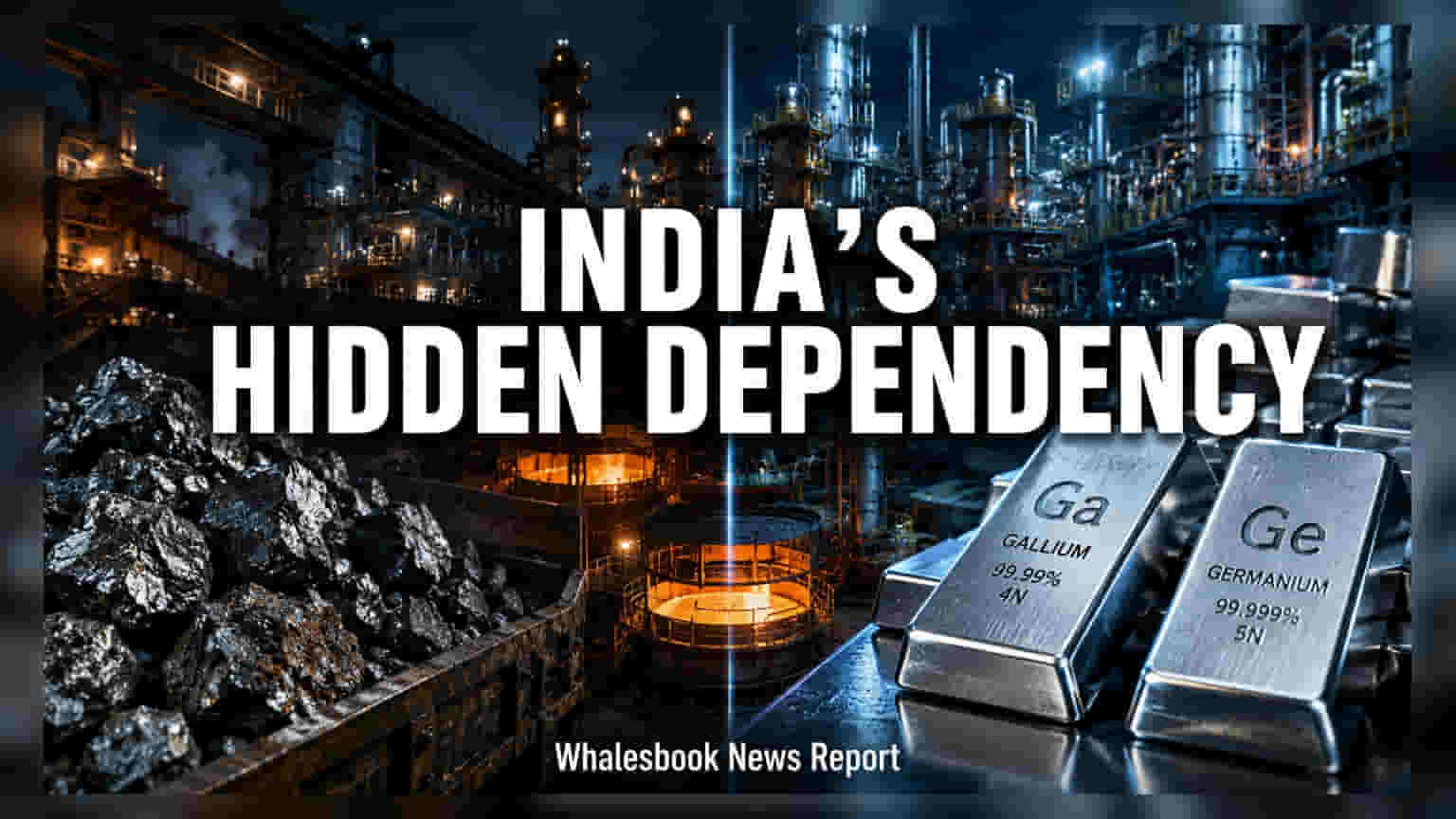
India heavily depends on imports for gallium and germanium, essential materials for 5G, EVs, and defense. With over $36 million in imports reported in 2024, the lack of domestic refining capacity poses a strategic challenge for the growing semiconductor sector.
As India accelerates its push into semiconductor manufacturing, artificial intelligence, and advanced defense systems, the country’s reliance on imported critical minerals has come into focus. Gallium and germanium are vital components in these high-technology fields, yet India currently lacks the necessary facilities to refine these materials to the purity required for electronics. This creates a strategic gap that may affect the cost and security of supply chains for domestic tech manufacturers.
In 2024, India’s imports of germanium oxide-related products exceeded $36 million, with a significant portion sourced from China. The dependence is even more pronounced for refined gallium compounds, where domestic production is nearly non-existent. While India has access to the raw material inputs—which are often available as by-products from existing large-scale aluminium refineries and zinc smelters—the country currently lacks the specialized industrial infrastructure to extract and purify these elements at a commercial scale.
The core challenge lies in the complex metallurgical processes required to reach ultra-high-purity levels suitable for semiconductor manufacturing. Global production of refined gallium is heavily concentrated, with China holding approximately 80% of the market share. For Indian companies operating in the semiconductor and electronics space, this concentration increases the risk of supply disruptions or price volatility, which could directly impact operating margins and production timelines.
Building a domestic ecosystem will require significant investment in zone-refining facilities and advanced solvent extraction technology. Integrating these processes with existing industrial setups like those of major aluminium and zinc producers is considered a potential pathway for domestic supply chain security. Investors in the manufacturing and industrial materials sectors may monitor future government policies, incentives for mineral processing, and corporate announcements regarding the development of high-purity refining infrastructure as indicators of progress. The long-term ability of domestic firms to secure these materials without heavy reliance on international trade will be a key factor in the stability and growth of India’s high-tech manufacturing sector.