

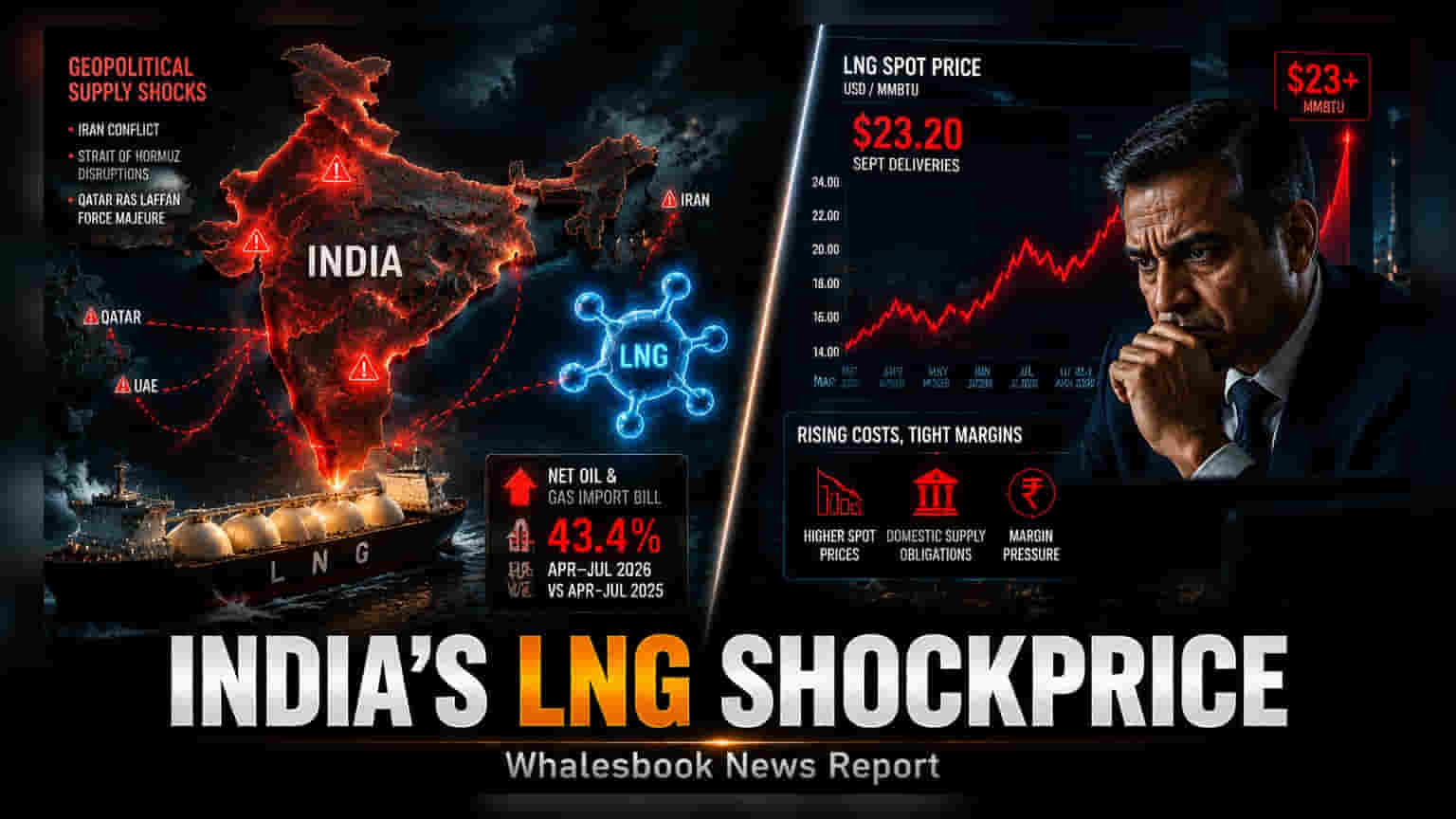
Indian energy firms, including GAIL India and GSPC, are paying over $23 per MMBtu for spot LNG, a multi-year high, to bridge supply gaps. With India’s oil and gas import bill rising 43.4% between April and July 2026, investors are focused on the potential pressure on profit margins for these state-run companies, particularly as they balance government mandates to prioritize essential sectors like fertilizers.
Indian state-run energy companies are currently navigating one of the most challenging periods for fuel procurement in recent years. Firms such as GAIL India Ltd. and Gujarat State Petroleum Corp. (GSPC) have been forced to source liquefied natural gas (LNG) from the spot market at prices exceeding $23 per million British thermal units (MMBtu) for September deliveries. These elevated prices, a direct consequence of persistent geopolitical supply shocks, highlight the difficulty in securing affordable fuel for domestic demand.
Impact on Import Costs and Margins
The rising cost of energy is reflected in the national trade data. India’s net import bill for oil and gas witnessed a significant surge of 43.4% during the April–July 2026 period compared to the same timeframe last year. For investors, this creates a clear concern regarding profit margins. When energy firms purchase gas at high spot market rates, they face a difficult choice: absorb the higher costs, which hurts profitability, or pass them on to consumers, which is often challenging due to regulatory sensitivity or the government's focus on controlling inflation.
Geopolitical Disruptions and Supply Shifts
The supply chain has been severely strained by ongoing conflicts involving Iran and disruptions in the Strait of Hormuz. A major supply issue occurred in March 2026 following attacks on Qatar’s Ras Laffan facility, which led to a declaration of force majeure. This significantly limited the availability of gas from one of India’s traditional and largest suppliers. Consequently, India has had to diversify its procurement strategy, increasingly relying on alternative suppliers including the United States, UAE, Nigeria, and Angola. While this diversification helps ensure energy security, sourcing from newer markets often comes with higher logistics costs and increased competition from European buyers, who are also fighting for supplies as global energy prices hover near $90 per barrel.
Domestic Policy Constraints
Beyond global pricing, Indian energy firms operate under a directive to prioritize domestic needs. The government mandates that gas be supplied to essential sectors, most notably fertilizer production and city gas distribution networks for homes and transport. This obligation forces state-backed companies to maintain supply levels regardless of the cost of procurement on the spot market. For shareholders, this means the financial performance of these companies is often tied to government policy and the ability of the state to subsidize or manage these costs.
What Investors Should Monitor
Moving forward, the primary factor for investors will be how these energy companies manage their quarterly margins. Market participants will be looking for management commentary in upcoming filings regarding their cost-sharing mechanisms, the extent of long-term contract coverage versus spot market reliance, and any updates on supply stability from diversified regions. Additionally, any sustained volatility in global crude and gas benchmarks will remain a significant factor, as it dictates the cost structure for the entire sector.