 Whalesbook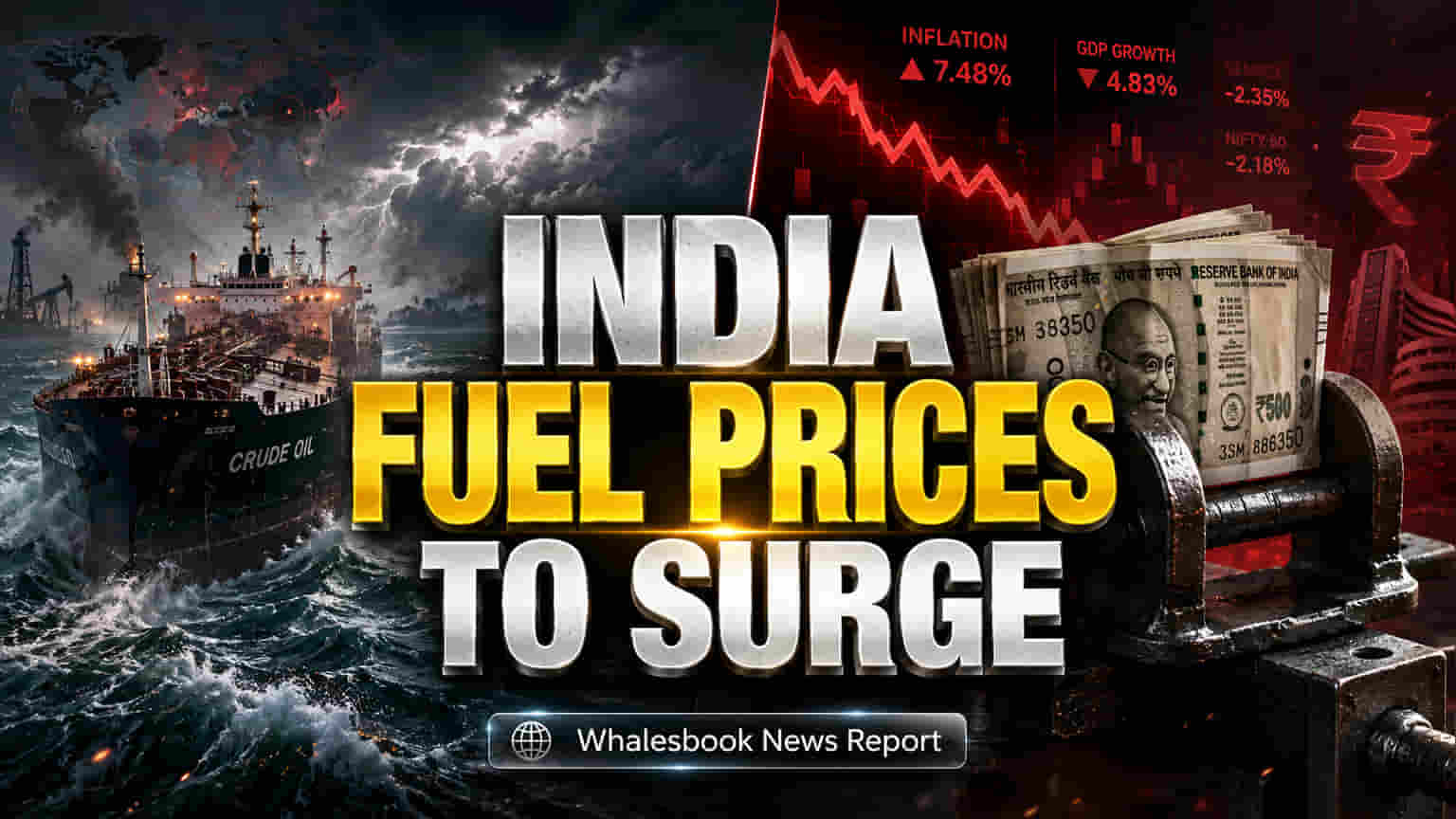


India Grapples with Rising Fuel Costs
The Indian government is preparing to make difficult economic decisions, particularly regarding fuel prices, after recent elections. India, heavily dependent on oil imports, has been absorbing high costs during a prolonged crisis in West Asia. This strategy is no longer sustainable. With Brent crude prices above $100 a barrel, the focus shifts to addressing significant operational challenges. Estimates show the daily financial impact of high crude and gas prices at ₹1,000 crore. The government previously absorbed about ₹24 per litre on petrol and ₹30 per litre on diesel when crude prices peaked at $126 a barrel. Combined with a ₹170,000 crore excise duty cut, these efforts aimed to protect consumers and oil companies. However, these measures have led to projected losses exceeding ₹50,000 crore for oil marketing companies by the end of the current quarter, with gas-related losses approaching ₹20,000 crore, affecting industries that rely on gas.
Strait of Hormuz Disruptions Hit Supply
The current crisis is made worse by the prolonged and unprecedented closure of the Strait of Hormuz, a critical energy route for India. This disruption is more severe than past events like the 1970s Arab oil embargo or the Iran-Iraq conflict. Beyond direct impacts on crude prices, India faces higher marine insurance premiums and increased freight costs. Ships diverting around the Cape of Good Hope now face delivery delays of two to three weeks, adding about 15-20% to shipping expenses. The shutdown of Qatar's Ras Laffan LNG terminal further worsens supply chain issues.
Oil Companies Face Financial Pressure
Major Indian oil marketing companies are navigating a difficult financial period. Indian Oil Corporation (IOC) has a market capitalization of around ₹2.07 trillion and a TTM P/E ratio of about 5.5. Bharat Petroleum Corporation (BPCL) is valued at approximately ₹1.33 trillion with a TTM P/E ratio near 5.7, while Hindustan Petroleum Corporation (HPCL) has a market cap of roughly ₹83 billion and a TTM P/E ratio around 5.6. These P/E ratios are notably low compared to the refining and marketing industry average of about 17.30, suggesting the market is cautious about their earnings potential. Companies like IOC have shown slower sales growth of 9.40% over the past five years and a low return on equity of 13.1% over the last three years. HPCL's profit margin is 3.55% TTM, below the industry average of 7.51%. Historically, India has experienced significant fiscal strain from previous oil shocks, and past excise duty cuts have added to long-term debt burdens. The current situation also strains the current account deficit due to higher import costs.
Global Price Hikes and Analyst Views
Internationally, countries like China, the Netherlands, Norway, Germany, and the UK have already raised fuel prices by 20% to 27%. Japan, Italy, Spain, and Korea have seen hikes exceeding 30%. India's reluctance to pass on these costs has created a financial crisis. Analysts are closely watching the government's actions, with recent reports suggesting no immediate financial support is planned for fuel retailers. The global diplomatic situation offers little certainty, meaning the Strait of Hormuz could remain a point of conflict, prolonging pressure on oil prices and shipping routes. The IMF has consistently advised India to reform its subsidy system to better match market conditions.
Rising Risks for India's Energy Sector
The continuous absorption of high crude costs and the substantial losses incurred by oil marketing companies present significant risks. While the government has provided support through excise duty cuts and direct subsidy absorption, the financial burden is becoming unmanageable. The projected losses for oil marketing and gas companies are large, potentially affecting their operations and future investments. Ongoing geopolitical uncertainty, especially concerning the Strait of Hormuz, introduces persistent volatility and risks of cost increases, including higher insurance premiums and freight charges. The absence of a clear diplomatic solution heightens the risk of continued price spikes. Any substantial increase in fuel prices at the pump is likely to trigger widespread inflation across other economic sectors, leading to public discontent and political backlash. The historical trend of slower sales growth for some companies, along with below-average returns on equity, highlights underlying structural issues that make them more vulnerable to external shocks. The low P/E ratios suggest the market is already factoring in these risks and uncertainties.