

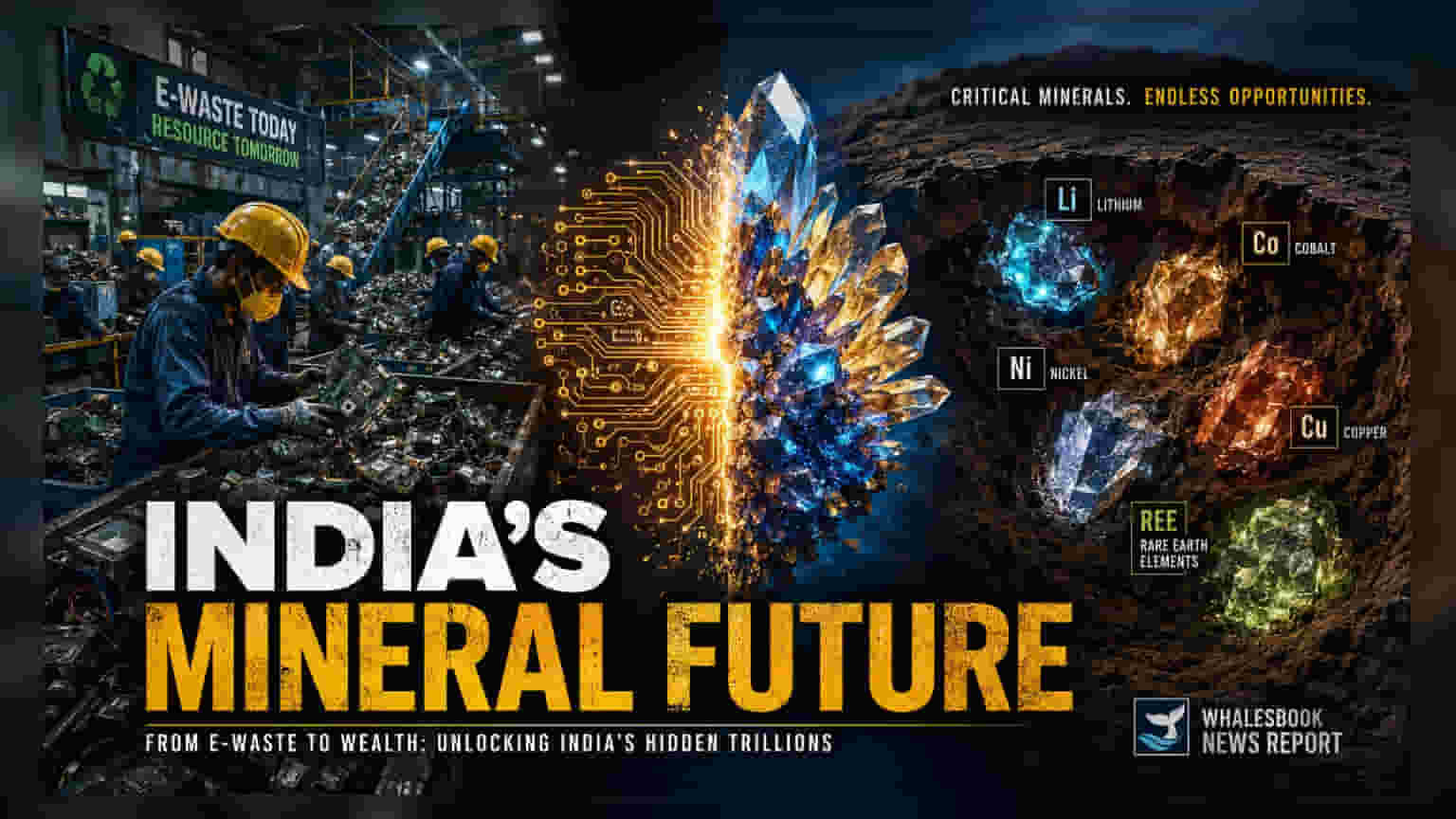
NITI Aayog is prioritizing the recycling of e-waste and mine tailings to secure critical minerals, aiming to bypass long domestic mining exploration timelines. The government is engaging industry giants like Coal India and Jindal Steel to build a scalable recovery ecosystem, which is essential for reducing import dependence in sectors like electronics and electric vehicles.
What Happened
India is shifting its strategy to secure critical minerals, which are essential for industries ranging from electric vehicles to defense and electronics. NITI Aayog has announced a focus on recycling e-waste, battery waste, and mine tailings as the most immediate solution to bridge supply gaps. While domestic mining exploration remains a long-term goal, the government has recognized that developing mineable reserves is a time-consuming process. The think tank is now actively working with major industrial players to build a commercially viable recycling framework that can reduce the country's heavy reliance on mineral imports.
Why Recycling is the Focus
India currently imports a significant portion of its critical minerals. Mining exploration, while crucial for long-term self-sufficiency, involves years of survey, land acquisition, and regulatory clearances before actual production begins. In contrast, recycling utilizes resources that are already extracted or available in waste streams, such as mine overburden, fly ash, and discarded electronics. This "urban mining" approach offers a faster route to supply chain security. By creating a robust ecosystem for recovering minerals from industrial byproducts, the government aims to lower the barrier for companies to enter the circular economy.
Industry Role and Pilot Projects
Several major Indian companies are participating in this push. A technical committee formed by NITI Aayog is evaluating the recovery potential of minerals from existing waste dumps. Major corporations, including Coal India, Singareni Collieries, Jindal Steel, and Adani, are part of these ongoing assessments. Neyveli Lignite Corporation (NLC India) has already demonstrated a proof of concept by recovering rare earth elements from fly ash. This success serves as a model that the government intends to scale across other industrial sectors, moving technologies from pilot stages to commercial operations.
Challenges in Mineral Recovery
While the recycling strategy offers potential, it faces several practical hurdles. Recovering minerals from complex waste streams requires advanced technology that is often still in the pilot stage. For these processes to be viable for large companies, the cost of extraction must be competitive with imported raw materials. Furthermore, building a formal collection network for e-waste and battery waste remains a significant challenge. Without a structured supply chain for the raw waste material, achieving the scale required for national mineral security will be difficult. Companies will need to invest in dedicated processing infrastructure, which could impact their near-term capital expenditure.
What Investors Should Monitor
Investors may watch for progress in three key areas. First, the transition of pilot-scale recovery projects to full commercial operations will be a critical indicator of success. Second, government incentives or policies that make domestic recycling more profitable than importing will be necessary to encourage corporate participation. Finally, the ability of companies like Coal India and Jindal Steel to integrate these recycling units into their existing operations without incurring high cost overruns will determine the long-term impact on their profit margins. The timeline for when these projects begin to contribute meaningfully to the companies' balance sheets remains the most important factor to track.