

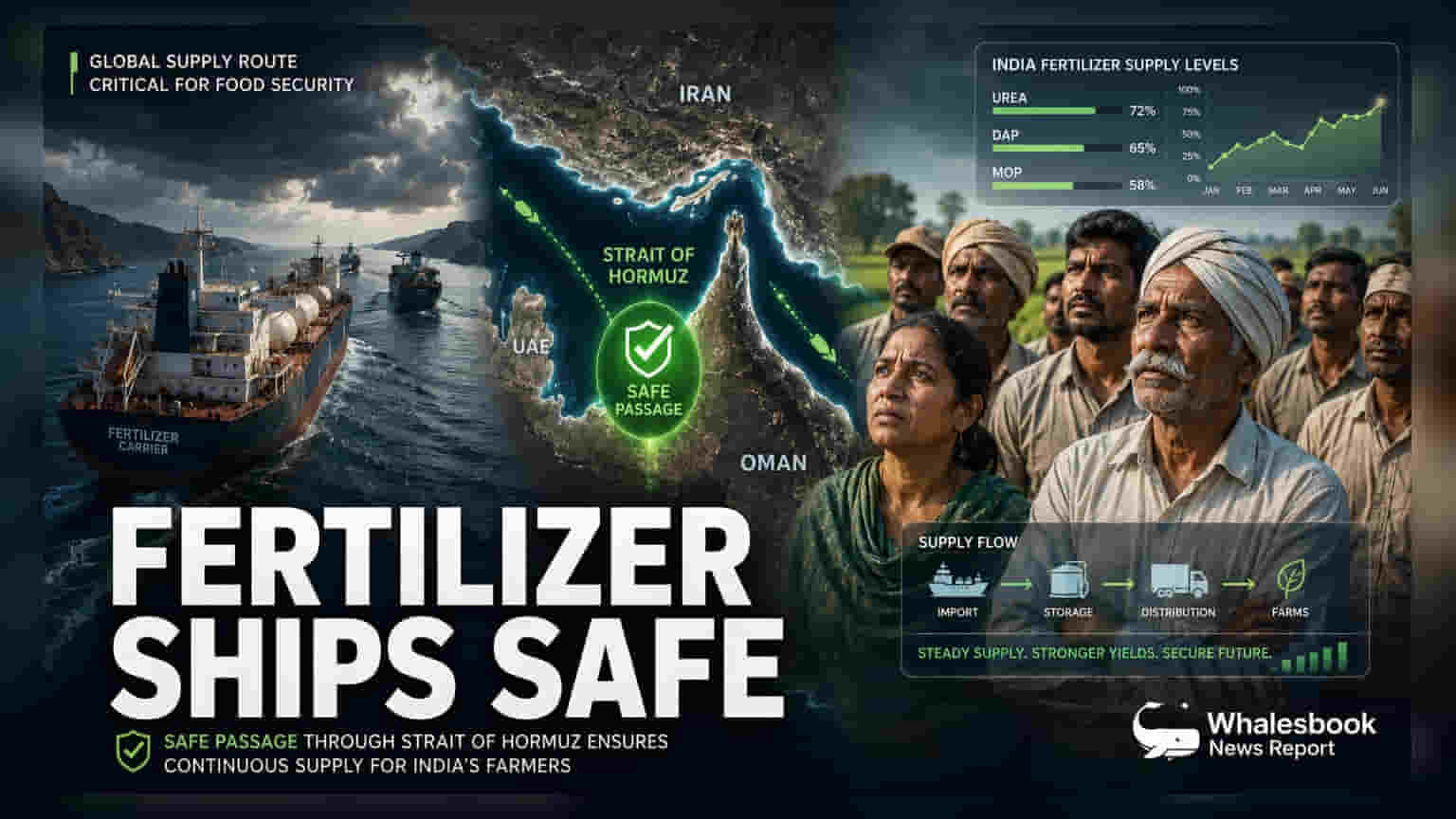
India has secured steady fertilizer imports despite regional instability in West Asia. The government confirms 15 vessels have safely passed the Strait of Hormuz, with domestic production also exceeding Q1 FY27 targets. This proactive inventory management aims to protect farmers from global price volatility and supply disruptions.
India’s fertilizer supply chain has shown resilience amid ongoing regional instability in West Asia. On Sunday, the Ministry of Chemicals and Fertilizers confirmed that 15 vessels carrying essential fertilizers and raw materials have successfully navigated the Strait of Hormuz, a critical maritime route. These shipments include 3.32 lakh tonnes of urea, 2.57 lakh tonnes of diammonium phosphate (DAP), and 1.11 lakh tonnes of sulphur, all of which are expected to arrive at Indian ports on schedule.
Diversified Imports and Inventory Strength
To mitigate potential shortages, the government has actively diversified its import sources. Urea is being sourced from a wide range of countries, including Oman, Malaysia, Russia, and the Netherlands. Similarly, DAP and NPK supplies are arriving from markets such as Morocco, the United States, and Saudi Arabia. As of July 2, 2026, the country holds a total fertilizer stock of approximately 163.35 lakh tonnes, covering over 50 percent of the annual demand. This buffer is designed to insulate the domestic market from global price spikes and transit delays that often accompany geopolitical tensions.
Domestic Production Reaches Full Capacity
Beyond import logistics, domestic manufacturing has provided a critical safety net. Union Minister J.P. Nadda reported that natural gas supplies to domestic fertilizer plants, which experienced a temporary dip, have been fully restored to 100 percent capacity. This recovery has enabled domestic plants to ramp up production significantly. In the first quarter of FY27, urea production reached 71.55 lakh tonnes, surpassing the target of 67.86 lakh tonnes. DAP production also outperformed expectations, reaching 9.84 lakh tonnes against a 8.61 lakh tonne target.
Investor Perspective on Supply Stability
For investors monitoring the agricultural and chemical sectors, these updates highlight the government's focus on securing raw material availability to stabilize domestic input costs. While global supply chain fluctuations can introduce volatility in raw material pricing, the return to full-capacity domestic production and a healthy inventory position are intended to support sustained demand from the agricultural sector. The key monitorable for the coming months will be the stability of these international transit routes and whether global fertilizer prices remain steady enough to maintain favorable operating margins for domestic producers. Investors may track future updates on inventory levels and any changes in government subsidy policies that could impact the sector's financial performance.