 Whalesbook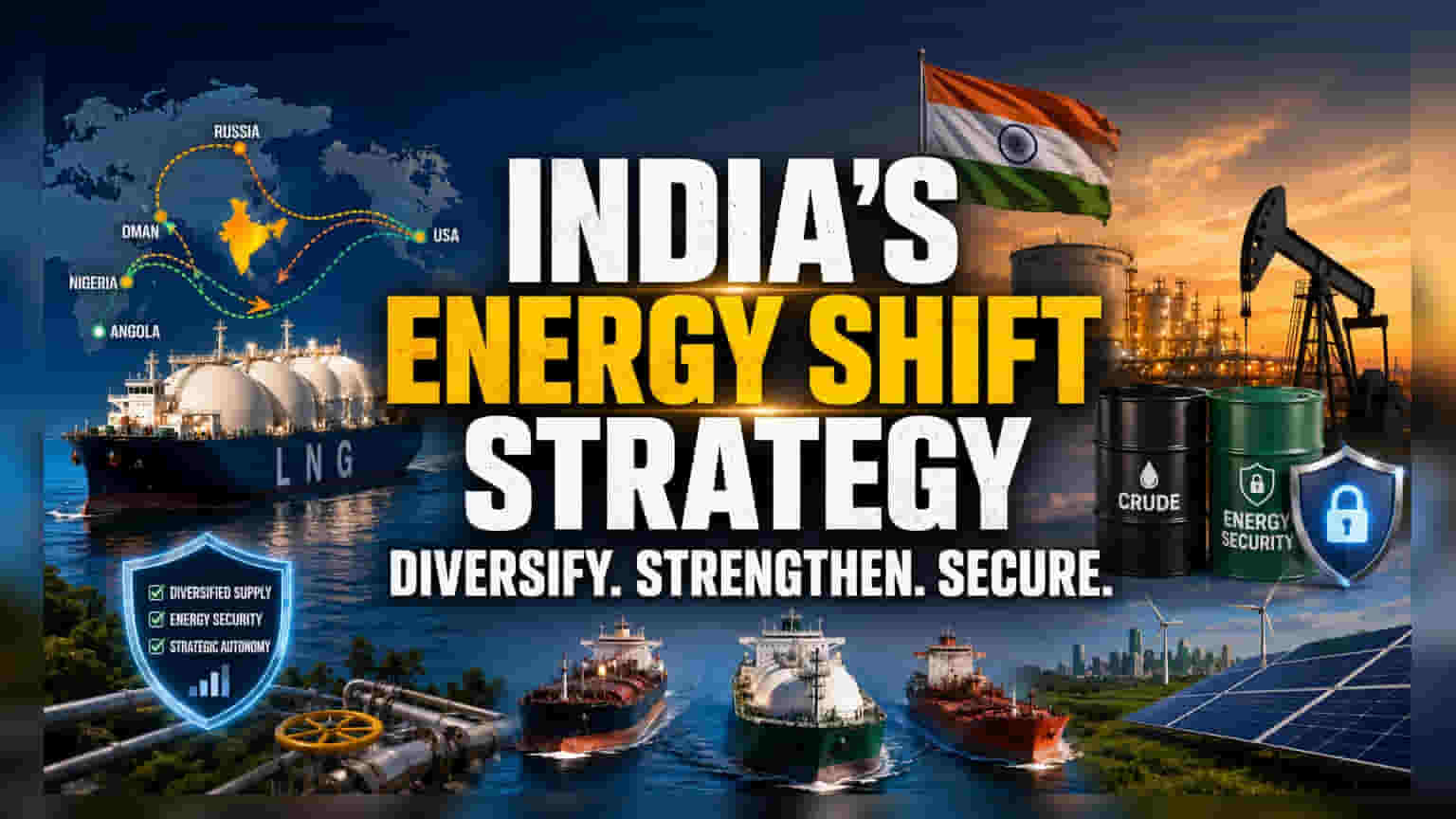


The Supply Chain Realignment
The stabilization of India’s energy inflows in May signals more than a mere return to pre-conflict volume levels. Following a period where March and April saw restricted access due to kinetic escalation in the Gulf, the current recovery is defined by a calculated transition away from long-standing regional concentration. Crude imports reached 4.9 million barrels per day (mbd), an 11.2% increase month-on-month, as refiners leveraged Russia’s continued position as a primary supplier—accounting for roughly 38% of total intake—to maintain refinery runs. This reliance remains a point of contention with the United States, yet domestic energy security necessitates this tactical flexibility.
The LNG Structural Pivot
Natural gas procurement has undergone a more radical, structural transformation than crude. Qatar, once the dominant provider of India’s liquefied natural gas (LNG), has seen its share collapse due to production disruptions and shipping constraints near the Persian Gulf. In a defensive, multi-year response, Indian importers like Petronet LNG have accelerated partnerships with Oman, Nigeria, Angola, and the United States. Oman has emerged as a cornerstone of this new strategy, supported by the recently implemented Comprehensive Economic Partnership Agreement (CEPA), which incentivizes duty-free trade and bolsters supply-chain resilience. This shift effectively decentralizes India’s energy procurement, reducing exposure to single-point maritime failures like the Strait of Hormuz.
The Forensic Bear Case: Structural Vulnerabilities
Despite the successful recovery in volumes, systemic risks persist. While diversification shields the economy from regional shocks, it introduces structural inefficiencies. Atlantic Basin suppliers and deeper-water sources naturally entail higher freight costs, longer voyage durations, and greater exposure to global maritime price fluctuations. Furthermore, the reliance on Russian crude—while currently providing a fiscal cushion—remains subject to evolving U.S. sanction waivers. Should the current administration in Washington move to fully revoke these allowances, Indian refineries may face severe margin compression. Additionally, the rapid shift to coal as a substitute for constrained gas during the recent crisis highlights a regression in India’s industrial decarbonization goals, creating long-term environmental and regulatory liabilities for domestic manufacturers.
Future Outlook: Strategic Autonomy
Policymakers remain committed to a long-term energy security agenda that prioritizes strategic petroleum reserves (SPR) and domestic capacity expansion. As India seeks to lead global oil demand growth through 2035, the emphasis will continue to shift toward high-reliability partners and the expansion of the domestic renewable mix. The current surge in imports reflects a nation transforming a tactical crisis into a broader effort to achieve structural energy independence, balancing the immediate need for affordable fuel against the rising necessity of geopolitical de-risking.