

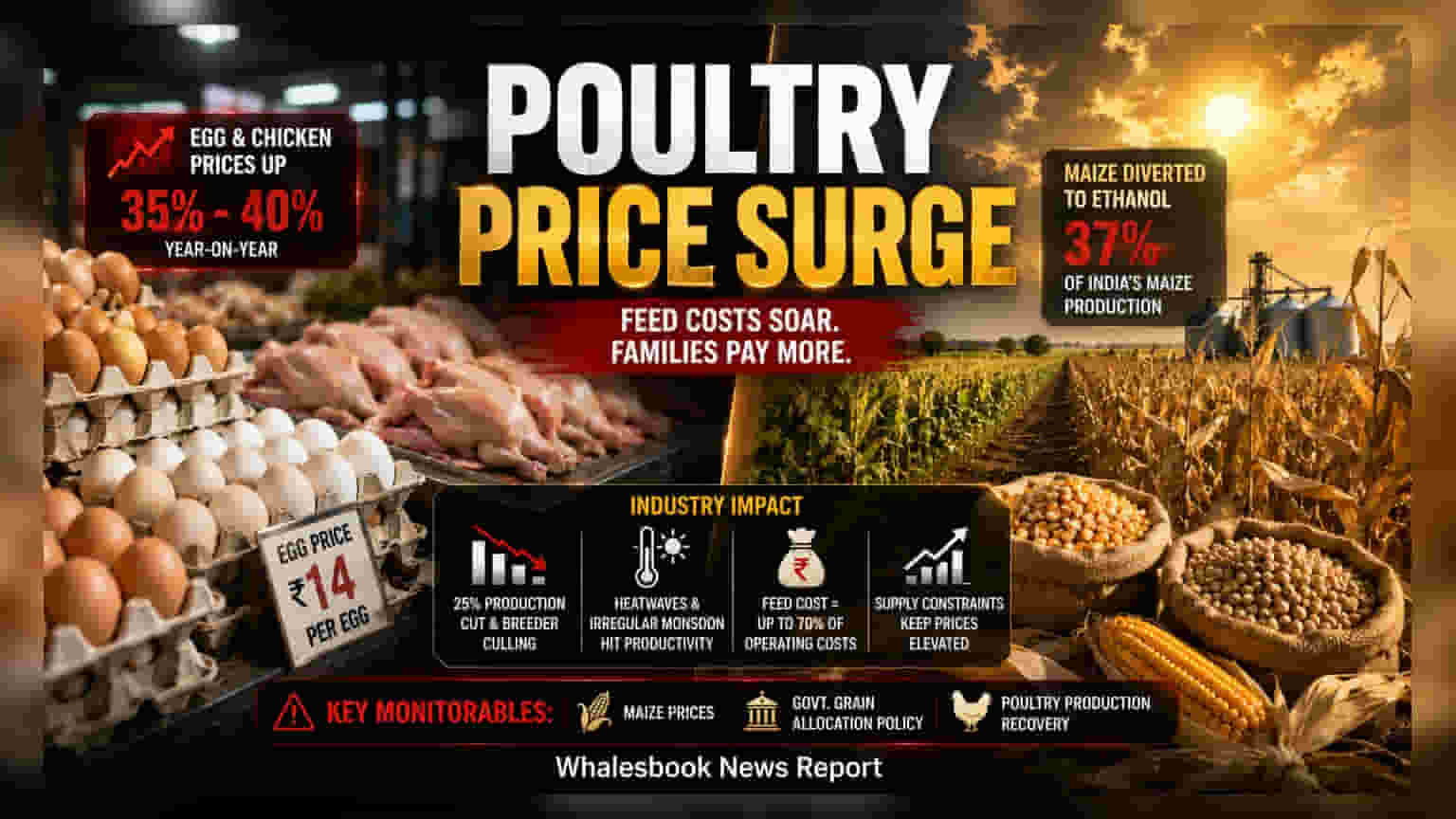
Retail egg and chicken prices in India have jumped 35-40% year-on-year, driven by record-high costs for maize and soybean feed. To manage collapsing margins, the industry has cut production by 25%, tightening market supply. This trend is putting pressure on the protein component of the Consumer Price Index, as farmers struggle with high input costs and fierce competition from ethanol manufacturers for grain supplies.
Retail prices for eggs and chicken across India have climbed sharply, with annual price increases now reaching between 35% and 40%. In many urban markets, the price of a single egg has approached ₹14, creating a noticeable impact on household protein budgets. This price surge is not merely a seasonal fluctuation but the result of a significant strain on the poultry production ecosystem, where the cost of feed accounts for up to 70% of total operating expenses.
The core of the problem lies in the skyrocketing prices of maize and soybean meal, the essential components of poultry nutrition. While the industry has always faced fluctuations in raw material prices, the current crisis is deepened by a structural shift in how maize is utilized within the country. Recent data indicates that approximately 37% of India's annual maize production is now being diverted to ethanol distilleries to support the government's biofuel blending mandates. This massive reallocation of grain has created a supply-demand mismatch, leaving poultry feed manufacturers struggling to source affordable raw materials.
Faced with a classic margin squeeze, poultry producers have begun to reduce their operations to avoid unsustainable losses. In June 2026, the All India Poultry Breeders’ Association and other industry bodies announced a coordinated 25% reduction in production, which includes the culling of parent breeder stocks. This is a significant move because breeder stocks are the foundation of the entire poultry supply chain; reducing them creates a lag that can take months to recover from. Because these birds were culled rather than reared, the industry is now dealing with an artificial supply constraint that is likely to keep prices elevated even if feed costs stabilize in the short term.
The production decline has been further complicated by environmental challenges. Prolonged heatwaves and erratic monsoon patterns throughout 2026 have impacted bird productivity, leading to lower yields and higher mortality rates. For smaller poultry farmers, who often lack the capital reserves to absorb these sustained price hikes, the situation has become particularly difficult. Many are operating at reduced capacity, and some have been forced to pause their operations entirely.
For investors and market observers, the situation highlights a complex tension between India's energy goals and food inflation. As the government continues to push for higher ethanol blending, the competition for maize is unlikely to diminish, keeping input costs for the poultry sector at higher levels than in previous years. The upcoming winter season, which typically sees a seasonal rise in demand for poultry products, will be a key period to watch. If supply remains constrained by the earlier culling of breeder stocks, retail prices may face further upward pressure. The most important monitorables in the coming months will be the trend in maize prices, any government adjustments to grain allocation policies, and signs of recovery in poultry production volumes.