

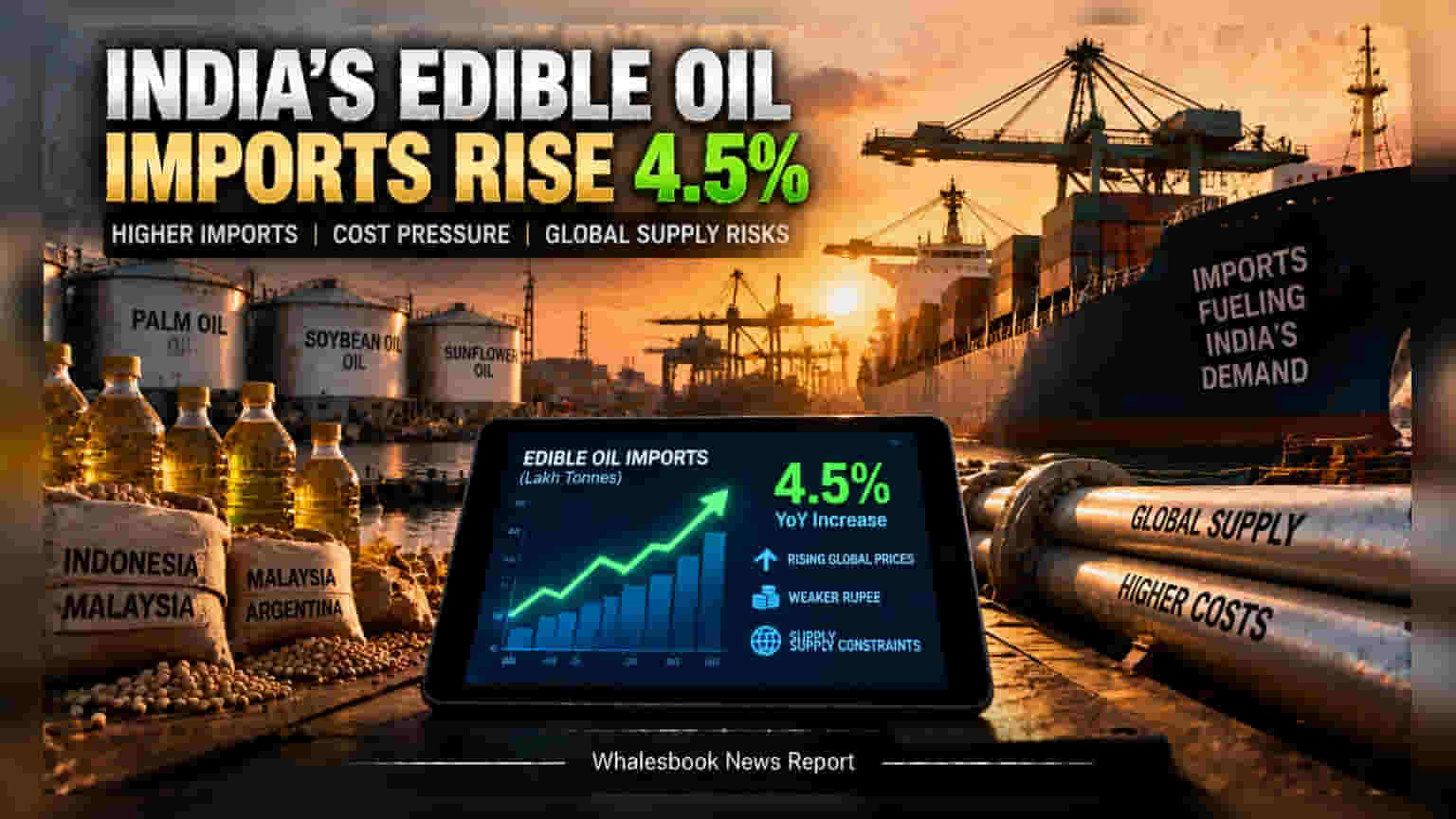
India’s edible oil imports grew 4.5% in the first 10 months of the 2025-26 oil year, with crude oil now making up 95% of the total. Domestic refiners face margin pressure as the rupee’s 9% depreciation inflates import costs.
India's dependence on imported edible oils continued to grow in the 2025-26 oil year. Data from the Solvent Extractors’ Association of India shows that imports reached 136.19 lakh tonnes in the first 10 months, marking a 4.5% year-on-year increase. This trend reflects the gap between domestic production and the country's rising consumption needs.
Strategic Shift to Crude Imports
A significant change in the import pattern is the move toward crude edible oils. Crude oil now accounts for 95% of total import volumes, compared to 87% in the previous year. Importers are increasingly choosing to bring in crude oil for domestic processing rather than importing already refined products. This shift generally benefits domestic refining capacity, allowing companies to add value locally. However, this strategy relies heavily on the steady availability of raw oils from global markets.
Financial Pressure on Refiners
While the shift to crude processing supports local value addition, the financial environment remains challenging for domestic refiners. The Indian rupee has depreciated by approximately 9% over the past year, significantly increasing the cost of landing these imports at Indian ports. Because edible oil is a commodity, refiners often struggle to pass these higher costs entirely to the consumer, which can put pressure on profit margins.
Adding to the cost burden, international market prices have also climbed. As of August 2026, global CIF prices—which include the cost, insurance, and freight—for crude sunflower oil increased by 18% compared to the same month last year. Similarly, crude palm oil and RBD palmolein saw price hikes of 9% and 10%, respectively. These elevated global prices, combined with currency weakness, mean refiners are paying more for their raw materials than they were a year ago.
Supply Dynamics and Risks
The global supply chain is also facing complexities that could impact future availability. Biofuel mandates in major exporting nations like Indonesia, Malaysia, and the United States are diverting a portion of vegetable oils away from food consumption and toward fuel production. This policy shift often tightens global supply, keeping prices volatile.
Domestically, reliance on imports is further compounded by inconsistent domestic oilseed crushing. Factors such as weather variability and monsoon patterns continue to affect domestic harvests, keeping the sector dependent on international suppliers like Argentina, Indonesia, and Malaysia. Additionally, geopolitical tensions in West Asia have pushed up freight and insurance costs, adding another layer of expense to the supply chain.
For investors, the key area to track remains the profit margins of edible oil refining companies. The ability of these firms to manage inventory costs effectively and pass on price increases to consumers will be crucial as they navigate high import costs and currency volatility.