

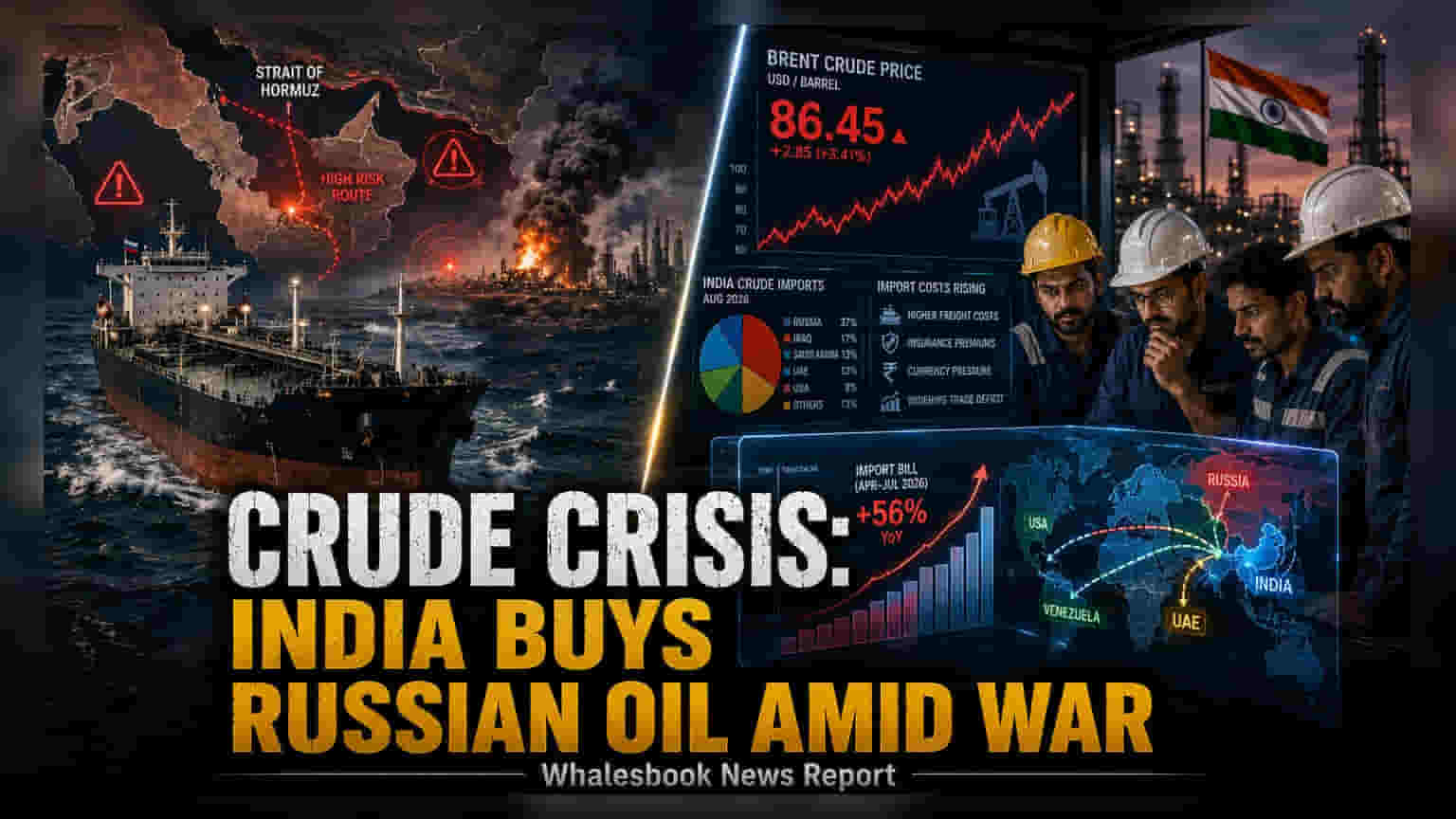
India is shifting its crude oil sourcing toward the UAE, Venezuela, and the US to bypass shipping disruptions caused by ongoing West Asia tensions. While Russia remains the top supplier, narrowing price discounts and rising freight costs are putting pressure on the nation's import bill. Investors should track how these higher costs affect domestic inflation and the country's fiscal deficit.
India is actively modifying its crude oil import strategy as geopolitical tensions in West Asia continue to disrupt traditional shipping routes. With transit through areas like the Strait of Hormuz becoming increasingly difficult and expensive, Indian refiners are turning to more diverse suppliers to ensure energy security. This shift involves balancing the need for reliable oil volumes with the rising costs of transporting fuel from further distances.
Russia Remains a Key Source Despite Challenges
Russia continues to hold its position as India’s largest crude oil supplier, providing approximately 2 million barrels per day as of August 2026. However, the dynamics of this trade are evolving. The deep discounts that previously made Russian crude highly attractive to Indian refiners have begun to narrow. Additionally, there is growing policy uncertainty regarding potential US measures, such as the proposed 'Lindsey O. Graham Sanctioning Russia and Iran Act of 2026.' This legislation could empower the US government to impose significant tariffs on countries importing high volumes of Russian oil, creating a new layer of risk that market participants are now tracking closely.
Rising Costs and Economic Impact
Moving away from traditional Middle Eastern suppliers to more distant sources like the United States, Venezuela, and South American nations brings logistical challenges. These routes often require longer travel times, leading to higher freight and insurance premiums. These expenses, combined with the volatility of global crude prices and a weaker rupee, have placed a strain on India's finances. Data from the April to July 2026 period showed that India’s crude oil import bill rose by over 56% compared to the previous year. This increase is a significant factor in the country's widening trade deficit and can influence domestic inflation if higher procurement costs are passed on to consumers.
Strategic Diversification to Ensure Supply
The move toward the United Arab Emirates, Venezuela, and the US is a calculated effort to mitigate the risk of supply blockages. The UAE, in particular, has become a more critical partner due to its robust pipeline infrastructure and ability to export oil from terminals located outside the immediate conflict zones. By broadening its list of suppliers, India aims to reduce its dependence on any single region, which is a common strategy to protect against regional instability.
Investors and market observers will need to watch several key factors in the coming months. These include any further escalation of the West Asia conflict, changes in global crude oil prices, and the progress of the potential US tariff legislation. Additionally, the government’s ability to manage the current account deficit while keeping domestic energy prices stable will be a primary indicator of economic health in the face of these external pressures.