 Whalesbook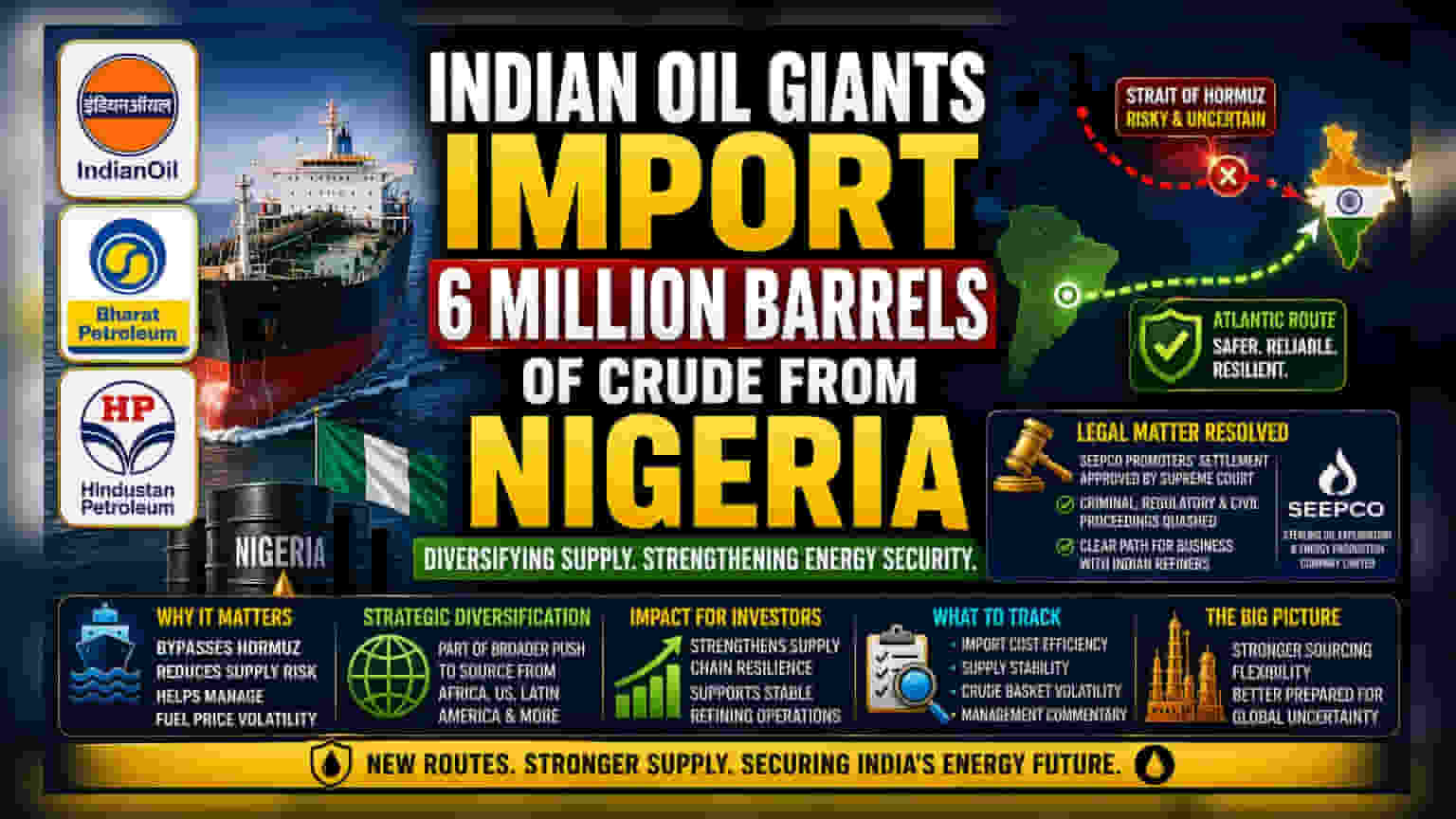


Indian state-run refiners have secured 6 million barrels of crude oil from Nigeria to reduce reliance on the volatile Strait of Hormuz. This supply diversification move comes amid heightened geopolitical tensions in West Asia and follows a significant legal development regarding the Nigerian supplier, SEEPCO.
What Happened
India’s major state-run oil companies—Indian Oil Corporation (IOCL), Bharat Petroleum Corporation (BPCL), and Hindustan Petroleum Corporation (HPCL)—have sourced nearly six million barrels of crude oil from Nigeria-based Sterling Oil Exploration & Energy Production Company Limited (SEEPCO). These deliveries, which took place between March and May 2026, represent a tactical shift to secure energy supplies outside of the traditional Gulf routes.
Why It Matters For Investors
The Strait of Hormuz is a vital maritime choke point through which a significant portion of global seaborne crude oil passes. For India, which relies on imports for over 85% of its crude needs, any disruption in this waterway can lead to higher fuel prices, increased inflation, and supply uncertainty. By sourcing oil from Nigeria, which reaches India via Atlantic shipping routes, state refiners are effectively bypassing the Hormuz waterway. This diversification helps strengthen supply chain resilience, allowing companies to maintain operations even if regional tensions in West Asia disrupt standard trade paths.
The Business And Regulatory Context
SEEPCO is a long-standing producer in Nigeria and is owned by the Sandesara brothers, Nitin and Chetan Sandesara. For investors, the company's background is a critical monitorable. Historically, the Sandesara group was involved in extensive legal and regulatory proceedings in India regarding alleged bank loan defaults and money laundering. However, in April 2026, the Supreme Court of India approved a full and final settlement proposed by the promoters. Following the payment of a significant settlement amount to secured lender banks, the court directed that related criminal, regulatory, and civil proceedings be quashed, and the matter was formally closed.
This resolution has paved the way for the company to resume active business operations with Indian public-sector entities. For the refiners involved, the arrangement provides access to a consistent supplier, while the recent legal closure aims to remove the immediate governance and counterparty risks that previously hindered engagement.
Peer And Sector Check
The energy sector remains sensitive to geopolitical shifts. Many global importers are currently re-evaluating their supply chains to prioritize security. Indian state refiners have been actively exploring diverse geographies—including the United States, Latin America, and Africa—to reduce dependence on any single region. This trend toward geographical diversification is a broader industry effort to manage the potential for price shocks and supply blockades. Unlike their peers who might remain heavily concentrated in Middle Eastern sources, companies that successfully broaden their supplier base may be better equipped to manage volatility in their raw material costs.
What Investors Should Track
Investors may monitor the following factors in the coming quarters:
- Import Cost Efficiency: Whether the shift to Atlantic-sourced crude remains cost-effective compared to traditional Middle Eastern grades, considering transport and insurance costs.
- Supply Stability: Any future updates on the volume and frequency of supply from SEEPCO and other non-Gulf partners.
- Crude Basket Volatility: How the overall import cost (the Indian crude basket) behaves as the company executes its diversification strategy.
- Management Commentary: Further statements from Indian refiners regarding their long-term sourcing strategy and any future reliance on non-traditional oil suppliers.
The final benefit of this strategy for shareholders will depend on the refiners' ability to maintain stable margins while navigating a complex global oil market.