

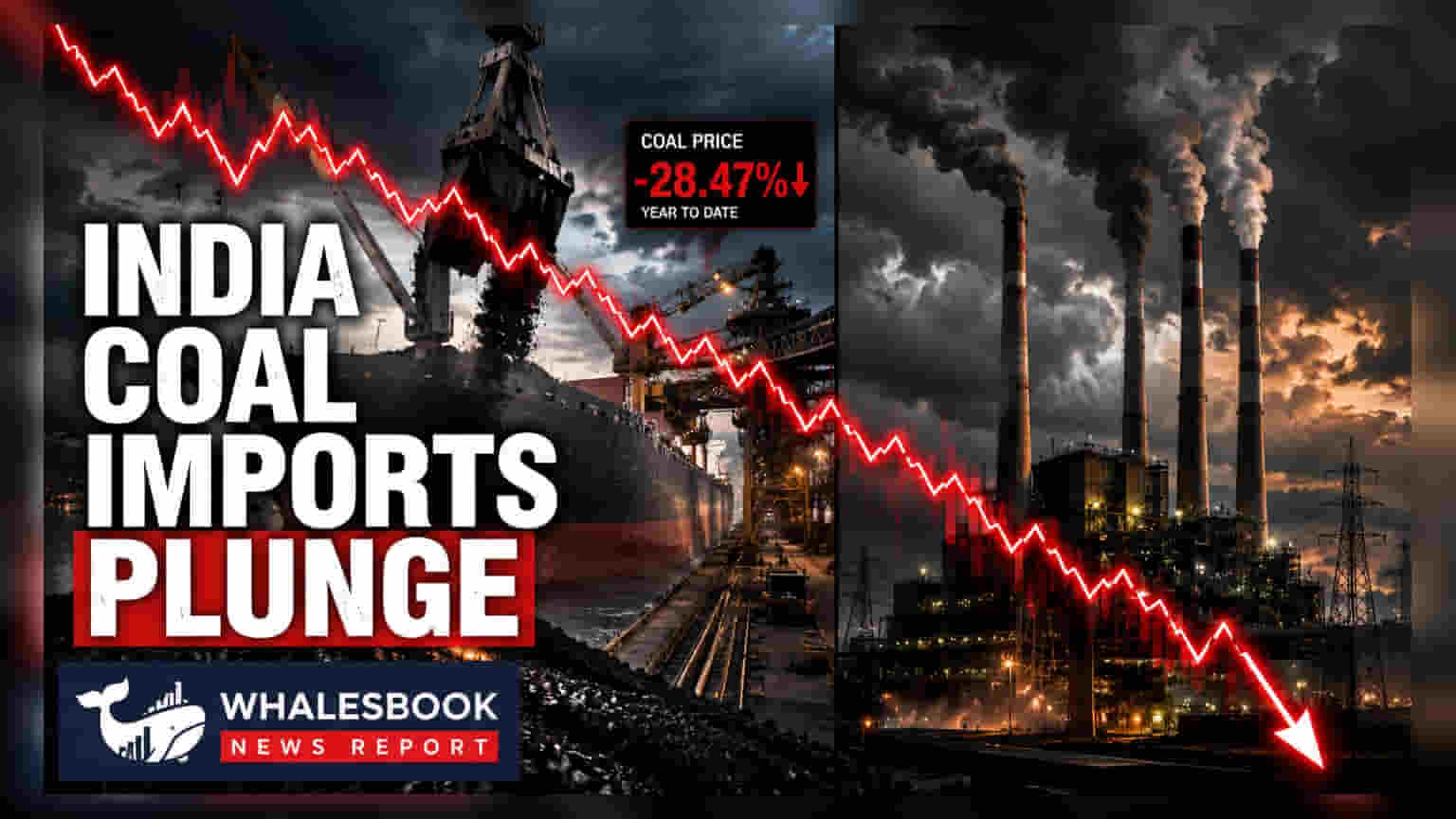
India's coal imports fell to 21.13 million tonnes in April 2026, a 13% decline compared to the previous year, even as power demand jumped by 9%. This shift underscores the increasing ability of domestic mines to meet national energy needs, reducing the economy's reliance on costlier foreign fuel for thermal power generation.
What Happened
In April 2026, India recorded a 12.95% year-on-year decline in coal imports, bringing the total to 21.13 million tonnes compared to 24.27 million tonnes in April 2025. This decrease is notable because it occurred while the country's power demand surged by nearly 9%. The data indicates that domestic coal supply has grown sufficiently to displace a significant portion of imported fuel, particularly for power generation.
Impact on Power Companies
The decline was sharpest in the power sector, where imports fell by nearly 25%. Plants that specifically require imported coal saw a 27.45% reduction, while domestic plants used 11.26% less imported coal for blending. For investors in the power sector, this transition toward domestic coal is a key variable. Domestic coal is generally priced lower and is more stable than imported coal, which fluctuates based on global supply chains and shipping costs. Higher reliance on domestic supply, primarily from producers like Coal India, helps power generators manage their fuel costs and operating margins more predictably.
The Divergence in Steel
While thermal coal imports for power declined, coking coal imports rose by 1.34% to 6.01 million tonnes. This highlights a persistent structural difference in the commodities market. Unlike thermal coal, which India produces in large quantities, coking coal—a critical raw material for steel manufacturing—remains scarce within the country. Consequently, steel producers like JSW Steel and Tata Steel continue to rely heavily on international markets. Any volatility in global coking coal prices can directly impact the cost of production for these companies, regardless of improvements in domestic thermal coal availability.
Why the Shift Matters
This trend toward higher self-reliance in thermal coal serves as a buffer against global commodity price shocks. In previous years, high import costs and supply shortages often pressured the margins of power generation companies. If domestic production continues to meet the rising demand, utility companies may see better control over their fuel expenditure. However, the reliance on imported coking coal keeps the steel sector exposed to international price cycles.
What Investors Should Track
Investors may monitor monthly coal production and offtake data from Coal India to assess if the domestic supply momentum continues. For the steel sector, the key monitorable remains the trend in global coking coal prices, as companies have limited domestic alternatives. Additionally, analysts will look for management commentary from power utility companies regarding the sustainability of their domestic fuel mix and any changes in logistics that might affect long-term cost structures.