

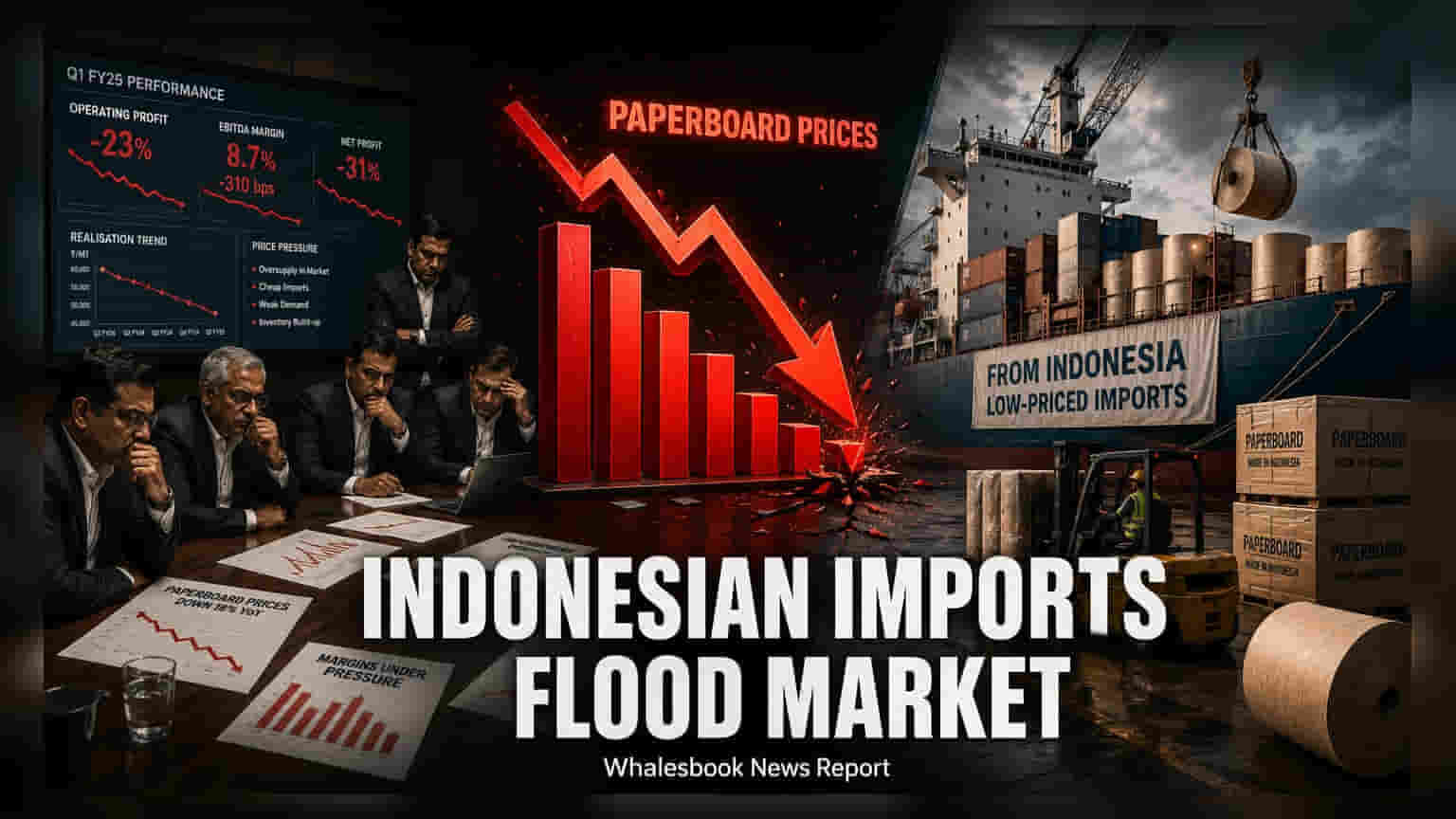
The Indian Paper Manufacturers Association is pushing for swift anti-dumping duties on Indonesian paperboard after producers faced Rs 242 crore in losses during FY2024-25. With a critical price protection measure set to expire on September 30, 2026, domestic companies are waiting for government action to curb cheap imports.
The Indian Paper Manufacturers Association (IPMA) has urgently requested the government to impose anti-dumping duties on imports of Virgin Multi-Layer Paperboard from Indonesia. This move aims to protect domestic paper mills from what the industry describes as unfair competition from low-priced foreign products.
The Directorate General of Trade Remedies (DGTR), the government body responsible for investigating trade practices, has already completed a study and recommended the implementation of these duties. The suggested levies range from USD 261 to USD 376 per metric tonne, depending on the specific producer. The industry is pushing for these measures to be finalized quickly, as the current interim safety measure—a Minimum Import Price of Rs 67,220 per metric tonne—is set to expire on September 30, 2026.
Financial data highlights the strain on domestic manufacturers. According to the IPMA, the influx of cheaper imports caused estimated losses of Rs 242 crore for the domestic Virgin Paperboard industry during the 2024-25 financial year. The DGTR investigation found that the volume of these imports surged dramatically, rising from just 296 tonnes in FY2021-22 to 62,935 tonnes in FY2024-25. During this same period, the price of these imports dropped by 25 percent.
This pricing pressure forced Indian companies to lower their own prices, which impacted their profit margins. For investors, this situation highlights the ongoing struggle between domestic manufacturing costs and cheaper global supplies. Companies in the paperboard sector, such as ITC, JK Paper, and Century Pulp & Paper, often face challenges when import prices fall below their cost of production. The imposition of anti-dumping duties is intended to level the playing field by raising the effective cost of these imported goods, potentially allowing local manufacturers to restore or protect their pricing power.
However, there is a risk factor for downstream users, such as packaging converters and consumer goods companies. If duties are implemented, the cost of raw materials for these businesses may increase, as the price of imported paperboard will rise. Investors will need to track the government's official notification, as the decision will determine the future competitive landscape for paper manufacturers and their downstream clients in the Indian market.