

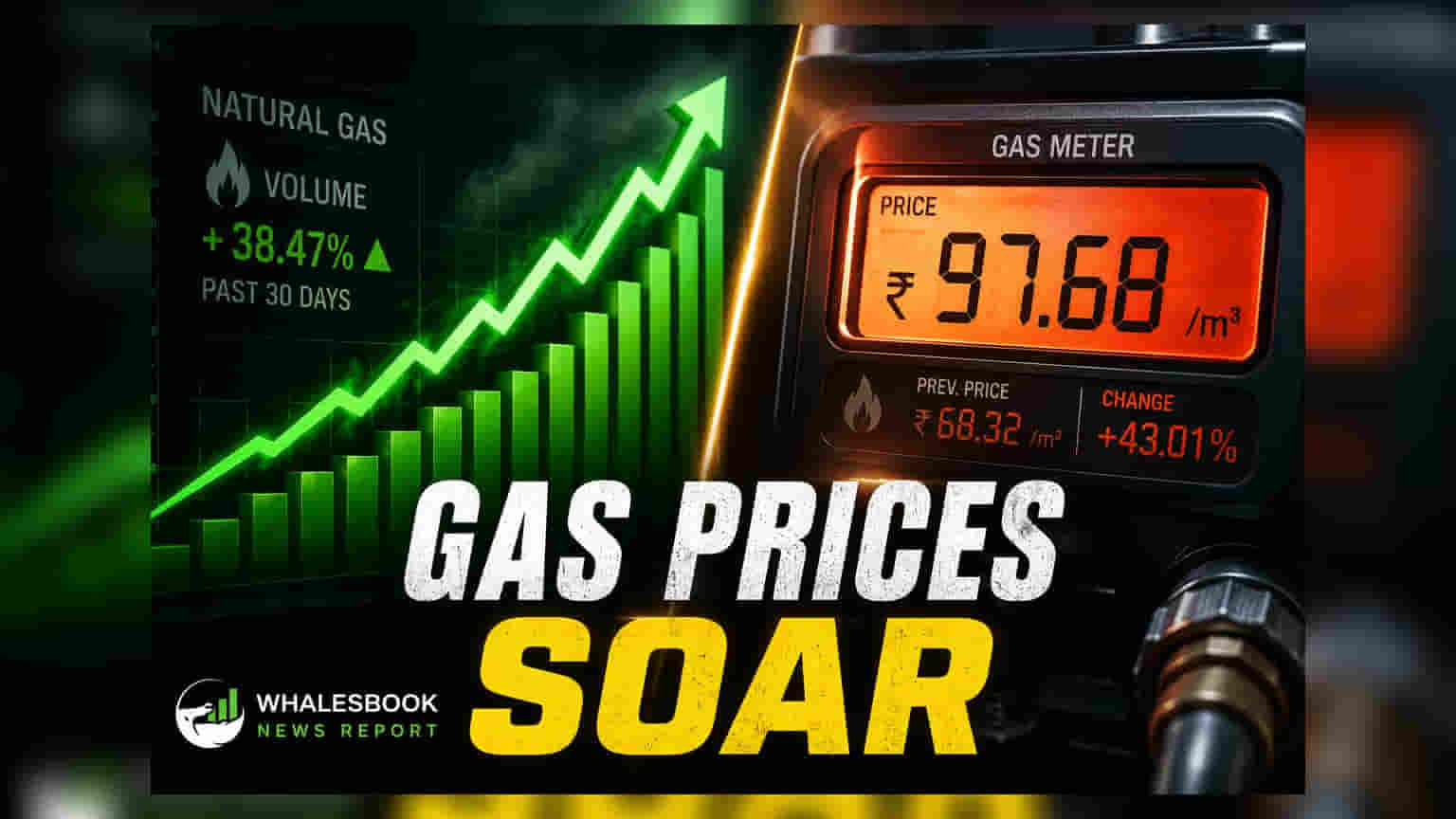
The Indian Gas Exchange (IGX) saw a 48% jump in volumes during Q1 FY27, reaching 27.48 million MMBtu. This growth was paired with a 79% year-on-year surge in benchmark gas prices for June. Investors may track whether higher prices and increased demand from city gas distributors sustain this momentum through the coming quarters.
The Indian Gas Exchange (IGX) reported a significant increase in its trading activity for the first quarter of the 2027 financial year. Total volumes traded on the exchange reached 27.48 million MMBtu, reflecting a 47.94% increase compared to the previous quarter and a 11.91% rise over the same period last year. This performance highlights the exchange's growing role in the nation's energy trading landscape as it facilitated 434 trades during the April-June period.
Price Trends and Market Drivers
The volume growth occurred alongside a sharp rise in gas prices. In June, the exchange's benchmark gas price, known as GIXI, averaged ₹1,767 or approximately $18.61 per MMBtu. While this price level remained largely consistent month-on-month, it represents a substantial 78.72% increase compared to June of the previous year. The exchange now operates across 19 delivery points, which include major LNG terminals and domestic gas-field landing locations, allowing it to cater to a diverse base of buyers.
Shift in Traded Gas Composition
A key aspect of the exchange's performance this quarter was the product mix. Free-market gas, which is not subject to government-mandated ceiling prices, captured 52.61% of the total traded volume for the quarter. The remaining 47.39% consisted of domestic gas from high-pressure, high-temperature (HPHT) fields. In June specifically, city gas distribution companies remained major participants, as they rely on the exchange to secure supplies for piped natural gas and CNG requirements.
Considerations for Market Participants
While the year-on-year growth in volumes and prices is notable, investors may note that June volumes saw a 23.87% dip compared to the figures recorded in May. Future trends for the exchange will likely depend on the stability of global gas prices, as the GIXI benchmark is sensitive to international market movements. Additionally, the continued expansion of delivery points and the adoption rate of the exchange by industrial consumers and city gas providers will be important factors to monitor. The exchange’s ability to maintain high volumes despite the significant spike in benchmark pricing suggests a steady demand for gas across the country, though profitability and market share will remain subject to supply-side constraints and government policy on domestic gas allocation.