

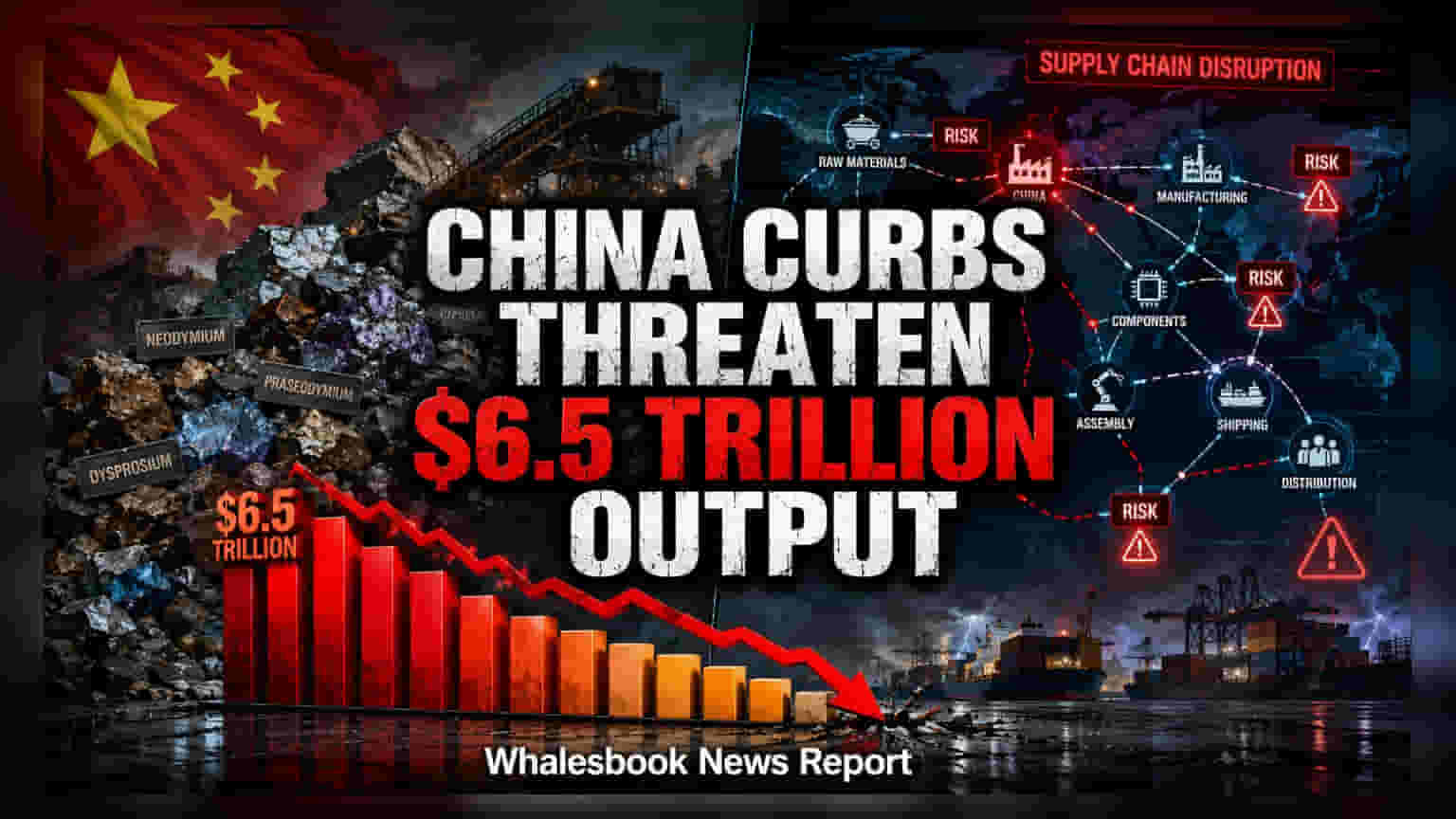
Potential export restrictions on rare earth minerals from China could disrupt $6.5 trillion in global production, according to the International Energy Agency. The IEA has recommended a $9.2 billion multilateral stockpiling program to safeguard supply chains against geopolitical risks and minimize economic fallout.
The International Energy Agency has issued a stark warning regarding the global dependency on concentrated sources for critical minerals. With China potentially tightening export controls on rare earth materials, industries ranging from electronics to renewable energy and defense face significant supply chain uncertainty. According to the IEA, the economic value of downstream production exposed to these potential disruptions is estimated at $6.5 trillion annually.
Strategic Stockpiling to Mitigate Supply Shocks
To address these vulnerabilities, the IEA has proposed the creation of a coordinated, multilateral stockpiling system for 11 essential, high-risk materials. This initiative would require an upfront capital outlay of approximately $9.2 billion. While this figure may seem substantial, the agency highlights that the potential economic loss from a major supply disruption far exceeds the cost of establishing this strategic reserve. The projected net annual maintenance cost for such a program is estimated at $900 million, which the IEA characterizes as a necessary expense to ensure industrial stability.
Geopolitical Risks and the Mineral Security Premium
Supply chain concentration has long been a concern, but the IEA noted that theoretical risks are becoming reality as countries like China, the Democratic Republic of Congo, and Zimbabwe implement various export limitations. For manufacturers and investors, these actions represent a shift in the global trade environment where access to raw materials is increasingly tied to geopolitical policy. IEA Director Fatih Birol has suggested that companies and governments should view the higher costs of sourcing minerals from more diversified, stable regions as a mineral security premium. This approach treats supply chain diversification as an insurance policy rather than merely an added expense.
For investors monitoring sectors such as electric vehicle manufacturing, advanced electronics, and clean energy, this development underscores the importance of tracking supply chain resilience. Companies with diversified supplier bases or significant internal stockpiles may be better positioned to navigate potential raw material shortages compared to peers heavily dependent on single-source origins. The next phase for this proposal will likely involve high-level discussions among member nations regarding the feasibility and funding structure of a coordinated stockpiling framework. Market observers will be monitoring whether governments move toward these policy recommendations or if industries continue to manage risks through private inventory accumulation.