 Whalesbook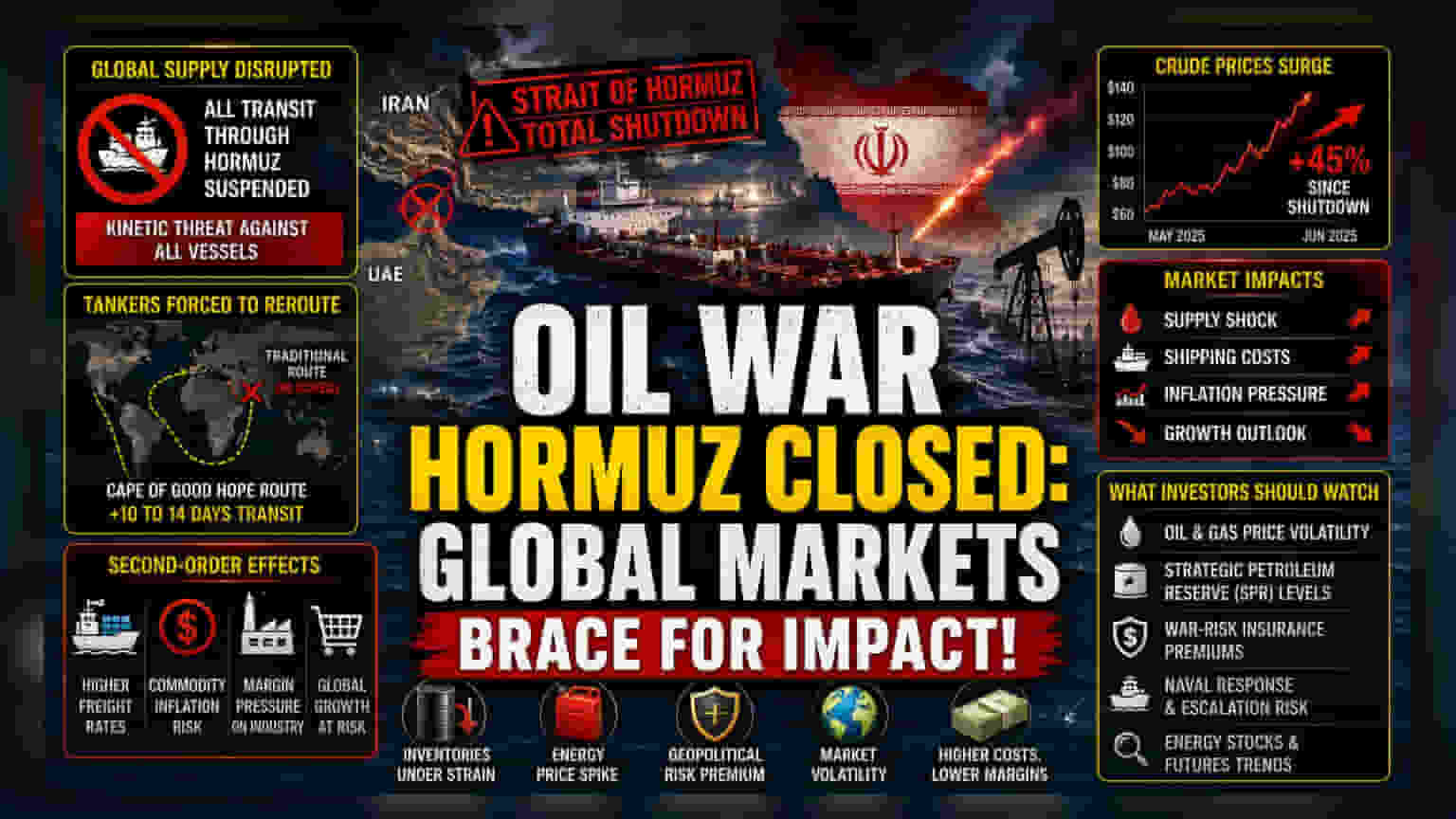


Iran has shuttered the Strait of Hormuz to all commercial traffic, triggering an immediate volatility spike across global energy markets. This move, a direct response to recent U.S. military strikes, threatens approximately 20% of the world's daily oil and LNG supply, raising urgent concerns regarding shipping insurance premiums, supply chain continuity, and a potential acceleration of global inflationary pressures.
The Geopolitical Supply Shock
The total cessation of transit through the Strait of Hormuz represents a structural break in global energy logistics. Unlike previous intermittent restrictions, the current mandate from Tehran includes a kinetic threat against any vessel attempting passage. This development forces an immediate rerouting of tanker traffic, drastically extending transit times and ballooning operational costs. As tankers are diverted around the Cape of Good Hope, the ensuing capacity crunch in the global shipping fleet is likely to exacerbate freight rates, creating a second-order inflation effect on commodities beyond just crude oil.
Market Mechanics and Risk Premiums
Energy markets are currently pricing in a severe supply-side contraction. Historical data from similar closures earlier this year demonstrates that market participants often overreact to the initial news, leading to extreme bid-ask spreads and liquidity droughts. While the current price action reflects the immediate risk of physical supply loss, the underlying market concern remains the sustainability of global inventories. If the blockade holds, the depletion of strategic petroleum reserves (SPR) in consuming nations will likely become a primary focus for traders, shifting the narrative from a short-term geopolitical event to a long-term supply deficit scenario. Competing energy hubs are already seeing increased volume as buyers scramble to secure non-Middle Eastern supply, leading to a temporary divergence in regional pricing benchmarks.
The Forensic Bear Case: Structural Weaknesses
The current situation poses a systemic threat to global economic stability, particularly for emerging markets reliant on energy imports. A prolonged closure functions as a de facto tax on the global economy, directly compressing margins for manufacturing and logistics firms that cannot pass on the volatile energy costs. Furthermore, the reliance on a single, narrow maritime corridor remains the most critical vulnerability in the global energy network. The U.S. military’s doctrine of 'self-defense' strikes has yet to demonstrate a capability to deter the IRGC from targeting the waterway, suggesting that the risk of further, more unpredictable escalation remains high. Unlike previous conflicts where back-channel diplomacy provided a clear path to de-escalation, the current total suspension of negotiations leaves markets with no tangible signal of when the blockade might be lifted.
Forward Outlook
Institutional analysts are shifting their focus to the potential for a coordinated international naval response, which could either alleviate supply pressures or exacerbate the conflict. Traders should monitor insurance underwriters for any surge in war-risk premiums, as this is often a leading indicator of how long market participants expect the disruption to persist. With no clear diplomatic exit strategy currently in sight, the volatility in crude and natural gas futures is expected to remain elevated until physical transit patterns stabilize or a new, more robust ceasefire framework is formalized.