 Whalesbook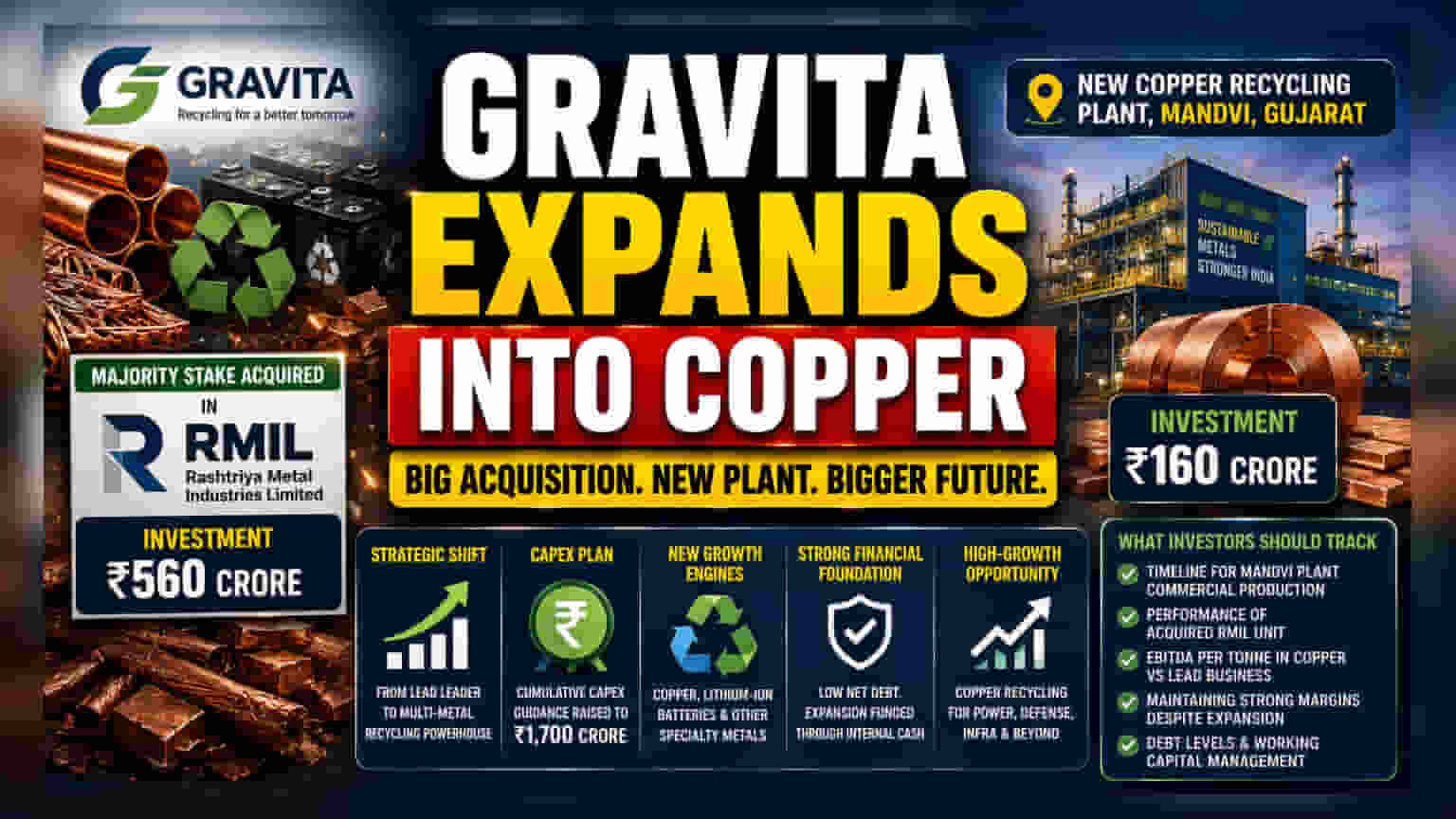
Gravita India is expanding into the copper recycling space through the acquisition of Rashtriya Metal Industries and a new facility in Gujarat. With a revised ₹1,700 crore capex plan for FY29, the company aims to diversify beyond its core lead recycling business. Investors should monitor the integration of this new business, execution timelines, and potential margin trends in the copper segment.
What Happened
Gravita India Limited, a key player in the global recycling sector, has initiated a significant expansion into the copper and copper alloy market. The company has acquired a majority stake (approximately 99%) in Rashtriya Metal Industries Limited (RMIL) for a total investment of about ₹560 crore. Alongside this acquisition, Gravita has announced plans to set up a new copper recycling plant in Mandvi, Gujarat, with an estimated investment of ₹160 crore.
This move marks a major shift in the company's growth strategy. Historically known for its dominance in lead recycling, Gravita is now diversifying its product portfolio to include copper, lithium-ion battery recycling, and other specialty metals.
Why This Matters For Investors
The acquisition and the new facility are part of an ambitious capital spending plan. Gravita has raised its cumulative capital expenditure (capex) guidance to ₹1,700 crore through FY29 to support this expansion. For investors, this represents a transition from a lead-focused company to a broader, multi-metal recycling platform.
Copper recycling is a high-entry-barrier segment, and by acquiring an established player like RMIL, Gravita aims to fast-track its entry into specialized sectors such as electrical equipment, power infrastructure, and defense. If successful, this strategy could help the company build a new revenue stream that complements its existing recycling business.
The Financial Context
Gravita has historically maintained a healthy financial profile with low net debt levels. The management has indicated that the planned expansion will be largely funded through internal cash flows, which helps in limiting the need for heavy borrowing. However, such large-scale capital deployment always brings a test of execution. While the company has a strong track record in lead recycling, expanding into new metals requires the team to prove its ability to replicate that success in the copper segment.
Investors may note that the company’s ability to manage its working capital will be critical. The copper business, similar to other metal recycling operations, requires managing raw material imports and price volatility. Therefore, sustaining strong margins in this new segment will be key to long-term profitability.
Risks and Market Context
While the expansion looks promising on paper, it comes with inherent risks. The recycling sector is sensitive to commodity price swings and demand cycles. Any delay in commissioning the new Gujarat plant or challenges in integrating the newly acquired RMIL operations could impact the projected returns.
Recently, the stock has faced some market pressure, reflecting broader concerns about margin compression in the recycling industry and the general volatility in mid-cap stocks. Investors should be aware that aggressive expansion plans, while growth-oriented, also demand constant monitoring to ensure that the new assets contribute to profit margins and are not just adding to volume growth.
What Investors Should Track Next
Going forward, the key monitorables for shareholders include the timeline for the commercial production at the new Mandvi facility and the operational performance of the acquired RMIL unit. Specifically, look for management commentary in future earnings calls regarding the 'EBITDA per tonne' in the copper segment compared to their core lead business.
Maintaining stable margins, effective integration of the copper business, and the ability to keep debt levels low despite the increased capex will be the primary factors that the market will use to judge the success of this strategic shift.