

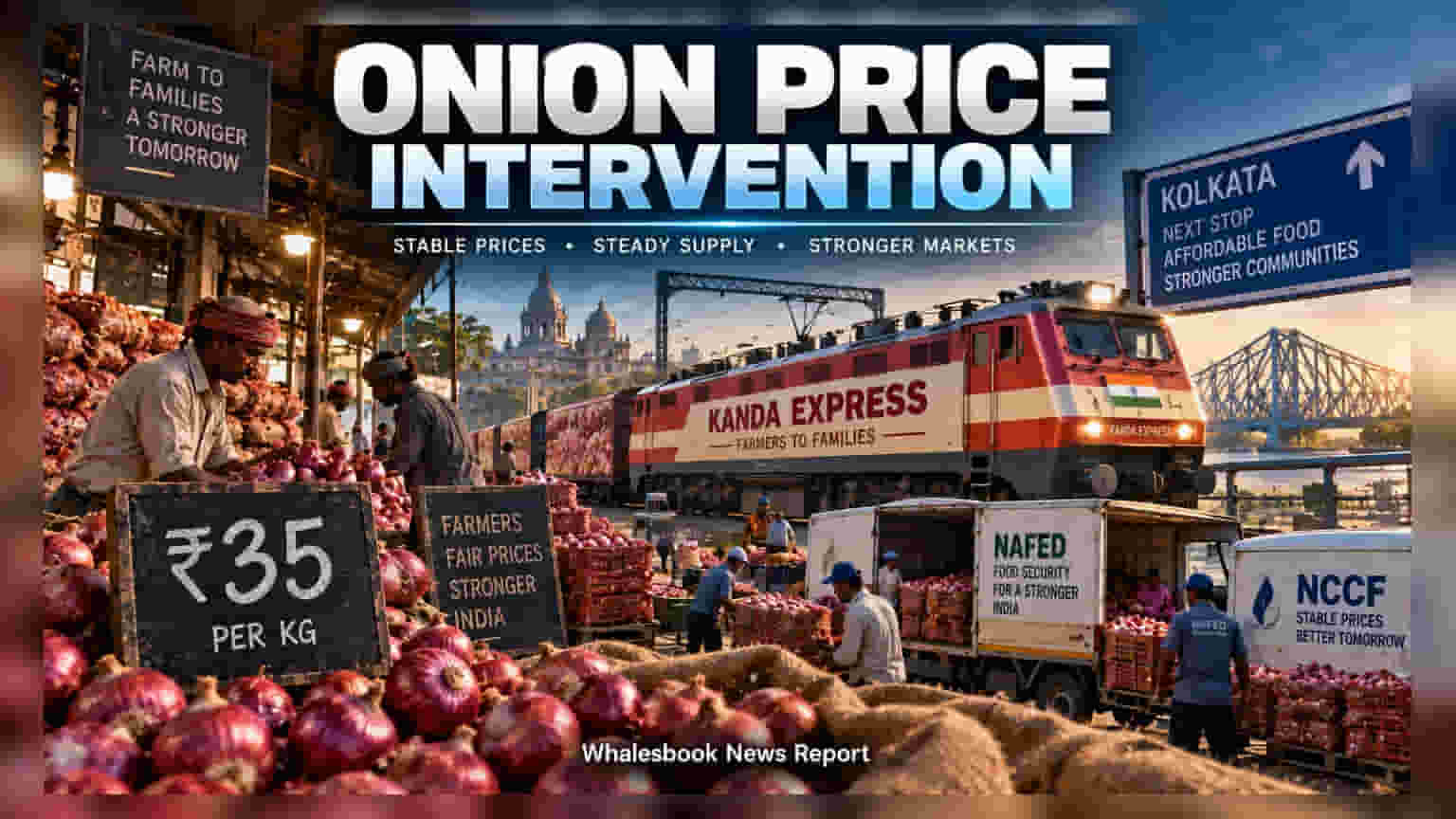
The central government is boosting onion supplies to West Bengal using the 'Kanda Express' rail service to control festive price hikes. By selling onions at a subsidized rate of ₹35 per kg through NAFED and NCCF, authorities aim to cool retail inflation before Dussehra. This intervention, part of a wider national price stabilization strategy, targets 100+ cities to balance local market demand.
The central government is stepping up the supply of onions to West Bengal, deploying the dedicated 'Kanda Express' rail network to stabilize retail prices ahead of the Dussehra festival. The initiative provides onions to consumers at a subsidized rate of ₹35 per kg, addressing rising costs in Kolkata and surrounding districts.
Logistic efficiency is central to this move. Transporting perishables like onions by road can lead to spoilage and higher transit times, which often inflates costs by the time goods reach the end consumer. By shifting to rail, authorities aim to ensure fresher produce arrives faster, reducing transit losses and maintaining consistent supply levels in urban markets. The latest consignment, supported by the government's Price Stabilization Fund, is scheduled to reach Kolkata by September 24.
Distribution is handled by NAFED and NCCF, which use mobile vans to sell directly to the public. These agencies are also looking to partner with state-run retail chains like Sufal Bangla to reach more consumers. This direct-to-market approach is designed to cut out middlemen, who often widen the gap between wholesale mandi prices and retail prices during festive periods.
This intervention is part of a broader national strategy that began on August 24, aimed at curbing food inflation, a significant component of the consumer price index. Onion prices are historically sensitive during this season as fresh harvests are yet to fully hit the markets, and festive demand spikes. With operations already active in over 100 cities nationwide, early data suggests the policy is helping to stabilize prices in states like Delhi, Uttar Pradesh, and Bihar.
While the intervention provides relief, the long-term price trend depends on supply chain management and the incoming harvest. The market may track whether these government releases effectively cool retail inflation or if supply constraints persist due to monsoon-related damage. The key for consumers and policymakers will be the consistent availability of buffer stocks until fresh arrivals normalize market rates.