

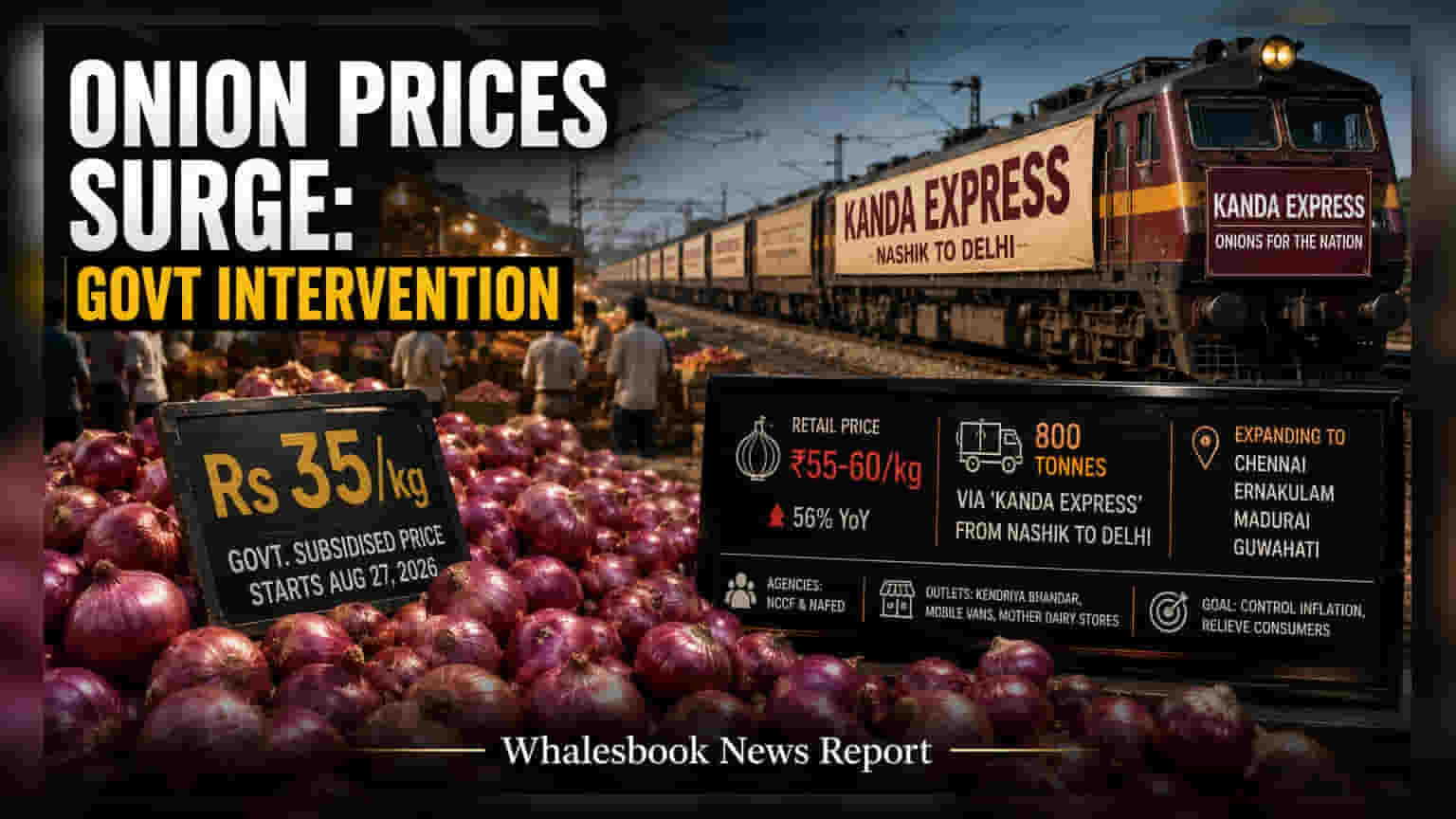
The Union government will begin selling onions at a subsidized price of ₹35 per kg in Delhi starting August 27, 2026, to counter retail price spikes reaching ₹55-60 per kg. This initiative, supported by the 'Kanda Express' rail service, aims to stabilize supply chain disruptions causing a 56% year-on-year price increase.
Starting August 27, 2026, the Union government will begin selling onions at a subsidized price of ₹35 per kg in Delhi. This direct market intervention aims to provide relief to consumers as retail prices in major metropolitan areas have surged to the ₹55-60 per kg range, marking a 56% increase compared to the same period last year.
The distribution will be managed by the National Cooperative Consumers' Federation (NCCF) and the National Agricultural Cooperative Marketing Federation (NAFED). To ensure steady supply, the government is utilizing a specialized railway service dubbed the 'Kanda Express,' which is currently transporting 800-tonne bulk shipments from Nashik to the capital.
Investors and market observers often track these interventions as they provide insight into government efforts to manage food inflation. While national production for the 2025-26 cycle is estimated at 307.37 lakh tonnes—sufficient for aggregate demand—the current price spikes are largely attributed to seasonal supply chain constraints and logistical gaps rather than an actual shortage of produce.
The operational effectiveness of this move will depend on how efficiently the subsidized onions reach local markets through existing channels like Kendriya Bhandar outlets and mobile sales vans. There are also ongoing talks to include Mother Dairy’s network of 300 stores, which would significantly expand the reach of this initiative. Similar distribution efforts are expected to follow in other cities such as Chennai, Ernakulam, Madurai, and Guwahati to help cool regional prices.
From an investor standpoint, the success of such interventions hinges on last-mile connectivity. Historically, government agencies face challenges in competing with private traders who may offer higher procurement prices to farmers, potentially leading to supply hurdles. Furthermore, while these measures help dampen retail price spikes, they do not address underlying structural issues like storage infrastructure or long-term logistics efficiency. Investors may continue to monitor food inflation trends and the government’s ability to stabilize regional supply chains without disrupting private market dynamics.