

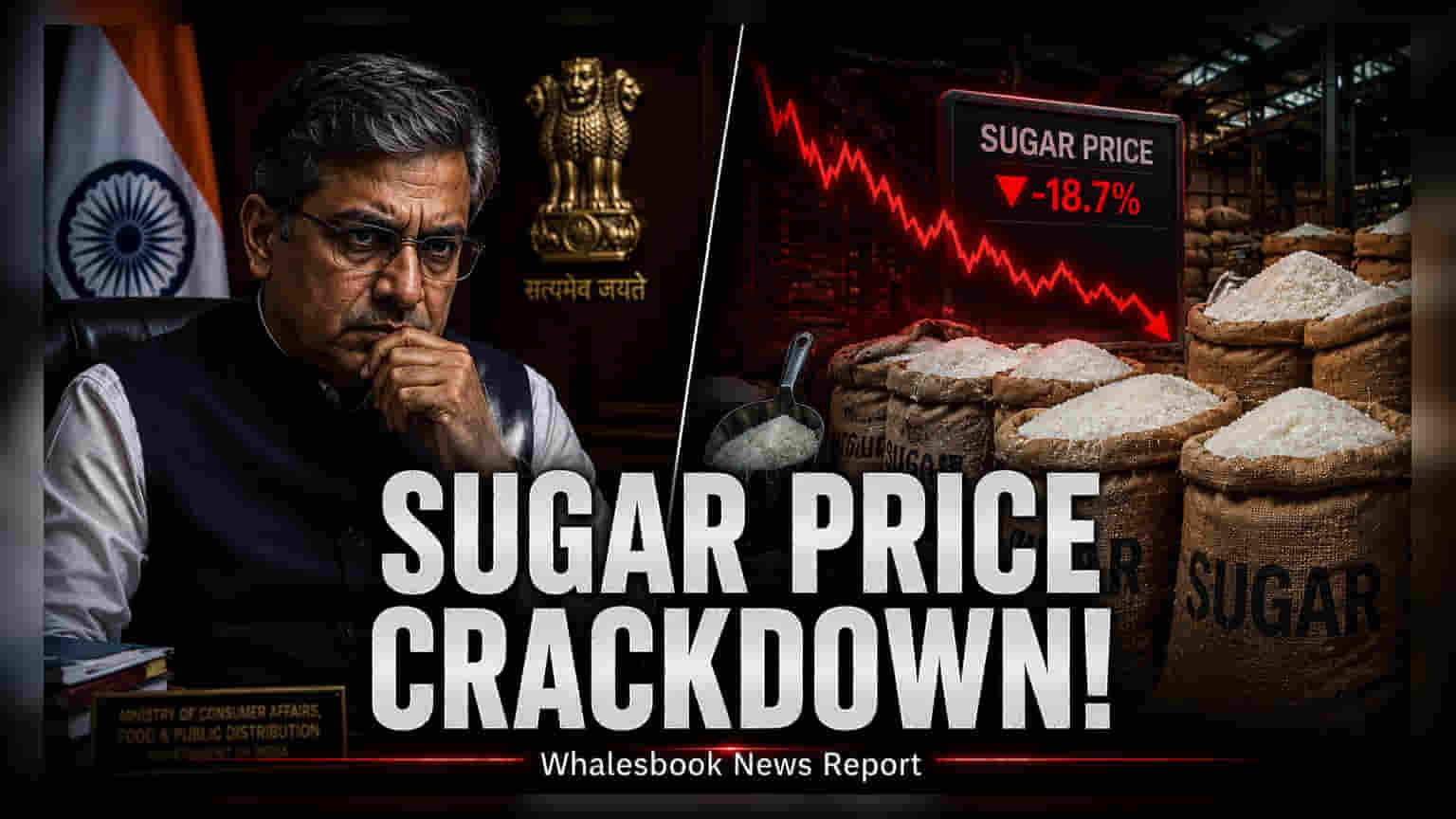
The Indian government has mandated stock holding limits for sugar dealers from August 1 to November 30 to prevent hoarding and stabilize retail prices. Dealers are required to report weekly inventory levels to ensure transparency and prevent speculative price hikes. This measure follows observations of rising ex-mill prices despite sufficient domestic supply.
Detailed Coverage
The Ministry of Consumer Affairs, Food and Public Distribution has announced new regulations to control the domestic sugar market. Effective August 1, 2026, until November 30, 2026, the government will implement strict stock holding limits for sugar dealers nationwide. This directive is part of a broader effort to ensure that sugar remains available and affordable for consumers by preventing the artificial inflation of prices through hoarding and speculative practices.
Curbing Market Manipulation
Official assessments suggest that recent increases in ex-mill sugar prices—the price at which sugar mills sell to traders—are not supported by supply-demand fundamentals. The government has identified that certain market participants may be holding excess inventory or engaging in speculative trading, often referred to as paper trades, which create an illusion of scarcity. By limiting the physical quantity that dealers can store, the government intends to force more consistent movement of sugar from mills into the retail supply chain.
New Weekly Reporting Requirements
To facilitate this policy, the government has introduced a mandatory disclosure system. Sugar dealers must now update their current stock positions on a weekly basis via an online portal operated by the Department of Food and Public Distribution. This requirement is intended to provide authorities with real-time data on inventory levels across the country. By tracking this information, regulators can identify regional bottlenecks or unusual accumulation of stocks, allowing for more precise interventions if market volatility continues.
Sector Context and Investor Focus
For investors in sugar manufacturing companies, such as Balrampur Chini Mills, Dalmia Bharat Sugar, and Dwarikesh Sugar, this development is a critical monitorable. While the move is aimed at traders and intermediaries, it reflects the government’s sensitivity to food inflation, which has historically led to export curbs or pricing interventions that affect mill margins. The sugar sector often faces pressure during periods of high domestic inflation, as the government prioritizes price stability over the export potential of sugar mills.
Historically, the sugar industry in India operates in a highly regulated environment where government policy—including the Fair and Remunerative Price (FRP) paid to farmers and the Minimum Selling Price (MSP) of sugar—dictates profitability. Investors will be closely tracking whether these dealer-level limits effectively stabilize retail prices or if the government finds it necessary to introduce further measures, such as tightening export quotas, should price pressures persist beyond the November window. The performance of sugar companies in the coming quarters will depend on the balance between domestic price stability, input costs like sugarcane prices, and any fluctuations in global sugar price trends.