

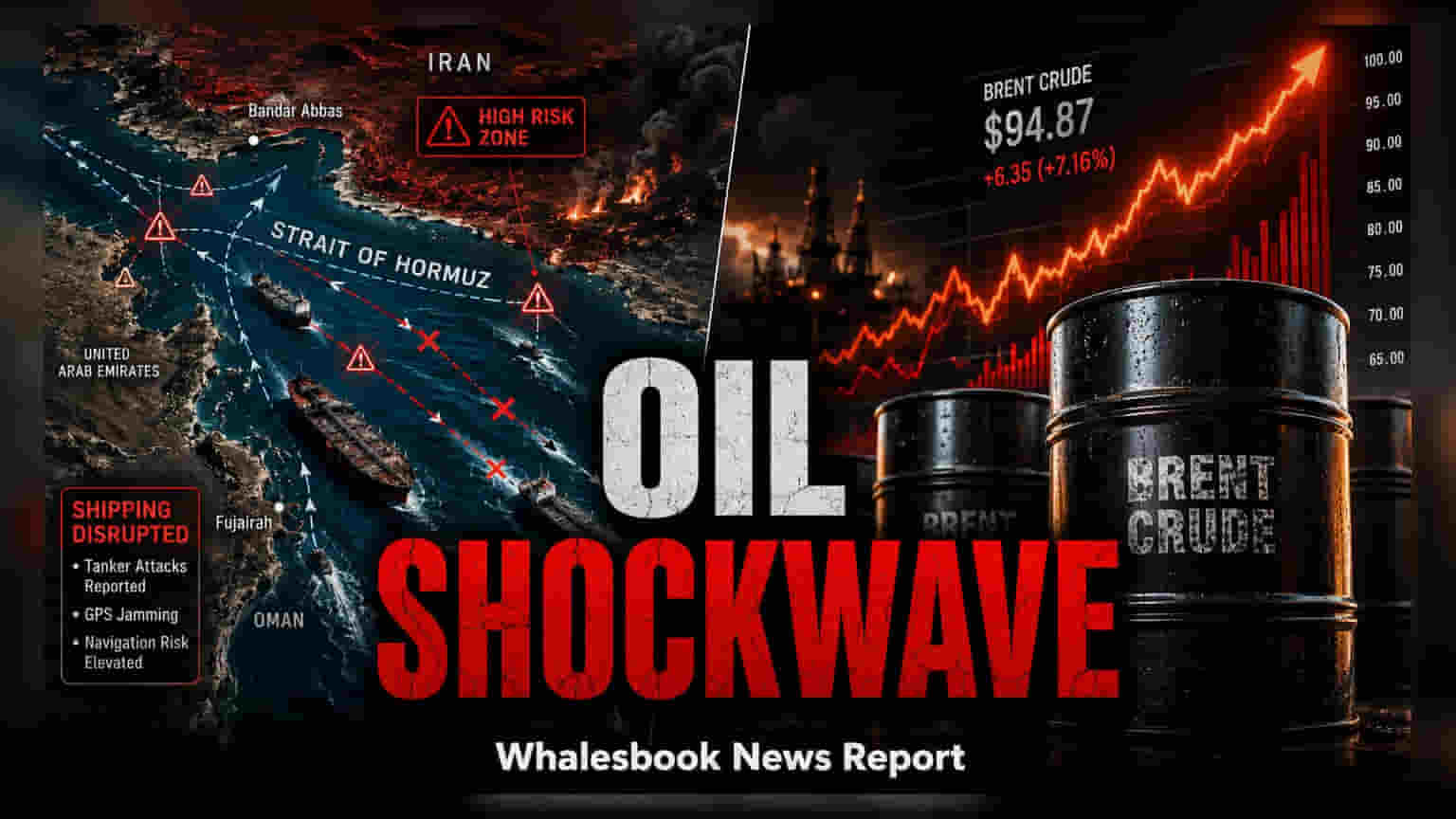
Goldman Sachs warns that Brent crude could rise above $120 a barrel in late 2026 if oil flows through the Strait of Hormuz remain restricted. While the bank maintains an $80 base case, rising geopolitical tensions in West Asia present a significant upside risk to global energy prices. Investors are evaluating potential hedging strategies as shipping and refinery supply chains face ongoing instability.
Detailed Coverage
Analysts at Goldman Sachs have cautioned that Brent crude prices could climb beyond $120 per barrel in the fourth quarter of 2026. This projection is tied to the potential for continued disruptions in the Strait of Hormuz, a critical maritime passage for global energy supplies. The bank’s primary forecast remains at $80 per barrel for the year-end period, assuming a de-escalation of regional conflicts, but they noted that the current balance of risk is skewed upward due to persistent instability in West Asia.
Energy markets are closely tracking the volume of oil moving through the Persian Gulf, which reports indicate has fallen below 45% of levels seen before the start of the conflict. Alongside these geopolitical pressures, Brent futures have recently traded near $88.65 per barrel. Historical data shows that prices are sensitive to these routes; for instance, crude surpassed the $126 mark in late April during previous phases of heightened conflict between the United States and Iran.
Impact on Energy Supply Chains
Beyond crude oil, the global energy market is grappling with broader supply constraints. Analysts have highlighted that the market for refined products like diesel remains tight. This is being driven by several concurrent factors, including ongoing attacks on Russian refinery infrastructure by Ukraine, as well as seasonal risks such as extreme weather events and heatwaves that can disrupt operations. These factors often lead to plant maintenance delays, further limiting the output of finished fuels.
Investor Considerations and Hedging
For investors concerned about exposure to these geopolitical shocks, market analysts have pointed toward specific energy-related instruments, such as the European diesel timespread for the period between December 2026 and March 2027. This strategy is often used when participants expect supply gaps to persist over the coming months. However, any investment in oil-linked products carries inherent risks, as energy prices are subject to rapid shifts based on news related to production quotas from OPEC+ or changes in global demand from major economies like China and India.
The most important monitorables for investors in the coming months include the actual volume of crude oil transit through the Strait of Hormuz, updates on Red Sea shipping safety, and the status of refinery operations in Russia. Market participants will also look for any shift in the official stance of major oil-producing nations regarding output levels, which could either alleviate or worsen the current supply pressures.