 Whalesbook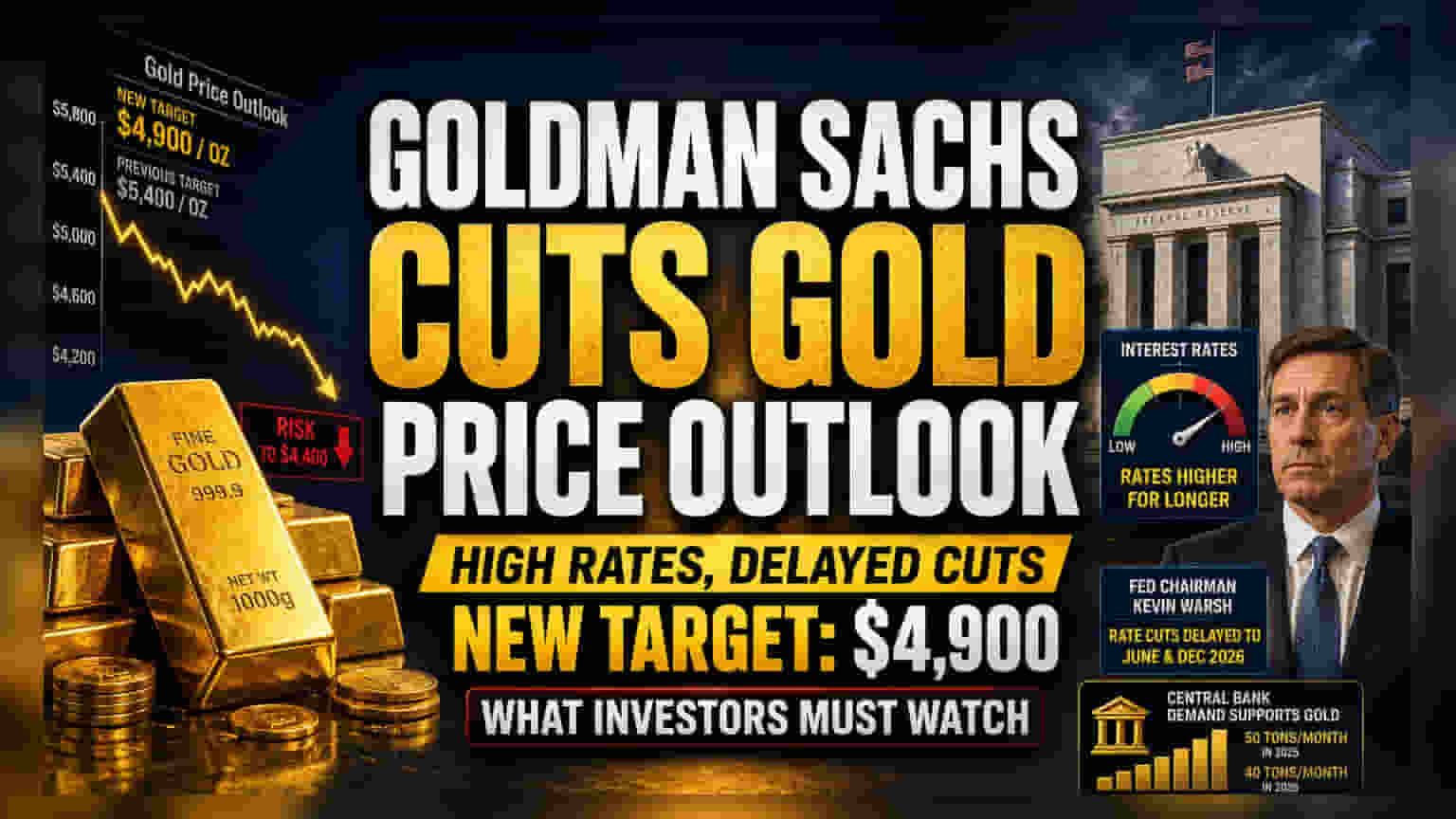
Goldman Sachs has reduced its year-end gold price target by $500 to $4,900. The revision comes as expectations for US interest rate cuts are pushed back to late 2026, with the Federal Reserve adopting a more cautious monetary stance.
What Happened
Goldman Sachs Group Inc. has revised its outlook for gold prices, lowering its year-end target by $500 per ounce to $4,900. This adjustment marks a shift in the bank's previous expectations, primarily driven by changing views on the US Federal Reserve's monetary policy. Economists at the firm now expect interest rate reductions to be delayed until June and December of 2026, rather than earlier in the year as previously anticipated.
Why This Matters For Investors
For investors, the relationship between gold and interest rates is essential. Gold is a non-yielding asset, meaning it does not pay interest or dividends. When US interest rates are high, other investments like government bonds become more attractive because they offer guaranteed returns. As a result, when the market expects interest rates to stay high for longer, gold often loses its appeal as a safe-haven asset, putting pressure on its price.
The Fed's New Stance
The revision follows comments from Federal Reserve leadership regarding price stability. With the appointment of Kevin Warsh as the new Fed Chairman, the market is adjusting to a shift in policy direction. Reports indicate that early meetings have signaled a focus on tighter monetary conditions to control inflation, rather than the easing that markets had hoped for earlier in the year. This sentiment has caused a slowdown in money flowing into gold-backed exchange-traded funds, as investors re-evaluate their exposure to the precious metal in a high-interest-rate environment.
The Risk of Further Rate Hikes
Beyond just delaying rate cuts, there is a risk that rates could move higher. Rob Kaplan, vice chairman at Goldman Sachs, has noted that the Federal Reserve might consider raising interest rates as early as September if inflation does not cool down. If such a scenario unfolds, it could lead to further selling pressure on gold, potentially pushing prices toward $4,400 per ounce by year-end, according to the bank's projections.
Where Gold Finds Support
Despite the pressure from US monetary policy, gold continues to find support from global central bank purchases. These institutions have been consistent buyers of the metal, and Goldman Sachs expects this trend to remain strong, with anticipated average purchases of 50 tons per month this year and 40 tons per month in 2026. This consistent demand from central banks acts as a stabilizing force, preventing a sharper decline in gold prices even when investor sentiment turns cautious.
What Investors Should Track
Investors may monitor a few key factors that will influence gold prices in the coming months. First, US inflation data remains critical; higher-than-expected inflation numbers could increase the likelihood of rate hikes. Second, future commentary from the Federal Reserve, specifically from Chairman Kevin Warsh, will be closely watched for any changes in the interest rate timeline. Finally, data on central bank gold buying will be an important indicator of whether this floor for gold prices remains firm.

