

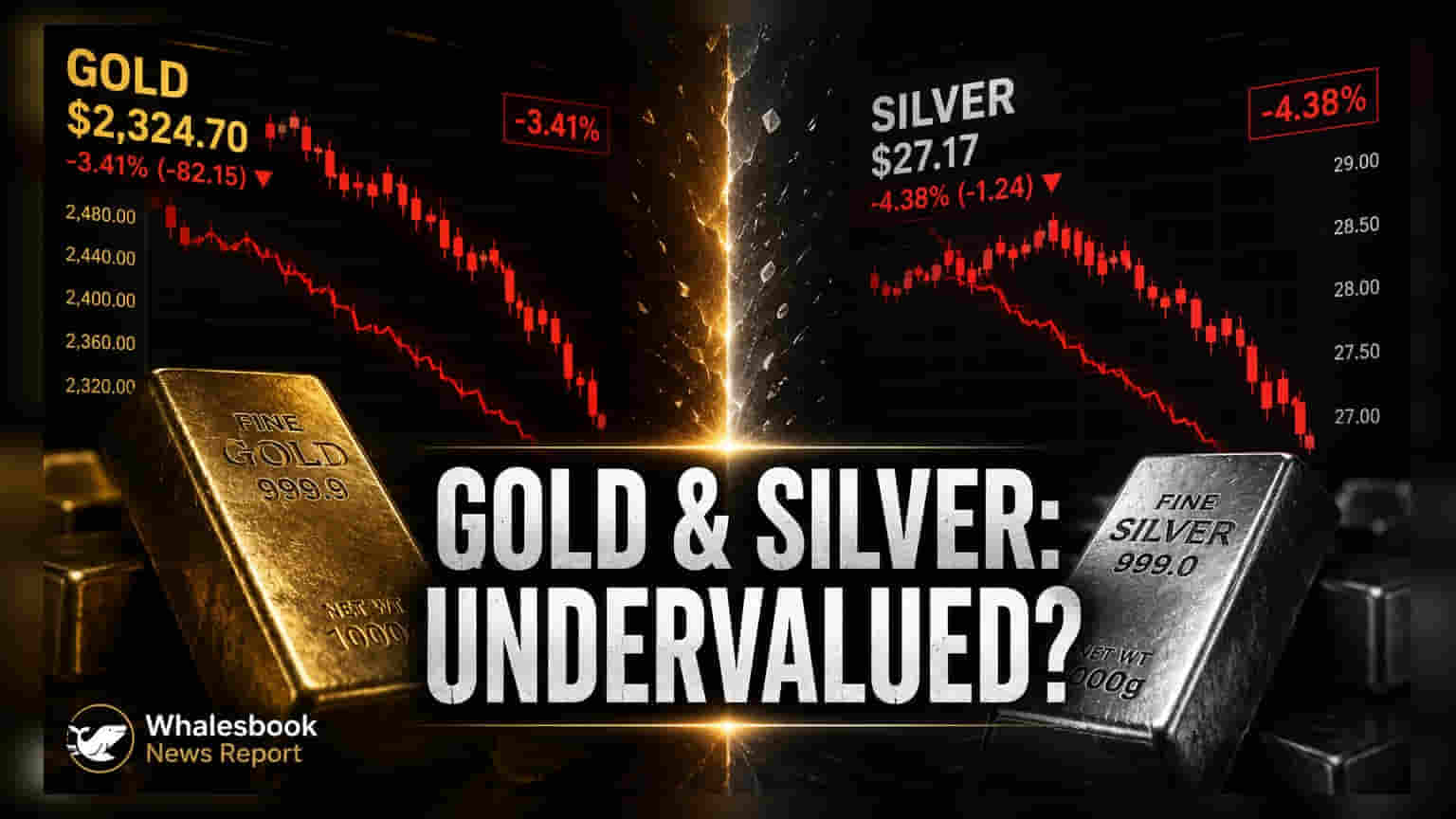
A new framework from DSP Asset Managers indicates that gold and silver prices are currently below their calculated fair values. The analysis suggests gold is trading at a discount of about 10.7%, while silver shows a potential discount of 21.8% based on historical price ratios.
A recent valuation report from DSP Asset Managers suggests that precious metals, specifically gold and silver, may be trading lower than their theoretical fair value. The firm developed a valuation model that correlates the total amount of gold historically mined—estimated at 7.24 billion troy ounces—with global liquidity measures, primarily the US M2 money supply and a portion of the euro area's M2 supply.
Gold Valuation Metrics
Based on this model, the firm calculated a midpoint fair value for gold at $3,828 per troy ounce. With the spot price of gold recorded at $3,994.1 per troy ounce as of July 1, 2026, the metal is trading approximately 10.7 percent below the upper end of the framework's valuation model. The model essentially seeks to determine the value of gold by examining it against the backdrop of total global money supply, suggesting that current price levels may not fully account for historical monetary expansion.
Silver's Undervaluation Gap
For silver, the analysis relies on the gold-to-silver ratio, a common method used to compare the relative prices of the two metals since silver transitioned away from its formal role in monetary systems. The report noted that silver was trading at $58.295 per ounce on July 1. By applying historical ratios to the calculated fair value of gold, the report estimates a theoretical fair value for silver near $64 per ounce, indicating a 21.8 percent discount. This suggests that, according to the firm’s methodology, silver currently presents a higher degree of undervaluation compared to gold.
Understanding Valuation Models
It is important for investors to note that these figures are derived from a specific theoretical model based on money supply and historical supply data. While such models provide a structured way to look at commodity valuation, the actual market price of gold and silver is influenced by many factors. These include global interest rates, central bank buying activity, geopolitical tensions, and industrial demand for silver.
The effectiveness of such a valuation model depends heavily on the assumption that the relationship between money supply and gold reserves will remain consistent over time. Investors should recognize that models of this nature are not price predictors and do not account for daily market fluctuations or sudden changes in macroeconomic policy. The next relevant updates for investors will involve tracking how actual market prices move in relation to global inflationary trends and interest rate decisions, which often serve as more immediate drivers for precious metal price movements than long-term theoretical valuation frameworks.