

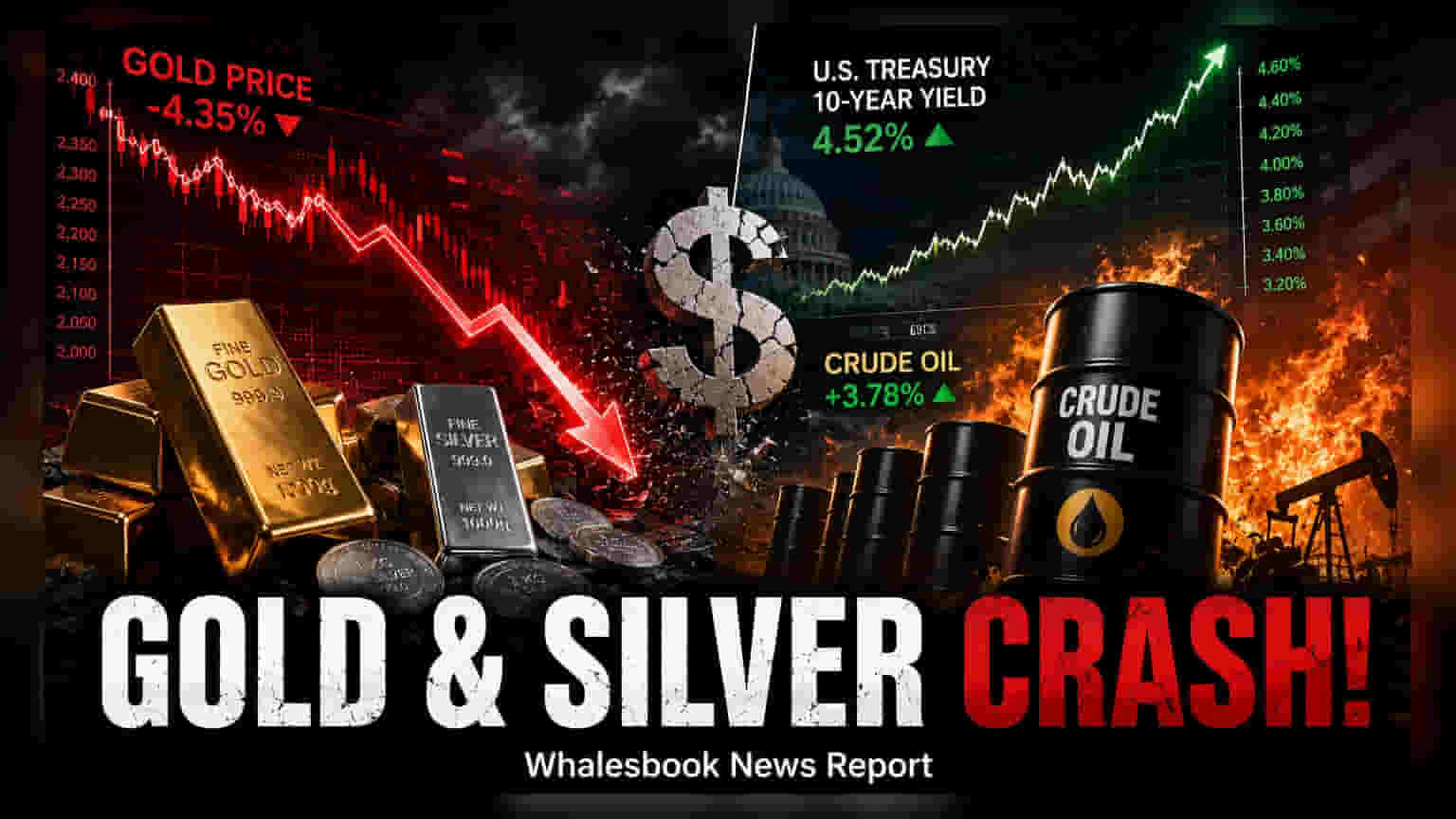
Gold and silver prices dropped on Monday, even as geopolitical tensions escalated in West Asia. A stronger U.S. dollar and rising bond yields are currently outweighing the metals' traditional appeal as safe-haven assets. Investors are now focused on upcoming U.S. inflation data to gauge future central bank interest rate policies.
Precious metals experienced a decline in international markets on Monday as shifting macroeconomic factors took center stage. Gold prices slipped to $4,083.10 per ounce on the COMEX, representing a 0.74% decrease, while silver saw a more significant drop of 1.86% to reach $59.045 per ounce during Asian trading hours.
The decline in bullion prices comes despite increased geopolitical anxiety following reports of the closure of the Strait of Hormuz. This critical shipping route's closure pushed Brent crude oil prices above $78 per barrel, raising concerns about energy-led inflation. While gold is historically viewed as a hedge during times of uncertainty, it currently faces pressure from competing assets.
Impact of Yields and Dollar Strength
Rising oil prices have contributed to a stronger U.S. dollar and higher U.S. Treasury yields. When bond yields increase, the opportunity cost of holding non-yielding assets like gold—which does not pay interest—tends to rise. Furthermore, a stronger dollar makes gold more expensive for investors holding other currencies, reducing global demand. Silver, which is often used in industrial applications, faced a sharper decline than gold as the market balanced these macroeconomic pressures against its industrial utility.
Upcoming U.S. Data and Market Focus
Investors are now turning their attention to the United States for critical economic indicators this week. Key releases, including consumer price inflation, retail sales, housing figures, and weekly jobless claims, are expected to influence the Federal Reserve's future interest rate decisions. If incoming data suggests that inflation remains persistent, expectations for higher interest rates could persist, which generally exerts downward pressure on bullion prices.
Market participants will continue to monitor the situation in the U.S.-Iran conflict closely. While extreme geopolitical events can sometimes spark a flight to safety, the current market dynamic shows that investors are prioritizing the immediate impact of interest-bearing assets and currency strength over geopolitical hedges. Future price movements will likely depend on whether energy costs continue to drive inflation expectations higher and how the Federal Reserve responds to these developments in its upcoming policy meetings.