

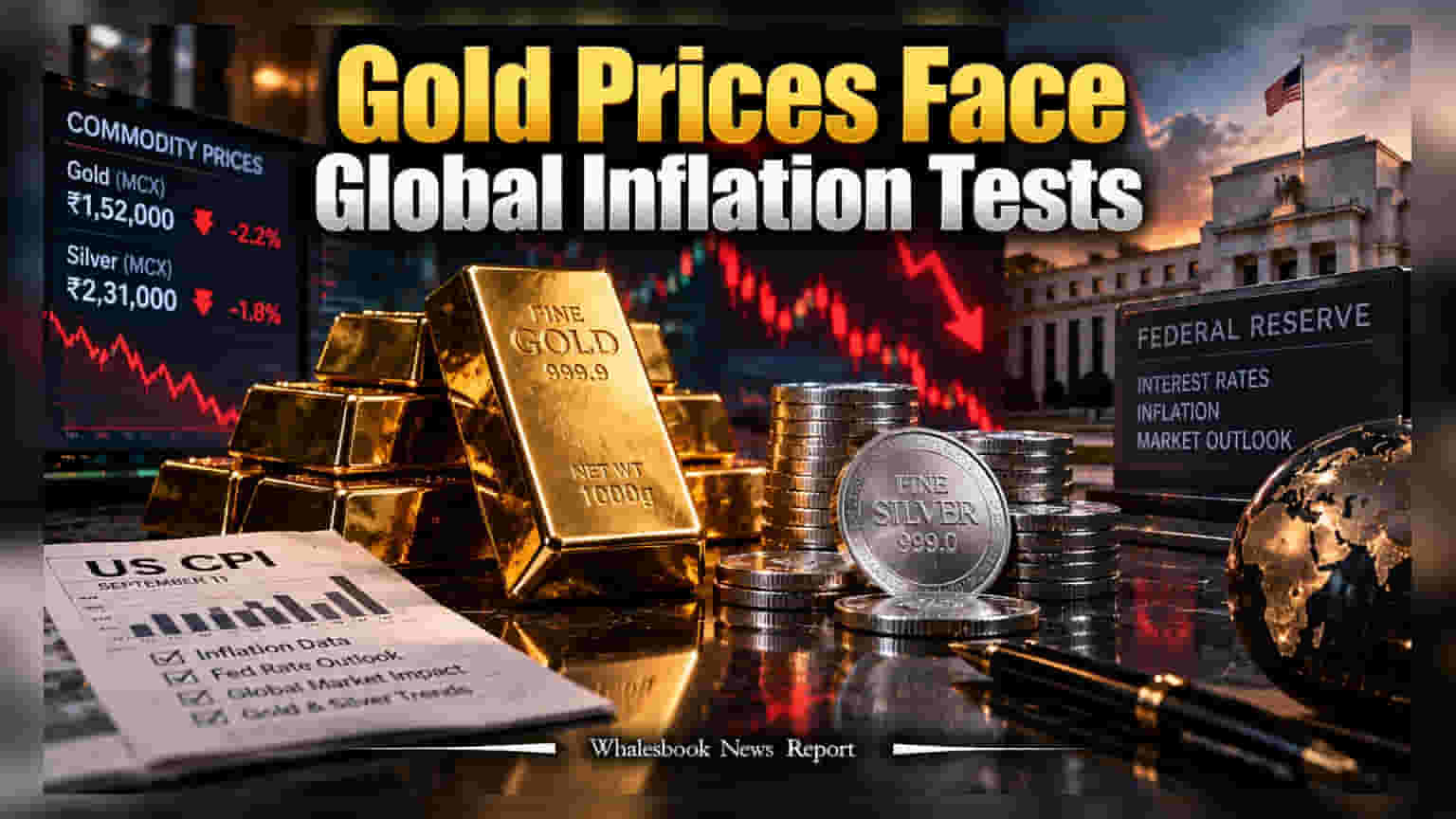
Gold and silver futures are experiencing pressure following a recent 2.2% price correction on the MCX. Investors are preparing for the upcoming US inflation report on September 11, which will shape future interest rate expectations. While central bank buying offers a long-term buffer, market participants are bracing for short-term swings driven by global economic cues and Federal Reserve policy signals.
Gold and silver markets are bracing for a week of uncertainty as traders look toward the upcoming US Consumer Price Index (CPI) report, scheduled for September 11. The anticipation of this data has weighed on precious metals, which recently saw a notable pullback. On the Multi Commodity Exchange (MCX), gold futures for October delivery dipped 2.2% last week, closing at Rs 1.52 lakh per 10 grams.
Why the US Inflation Data Matters
The US CPI report is a primary signal for the Federal Reserve’s future interest rate path. Currently, markets are reacting to hawkish comments from Federal Reserve Chair Kevin Warsh, who has indicated that inflation remains a concern. When expectations for interest rate hikes rise, gold prices often face pressure. This happens because gold does not pay interest or dividends. When interest rates on bank deposits or government bonds rise, investors often shift their money out of gold and into these interest-bearing assets.
Technical Levels and Market Risks
Market analysts are watching key price levels closely as volatility persists. For gold, Rs 1.57 lakh per 10 grams is being watched as an immediate resistance level, a price point where the asset has struggled to rise above in recent trading. Silver, which is also used in industrial applications, has shown higher sensitivity to these swings, with experts eying Rs 2.31 lakh per kg as a critical support level. Traders are reminded that trading on margin—using borrowed money to trade—can significantly increase the risk of losses during these periods of high price swings.
Global Factors and Central Bank Demand
While the market focuses on US inflation, demand from central banks continues to provide a structural foundation for gold prices. The People’s Bank of China recently added another 20 tonnes of gold to its reserves, continuing a 21-month streak of consistent buying. This indicates that despite current interest rate pressures, many global institutions continue to accumulate bullion as a long-term store of value. Additionally, market participants are monitoring geopolitical tensions in West Asia, which can impact crude oil prices and inflation, further complicating the outlook for interest rates.
What Investors Should Track
The most important event for investors to track is the release of the US inflation figures on September 11. Until then, gold and silver prices are likely to react to any updates regarding global bond yields and the strength of the US dollar. Investors monitoring this space should be prepared for fluctuations, as market sentiment often changes quickly ahead of significant economic data releases.