 Whalesbook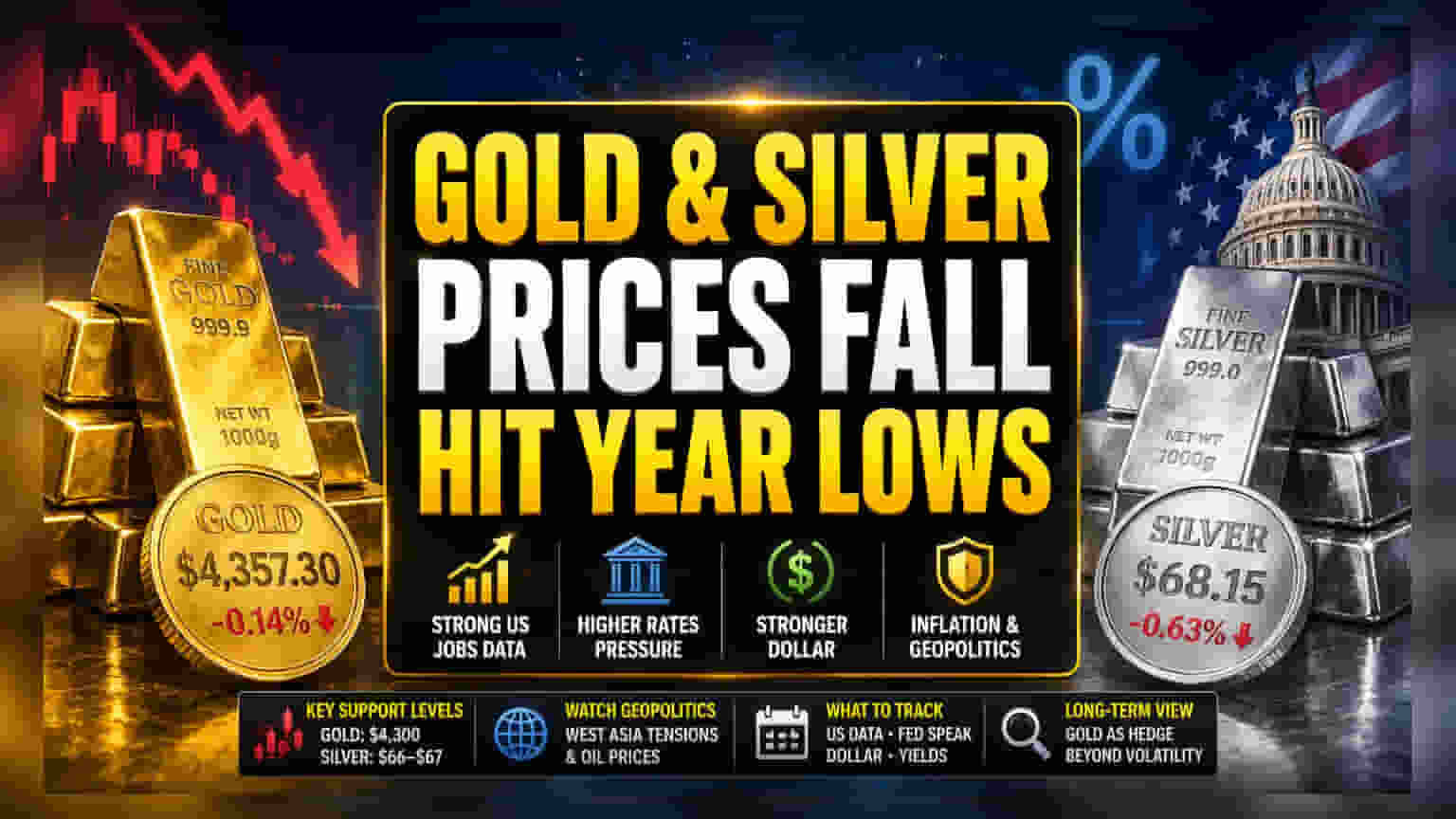


What Happened
Gold and silver prices have declined, marking a fresh low for the year. The drop follows the release of strong US employment figures, which changed how investors view the future of US monetary policy. COMEX gold was trading down by 0.14% at $4,357.30 per ounce, while COMEX silver saw a decline of 0.63% to $68.15 per ounce during recent Asian trading hours.
Why This Matters For Investors
To understand why gold and silver prices are falling, it helps to look at the relationship between interest rates and precious metals. When US jobs data is strong, it suggests the economy is robust. This often leads the market to believe that the Federal Reserve will keep interest rates high to control inflation.
When interest rates are high, government bonds and other fixed-income investments become more attractive because they pay guaranteed interest. Gold and silver, however, do not pay interest. When investors can earn better returns elsewhere, they may move their money out of non-interest-paying assets like bullion. Additionally, a stronger US dollar—often linked to higher interest rates—makes gold and silver more expensive for buyers holding other currencies, which can reduce global demand.
The Technical Support Levels
Market watchers often look at specific price points, known as support levels, where a stock or commodity might find enough buying interest to stop falling. For gold, the price is currently testing a key support zone near $4,300 per ounce. If the price remains above this level, some analysts suggest there could be a technical rebound as bargain hunters look for value. However, if the price breaks decisively below this point, it could signal further weakness toward the $4,000 to $4,100 range. Similarly, silver is testing a crucial support zone between $66 and $67 per ounce, and sustained trading below these levels could invite more selling pressure.
Geopolitical and Inflation Concerns
While the primary pressure on precious metals comes from the interest rate outlook, broader economic factors remain relevant. Geopolitical developments in West Asia continue to fuel concerns about inflation. Rising energy prices, linked to regional instability, could complicate the inflation outlook. If inflation stays high for longer than expected, it may force major central banks to delay any easing of their current policies, which adds another layer of uncertainty for the markets.
How Investors May Read This
It is important for investors to distinguish between short-term market noise and long-term investment goals. While the current price decline is driven by changing expectations for interest rates and the US dollar, many market participants still view gold as a long-term hedge against inflation and general economic uncertainty. The current volatility reflects the market adjusting to new economic data rather than a fundamental change in the long-term appeal of precious metals.
What Investors Should Track Next
Investors may want to monitor several key factors in the coming weeks. The most important indicator will be future US economic reports, as these will directly influence expectations for Federal Reserve policy. Statements from central bank officials regarding their interest rate plans will also be crucial. Furthermore, watching the strength of the US dollar and the movement of Treasury yields will provide clues about whether the current pressure on gold and silver is likely to continue or reverse.