

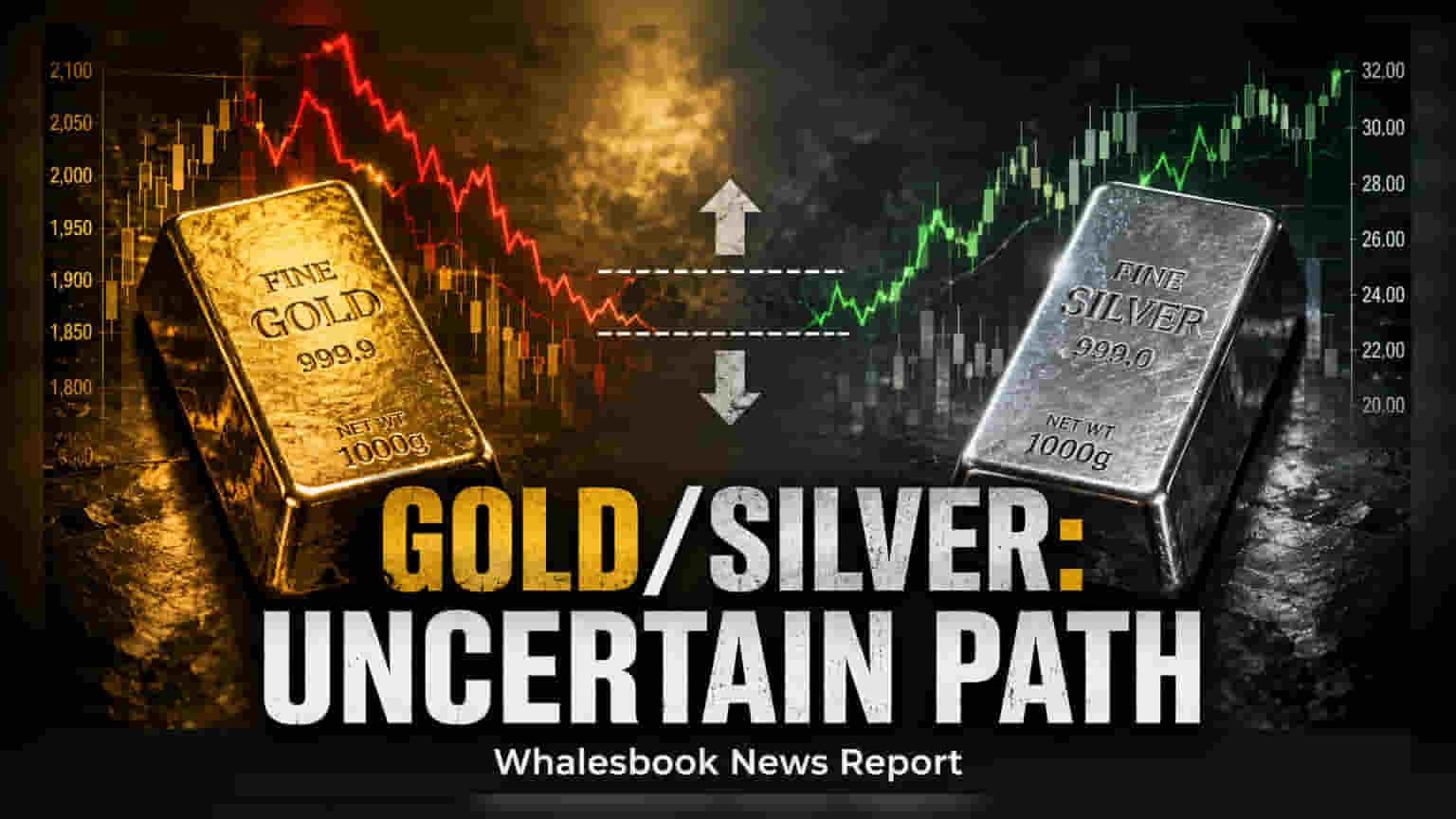
Gold and silver prices continue to trade within a narrow range, leaving investors without a clear price direction. Understanding these technical support and resistance zones is essential for managing risk in current commodity holdings.
Detailed Coverage
Precious metals have shown little price movement recently, trading within established boundaries. Global gold prices saw a modest 0.9% rise to $4,053 per ounce last week, while domestic August futures for gold closed at ₹1,43,106 per 10 grams. Similarly, silver futures for September delivery reached ₹2,22,138 per kilogram after a week of volatile trading.
Monitoring Gold Price Boundaries
Gold futures are currently moving between a support level of ₹1,40,000 and a resistance level of ₹1,48,000. Investors often watch these zones because they represent points where buying or selling pressure has historically intensified. A move sustained above the ₹1,48,000 mark would be a change in the current trend, while a dip below the ₹1,40,000 support could suggest further price weakness. Market participants typically look for a clear, confirmed breakout from this range before assuming a sustained trend in either direction.
Silver Price Movements and Volatility
Silver has displayed higher sensitivity to short-term news, with a weekly gain of 2.7% largely dependent on an initial gap-up in trading. Without that early strength, the price would have shown little to no progress. Silver futures face a significant resistance level at ₹2,39,000. If prices manage to cross this barrier, it may signal renewed interest from buyers. On the downside, the support level sits at ₹2,14,000. A fall below this point may lead to increased pressure, with a deeper psychological base located around the ₹2,00,000 mark.
Factors Influencing Commodity Trends
These price patterns are often linked to broader economic factors, including fluctuations in the value of the Indian Rupee against the US Dollar and global interest rate expectations. When global prices move, domestic futures are adjusted to reflect currency conversions and local import duties. Because gold and silver are often used as hedges against inflation or economic uncertainty, changes in these macroeconomic indicators frequently lead to rapid shifts in sentiment. Investors usually monitor incoming data on global inflation and central bank policies, as these remain the primary drivers of long-term trends in precious metals. For now, the lack of a strong trend suggests that market participants are waiting for more definitive global economic updates to dictate the next major move.