

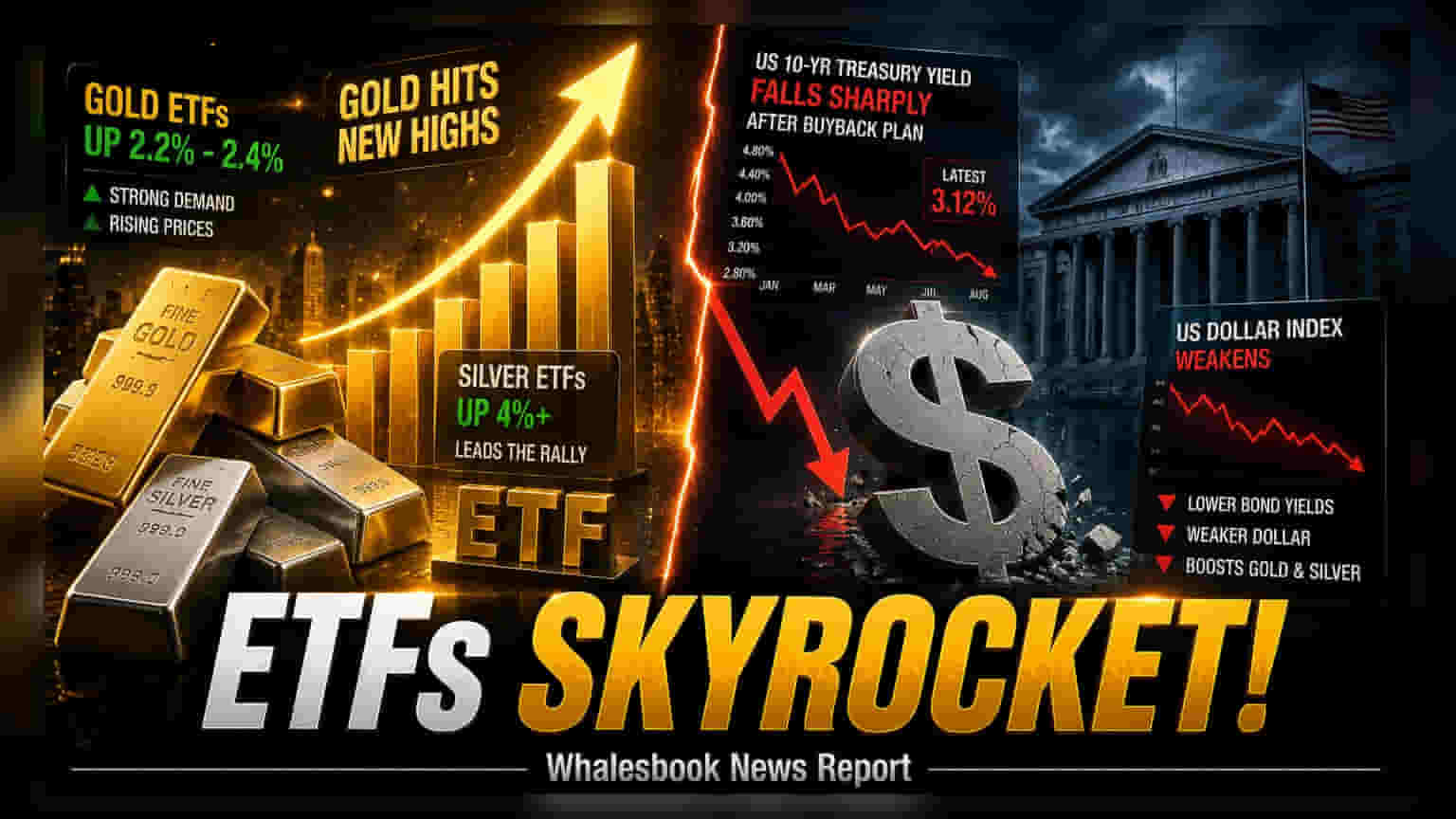
Indian gold and silver ETFs posted sharp gains on August 20, 2026, following a surge in global bullion prices. The movement was triggered by the US Treasury’s decision to increase long-term debt buybacks, which lowered bond yields and weakened the dollar. While this trend boosts demand for precious metals, investors should remain cautious of ongoing market volatility and geopolitical risks.
Indian gold and silver exchange-traded funds (ETFs) witnessed a sharp rally on Thursday, August 20, 2026, tracking a significant jump in global bullion prices. Investors reacted positively as precious metals saw renewed demand, with silver ETFs leading the gains by rising over 4 percent, while gold ETFs posted gains in the range of 2.2 percent to 2.4 percent.
Impact of US Treasury Buyback Plan
The primary driver for this market move was an unexpected announcement from the US Treasury regarding its debt management strategy. The US Treasury plans to increase its liquidity support buyback operations for 10-to-30-year government debt to at least $4 billion per operation, starting September 9, 2026.
This decision is intended to improve market liquidity and control borrowing costs. For the precious metals market, this serves as a major catalyst. When long-term bond yields fall, the appeal of assets that do not pay interest—like gold and silver—increases. Furthermore, this move put pressure on the US dollar, making dollar-denominated commodities like gold and silver cheaper for international buyers, further supporting the price increase.
Performance Across Metal ETFs
Silver ETFs outperformed gold in today's trading session, reflecting the metal's typically higher price volatility. Tata Silver ETF saw a rise of 4.23 percent, while other major funds like Nippon India Silver ETF and SBI Silver ETF recorded gains of approximately 4.05 percent.
Gold ETFs also saw broad participation. Funds managed by ICICI Prudential, Nippon India, SBI, and Tata recorded gains between 2.2 percent and 2.4 percent. While this growth reflects positive investor sentiment toward safe-haven assets, it is important for investors to note that these price movements are tied to global macroeconomic factors.
Risks and Market Monitorables
While the current environment is supportive of precious metals, investors should consider the risks involved in this asset class. Precious metals remain highly sensitive to US inflation data and signals from the Federal Reserve regarding interest rate policies. Any shift in expectations regarding inflation or rate cuts can lead to rapid price corrections.
Additionally, geopolitical uncertainty, particularly tensions in regions like the Middle East, continues to influence global energy prices and monetary policy expectations. These factors can introduce sudden volatility into the market.
For those invested in ETFs, it is also important to monitor fund-specific factors beyond the underlying metal prices. These include tracking error—the difference between the ETF's performance and the actual market price of the metal—and the expense ratio, which affects net returns. As global conditions evolve, the sustainability of this rally will depend on whether bond yields remain low and the strength of the US dollar persists.