

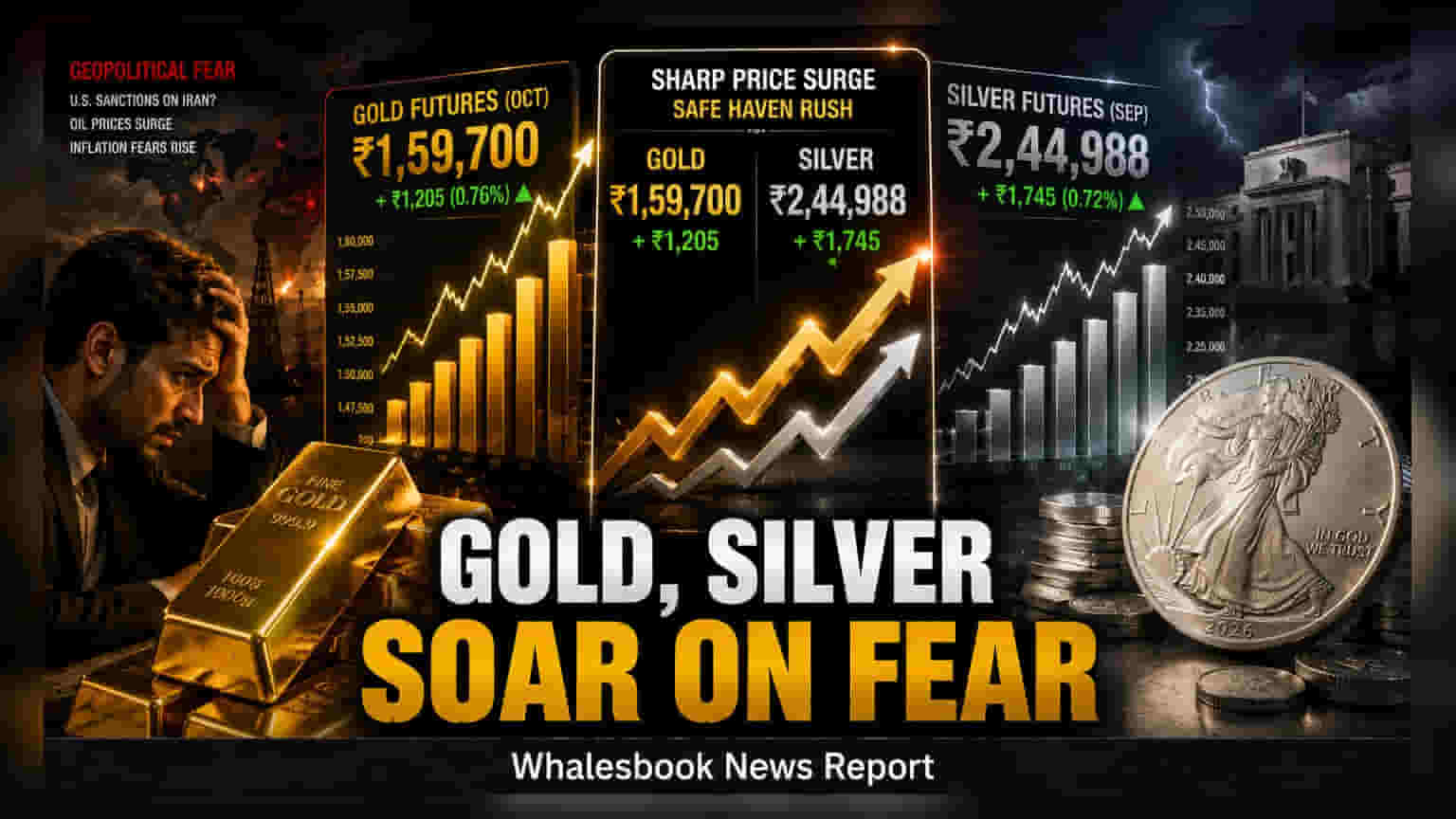
Gold futures on the MCX jumped ₹1,205 to ₹1,59,700 per 10 grams, while silver climbed ₹1,745 to ₹2,44,988 per kg on Friday. Rising geopolitical tensions, specifically regarding potential U.S. sanctions on Iran, have pushed investors toward precious metals. While this reflects strong demand, investors should be aware that such high price levels often lead to a cooling in physical demand across India.
Precious metals experienced a sharp rise on Friday as market uncertainty prompted investors to move money into assets considered safer during turbulent times. Gold futures for the October contract on the Multi Commodity Exchange (MCX) rose by ₹1,205 to trade at ₹1,59,700 per 10 grams. Similarly, silver futures for the September contract opened higher at ₹2,44,988 per kg, reflecting a gain of ₹1,745.
The primary driver behind this move is rising geopolitical anxiety. Investors are closely monitoring the potential for expanded U.S. sanctions on Iran. Because Iran is a significant producer of crude oil, any disruption or policy change often leads to higher oil prices. When crude oil prices rise, it tends to increase inflation fears globally. Investors frequently turn to gold and silver in such environments, viewing them as a shield against the rising cost of living and financial instability.
While the jump in futures prices highlights investor sentiment in the financial markets, it is important for observers to look at how this impacts the real-world market. In India, a major consumer of gold, high prices often create a different reaction at the retail level. Historically, when prices move up this sharply, physical demand from jewelry buyers and small investors often slows down, as many prefer to wait for prices to stabilize before making large purchases.
Institutional buying continues to be a structural support for gold prices. Central banks across the world, with China being a notable example, have been consistent buyers of gold to hold as a reserve asset. This institutional trend acts as a long-term foundation for the price, helping to balance out the volatility caused by day-to-day trading in the futures market.
For investors monitoring this space, the most important factors to track will be the movement of global crude oil prices and the strength of the U.S. dollar. Precious metals typically share an inverse relationship with the dollar; if the dollar strengthens due to global economic policy shifts, it can sometimes create pressure on gold prices. Additionally, any updates regarding Middle Eastern policy will remain a key trigger for market movement in the near term.