 Whalesbook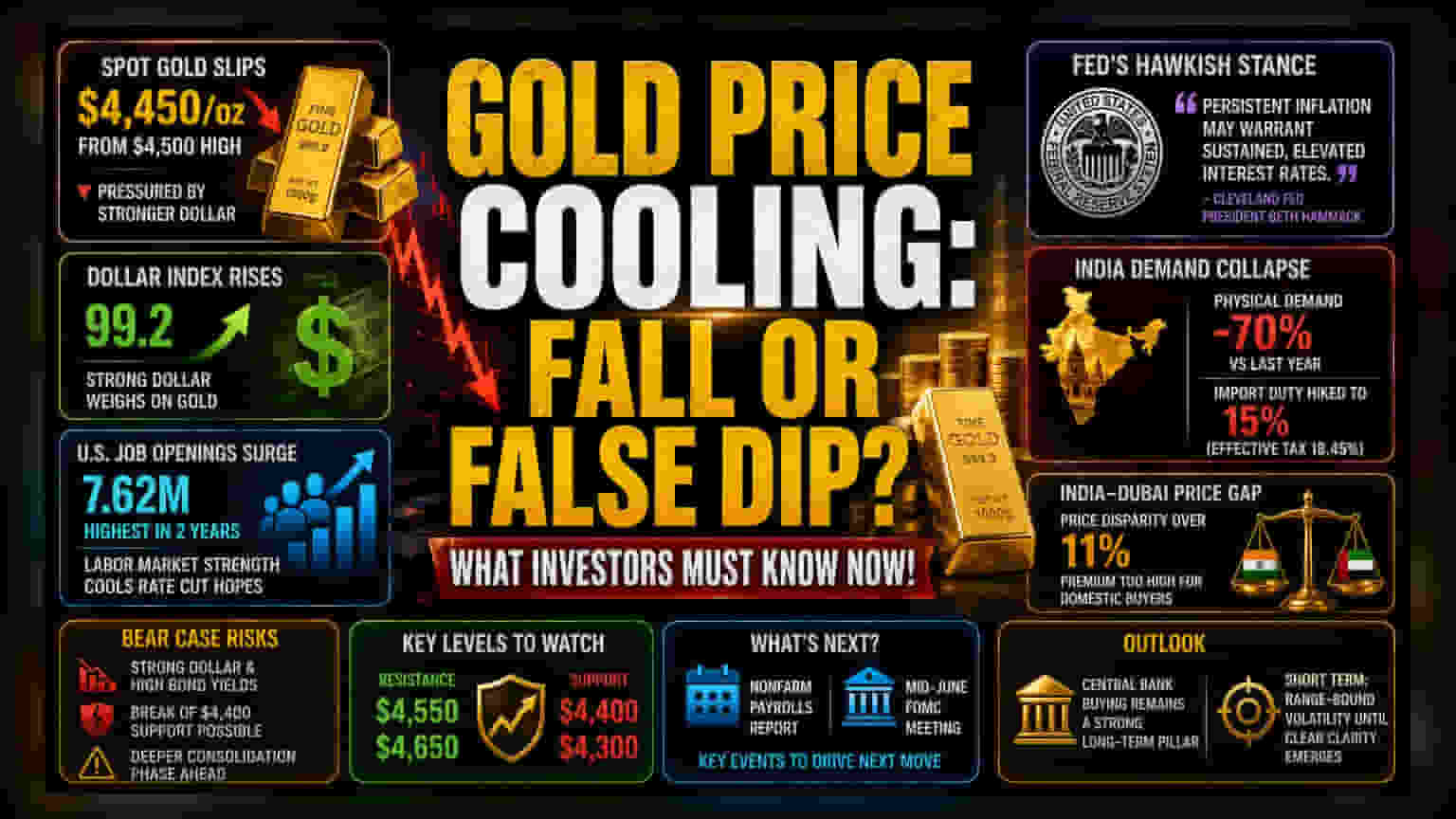


The Valuation Gap
The recent cooling in gold prices reflects a tug-of-war between haven-seeking sentiment and macroeconomic pressures. Spot gold, which recently flirted with the $4,500 per ounce mark, faced heavy selling pressure in early trade on June 3, 2026, as the US Dollar Index climbed toward 99.2. This appreciation in the greenback effectively dampened the metal's appeal as a non-yielding asset, especially as investors recalibrated their expectations for the Federal Reserve’s future monetary policy path. While gold serves as a traditional hedge against inflation, its recent price action confirms that it is currently trading more like a risk asset, sensitive to the potential for higher-for-longer interest rates in the US.
Analytical Deep Dive: The Labor Market Catalyst
The catalyst for this latest shift was the robust labor data released earlier in the week, showing US job openings in April surging to 7.62 million, their highest level in two years. This resilience in the labor market, coupled with a notable decline in layoffs, has effectively cooled the market's enthusiasm for imminent interest rate cuts. Cleveland Fed President Beth Hammack’s commentary, which emphasized that persistent inflation might necessitate sustained, elevated rates, acted as a significant drag on bullion. Unlike periods of past stability, gold is currently grappling with a market that is pricing in a more restrictive central bank environment, creating an environment where even high geopolitical risks in the Middle East provide only a temporary floor rather than a launchpad for higher prices.
The Forensic Bear Case
Beyond the headline volatility, structural weaknesses are weighing on the sector. Indian demand, in particular, has faced a severe correction following the government’s decision to increase gold import duties from 6% to 15% in May. This 18.45% effective tax burden has caused physical demand in India to plummet by approximately 70% compared to last year. Furthermore, while the current price disparity between Indian and Dubai gold remains over 11%, this premium is becoming increasingly difficult for domestic consumers to absorb. There is a distinct risk that if the dollar continues to strengthen and US bond yields remain at their current levels, the gold market could undergo a deeper consolidation phase, breaking through the $4,400 per ounce support level.
Future Outlook
Market participants are now turning their attention to the upcoming nonfarm payrolls report and the mid-June FOMC meeting for further confirmation of the rate trajectory. While long-term fundamentals—driven by sustained central bank accumulation—remain a bedrock for the gold market, short-term performance will likely be dictated by the interplay between currency strength and inflation data. Analysts remain divided, but the prevailing consensus points toward continued range-bound volatility until clear indicators of economic cooling emerge.