

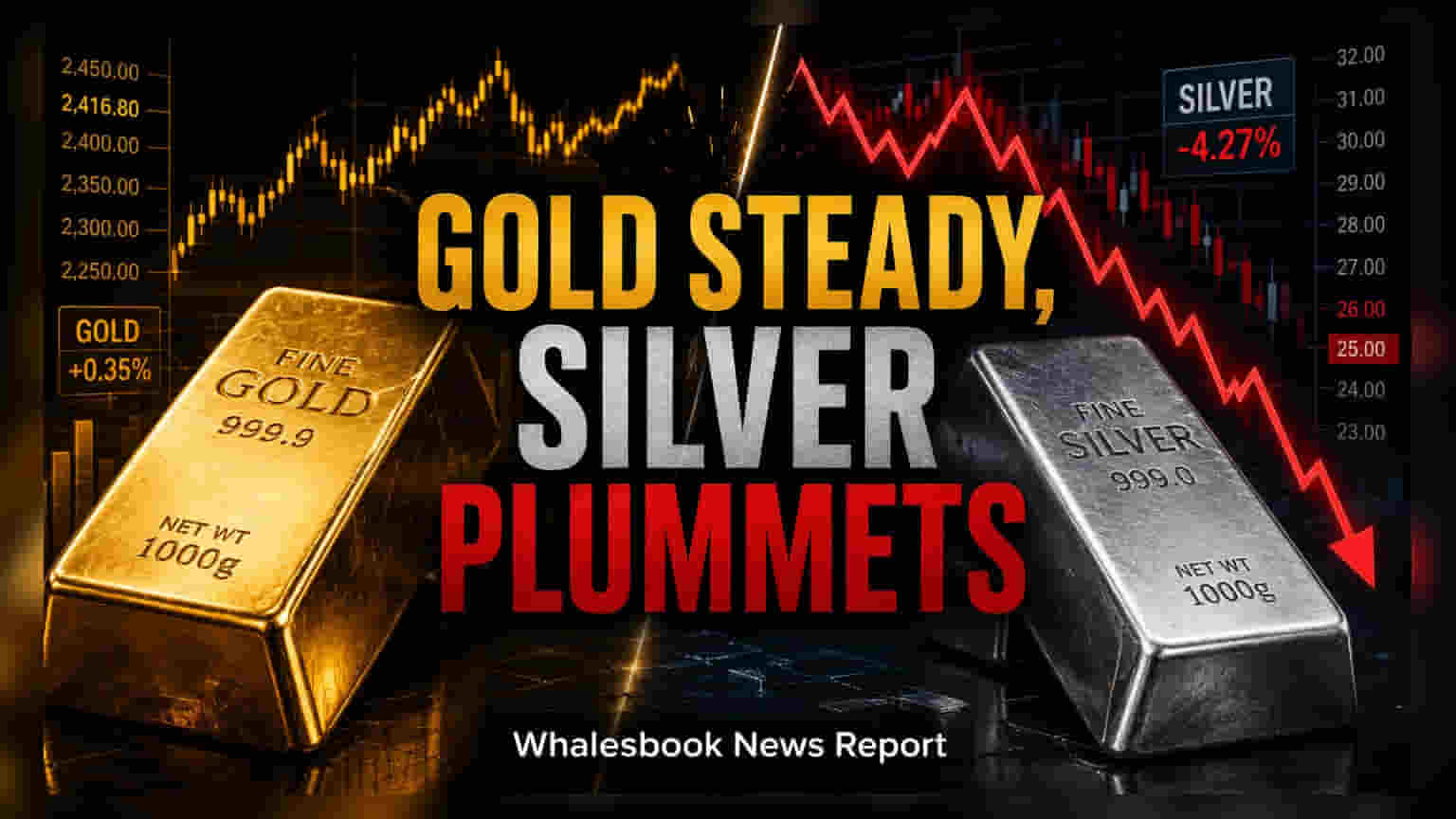
Gold prices remained unchanged at ₹1,46,300 per 10 grams in Delhi on Thursday, while silver prices declined by ₹1,500 to reach ₹2,24,500 per kilogram. The fall in silver is driven by profit-booking and weak industrial demand amid ongoing geopolitical tensions in West Asia.
Precious metals saw a mixed performance in Delhi markets on Thursday. While gold prices held steady for the second consecutive day at ₹1,46,300 per 10 grams for 99.9% purity, silver faced persistent selling pressure. The white metal fell by ₹1,500 to close at ₹2,24,500 per kilogram, marking its fourth straight day of losses and reaching a two-week low.
Pressure on Silver Prices
Silver has experienced a sharp correction recently, declining by ₹12,500 or approximately 5.3% from its recent peak of ₹2,37,000 recorded on July 10. Market analysts attribute this downturn to a combination of sustained profit-booking by traders and a cooling of industrial demand for the metal. Unlike gold, which is often sought as a safe haven during uncertain times, silver’s price is more heavily influenced by industrial consumption, which currently appears subdued.
Global Trends and Geopolitical Risks
International market movements are mirroring these local trends. Spot gold prices dipped nearly 1% to USD 4,030.84 per ounce, while spot silver declined 1.7% to USD 56.79 per ounce. Geopolitical instability in West Asia is acting as a dual-edged sword for commodity markets. While conflict-related risks typically support gold prices, the potential for rising oil prices creates uncertainty regarding global inflation and future interest rate decisions by the US Federal Reserve.
Economic Data as a Future Trigger
Investors are currently looking for clues from upcoming American economic reports, specifically US retail sales data and jobless claims. These figures are expected to provide clarity on the strength of the US economy, which directly influences the Federal Reserve's interest rate policy. Because precious metals generally do not pay interest, they often face pressure when US interest rates remain high or are expected to rise. If upcoming data points to a resilient economy, it could further influence how the central bank manages borrowing costs, subsequently impacting global precious metal prices.
For investors monitoring this space, the primary focus remains on how industrial demand for silver recovers and whether gold can maintain its current support levels if geopolitical tensions persist or escalate further.