 Whalesbook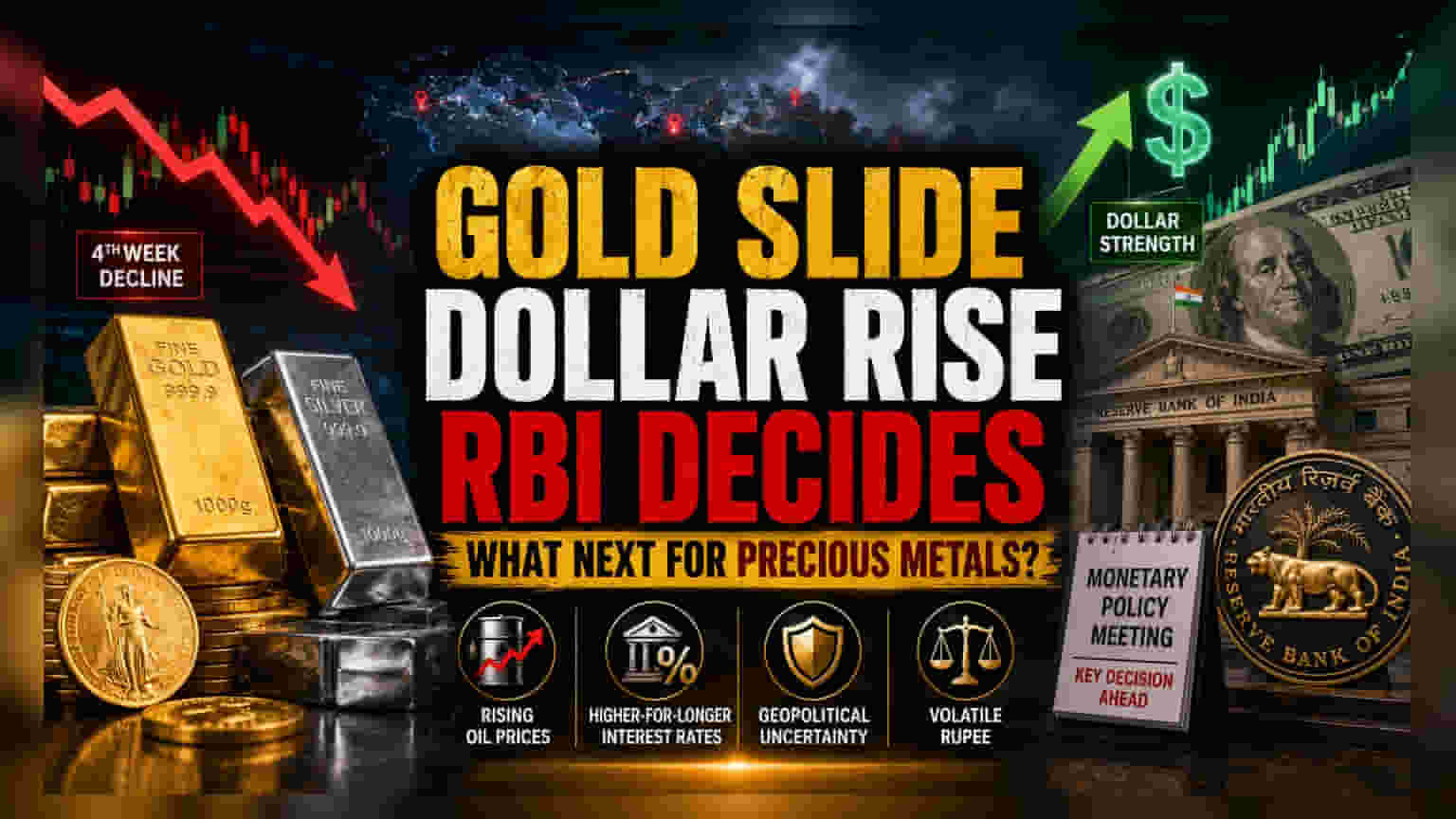


The Valuation Gap
Precious metals are navigating a challenging cycle, characterized by the fourth consecutive weekly slide. While bullion previously benefited from geopolitical hedging, the current environment has forced a repricing as market participants recalibrate inflation expectations. The dollar’s persistent strength remains a primary obstacle, elevating the cost of gold for international holders and diminishing its relative appeal. Unlike periods of clear directional trends, current price action reflects a tug-of-war between inflationary energy costs and the prospect of central banks maintaining higher-for-longer interest rates to curb economic overheating.
Macro Sentiment and Policy Cues
The Reserve Bank of India’s ongoing Monetary Policy Committee meeting stands as a critical checkpoint for regional sentiment. Markets are closely watching for shifts in commentary from Governor Sanjay Malhotra, particularly regarding the balance between the 6.9% FY27 growth projection and the management of domestic inflation, which is currently oscillating within the central bank's tolerance band. The rupee’s recent volatility against the dollar has added an extra layer of complexity, complicating the outlook for domestic bullion prices even as global spot markets provide a baseline for valuation.
The Forensic Bear Case
The bull case for gold as an inflation hedge is currently being tested by the structural reality of non-yielding assets in a high-rate environment. When energy-driven inflation—specifically the recent surge in crude oil futures—leads to potential tightening by central banks, the opportunity cost of holding gold rises significantly. Furthermore, historical data reveals that the correlation between gold and oil is often inconsistent, meaning that while energy price spikes initially ignite safe-haven demand, they eventually trigger a bearish response if they force monetary policy to become more restrictive. Additionally, geopolitical risks, while headline-grabbing, can lead to sudden liquidity shifts that favor the US dollar over gold if markets perceive the dollar as the more reliable store of value during times of high uncertainty.
The Future Outlook
Guidance remains cautious as investors wait for clearer data on labor markets and CPI metrics. While institutional reserve diversification remains a long-term tailwind, the short-term trajectory for precious metals depends heavily on whether the US dollar breaks through major resistance levels or retreats. Should central banks signal a pivot toward monetary easing, the current valuation gap could close, though analysts remain focused on the potential for extended volatility throughout the remainder of the quarter.