

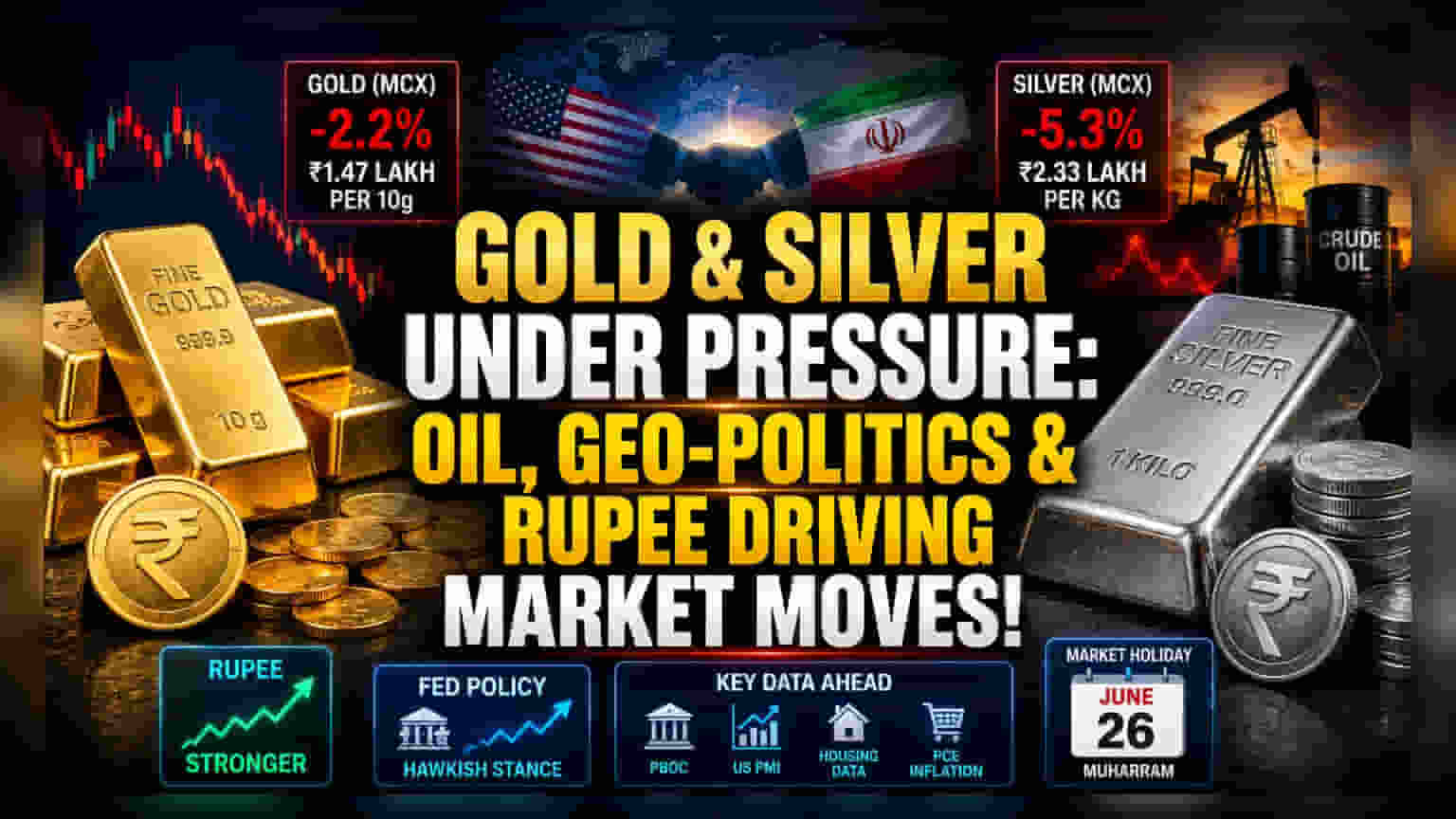
Gold and silver prices in India are expected to remain volatile this week as markets track US-Iran negotiations and global crude oil trends. Bullion recently faced pressure from a stronger rupee and a hawkish US Federal Reserve. Investors are now watching key US economic data and central bank decisions to gauge future price movements.
What Happened
Gold and silver prices in the Indian commodity market are bracing for a potentially volatile week. Last week, both precious metals saw a significant decline. Gold futures on the Multi Commodity Exchange (MCX) ended 2.2% lower, settling at ₹1.47 lakh per 10 grams. Silver experienced a steeper drop, falling 5.3% to close at ₹2.33 lakh per kilogram. This movement comes as global factors, including geopolitical negotiations and crude oil price fluctuations, take center stage.
Why The Market Is Watching Oil And Geopolitics
Market participants are closely tracking the ongoing negotiations between the United States and Iran. These discussions, aimed at a framework agreement to ease hostilities, are a major driver for commodity prices. Because these countries are key players in the energy market, any developments can impact crude oil prices, which in turn influences inflation and safe-haven assets like gold.
There have been reports concerning the Strait of Hormuz, a critical shipping lane for oil. While some reports suggested the strait might close following regional strikes, the US Central Command has disputed these claims, stating that shipping operations have continued without interruption. Investors are monitoring these updates closely, as stability in oil supply routes often impacts energy costs and market sentiment.
The Currency And Interest Rate Impact
For Indian investors, the strength of the Indian rupee plays a crucial role in domestic gold prices. When the rupee gains strength against the US dollar, the cost of importing gold into India decreases. This often creates downward pressure on local prices. Recently, the rupee's performance, combined with a hawkish stance from the US Federal Reserve, has weighed on bullion.
A hawkish stance from the Fed generally means the central bank is focused on keeping interest rates higher or potentially raising them to control inflation. This often makes the US dollar more attractive to investors, which can put pressure on gold, a non-yielding asset that does not pay interest or dividends.
Key Economic Data On The Horizon
Beyond geopolitical events, several global economic data points are scheduled for release, which could influence price trends. Investors will be keeping an eye on the People’s Bank of China’s policy decisions, as China is one of the world's largest consumers of gold. Additionally, upcoming reports on US manufacturing and services performance, housing numbers, and Personal Consumption Expenditures (PCE) inflation—a key metric for the Federal Reserve—will be important for gauging future interest rate policy.
What Investors Should Monitor
Indian commodity markets will observe a morning session closure this coming Friday, June 26, 2026, on account of Muharram. Investors may watch how the rupee behaves against the US dollar, as this directly affects the landing cost of imported precious metals. Furthermore, any new commentary from Federal Reserve officials regarding interest rates, alongside developments in the US-Iran framework talks, will be key factors that could dictate the direction of gold and silver in the coming days.