

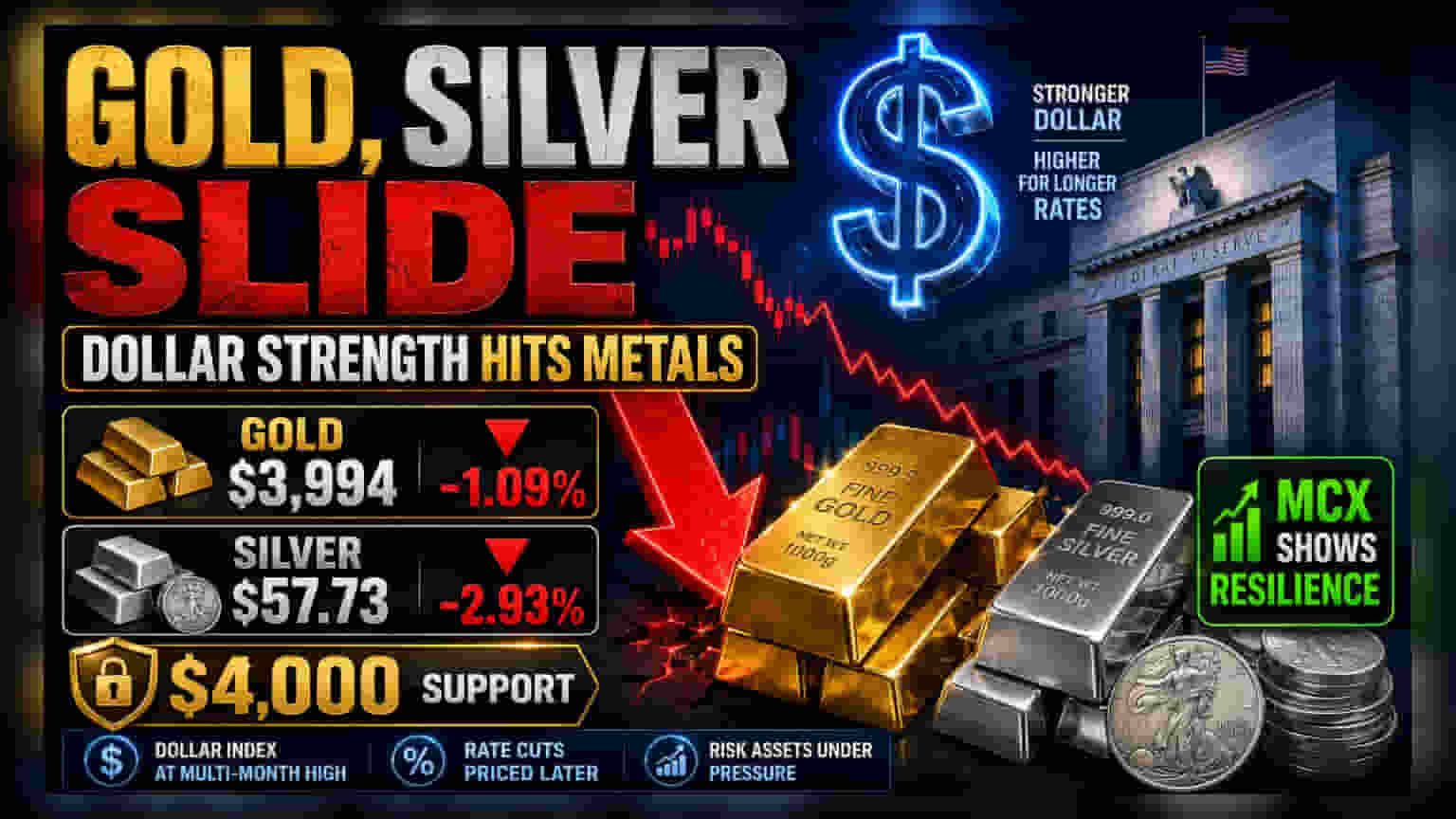
Global gold and silver prices fell on July 1 as the US dollar gained strength and expectations of rising interest rates grew. While global bullion struggled, domestic MCX futures showed slight gains. Investors are now watching upcoming US employment data for clues on future price trends.
What Happened
Global gold and silver prices saw a sharp decline during trading on July 1. Spot gold prices fell by 1.09 percent to $3,994.40 per ounce, while silver dropped by 2.93 percent to $57.73 per ounce on the Comex exchange.
This drop happened because the US dollar strengthened significantly against other currencies. When the dollar rises, gold and silver—which are priced in dollars—often become more expensive for international buyers, reducing demand. Additionally, concerns that the US Federal Reserve might keep interest rates high have weighed on metal prices, as these assets do not pay interest, making them less attractive compared to bonds or savings in a high-rate environment.
Mixed Trends in Domestic Markets
Despite the pressure in global markets, Indian commodity markets showed different signs. On Tuesday, June 30, MCX gold futures for the August contract closed with a marginal gain of 0.01 percent, settling at Rs 1,42,546 per 10 grams. Similarly, silver futures for September delivery rose by 0.04 percent, closing at Rs 2,28,665 per kilogram. This suggests that local demand or market expectations in India have been more resilient compared to the global sell-off.
The Impact of US Economic Data
Investors are now turning their attention to upcoming US economic reports, specifically employment data. These updates, including payroll figures and unemployment rates, are crucial because they influence the Federal Reserve's future interest rate decisions. If the job market remains strong, it may encourage the Fed to keep rates higher for longer, which could create further pressure on precious metals. Conversely, any sign of economic cooling could change the outlook for rates.
Why Investors Are Watching the $4,000 Level
Recent market data shows that gold has corrected significantly in June, falling from levels near $4,500 to around $3,950. Analysts at LKP Securities have pointed out that this rapid decline has left the market in an oversold position. They noted that the $4,000 mark is currently acting as a psychological support level where buying interest often reappears.
What Investors Should Track
The key monitorable for the coming days is the release of US jobs data. This will likely set the trend for the dollar and, by extension, gold and silver prices. Investors may also track whether the $4,000 support level on the Comex exchange holds in the face of continued dollar strength. For those holding MCX futures, the gap between global trends and domestic price performance will be important to observe, as it reflects the balance of local supply and demand.