

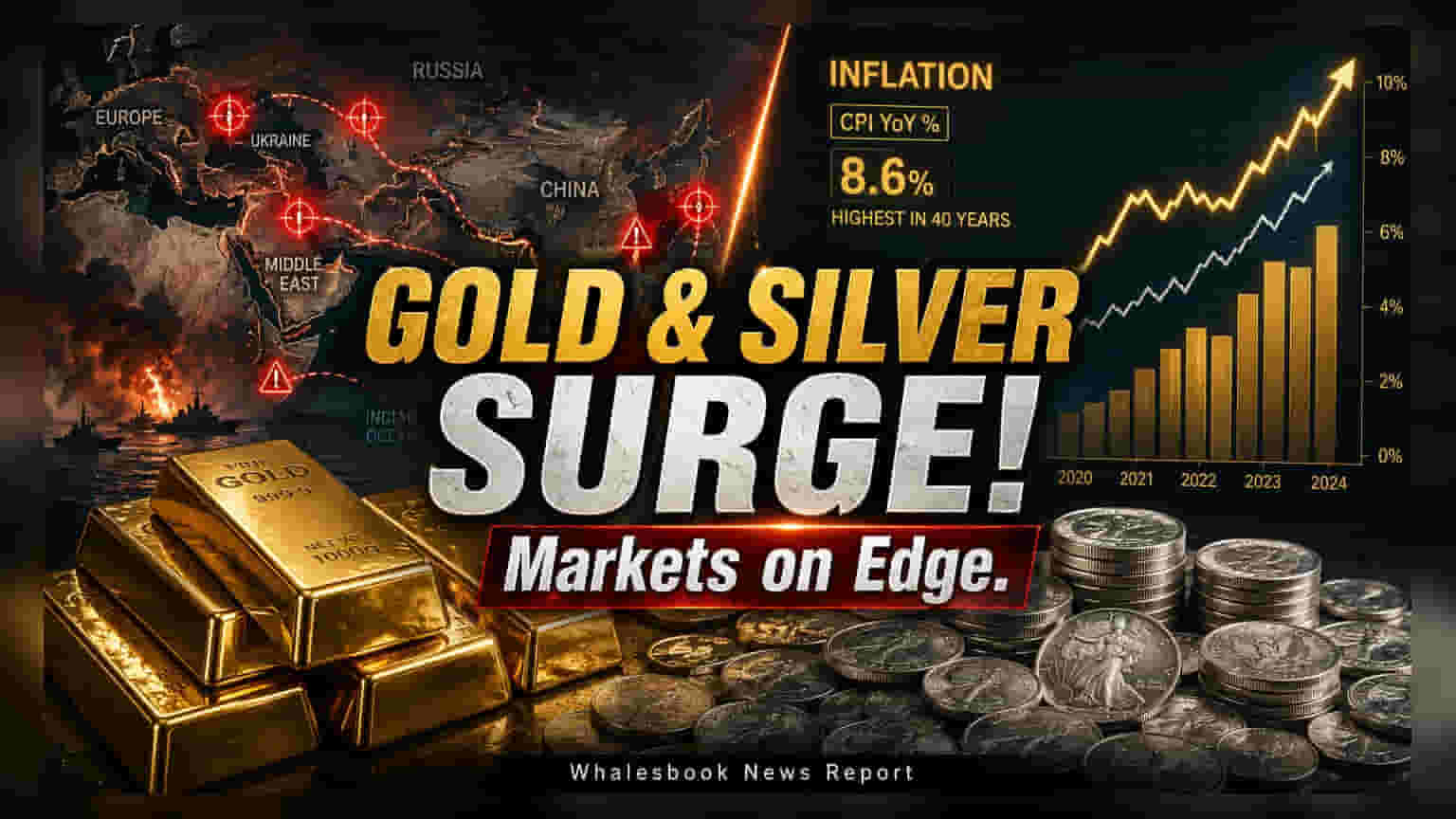
Precious metals gained on August 12, 2026, as investors sought safety amid global conflicts while awaiting key US inflation data. Gold rose to $4,456.70 per ounce, and silver reached $65.25. The market is balancing immediate safe-haven demand against the potential impact of the upcoming consumer price index report on future Federal Reserve interest rate policy.
Gold and silver futures edged higher in early trading on Wednesday, August 12, 2026, as investors increased their allocation toward safe-haven assets. Gold prices touched $4,456.70 per ounce, gaining 0.35%, while silver futures rose 0.49% to $65.25 per ounce.
The primary driver behind this move is a rise in geopolitical uncertainty. Recent developments, including tensions involving the United States, Iran, and Houthi rebels, alongside a missile launch by North Korea, have created unease across global financial markets. Because gold is traditionally seen as a safe store of value, it often attracts capital during periods of international conflict or when investors fear supply chain disruptions, such as the potential impact on energy shipments through the Strait of Hormuz.
Adding to the market's cautious mood is the upcoming release of the US consumer price index (CPI) data, scheduled for later today. This report is a critical piece of information for market participants trying to predict the Federal Reserve’s future stance on interest rates. Market forecasts suggest a 0.1% month-on-month rise in headline inflation, with annual figures potentially easing to 3.4% from 3.5%.
For investors, the link between inflation and gold is direct. Gold does not generate interest income, so when interest rates are high, investors can often earn better returns on other assets like bonds, making gold relatively less attractive. If the inflation data signals that the economy is cooling and interest rates might fall, gold often becomes more appealing. Conversely, a stronger-than-expected inflation reading could lead to concerns about more restrictive monetary policy, which typically creates downward pressure on gold prices.
Despite the current rally, some market observers have pointed to technical signs of caution. Gold has appreciated roughly 8% in August, moving above its 50-day moving average and entering what is technically termed "overbought" territory. Historically, such quick price increases can lead to periods of volatility or profit-taking. The next major movement for the bullion market will likely depend on the CPI report and how it shapes the Federal Reserve's policy path, alongside any further developments in Middle Eastern energy supply routes.