 Whalesbook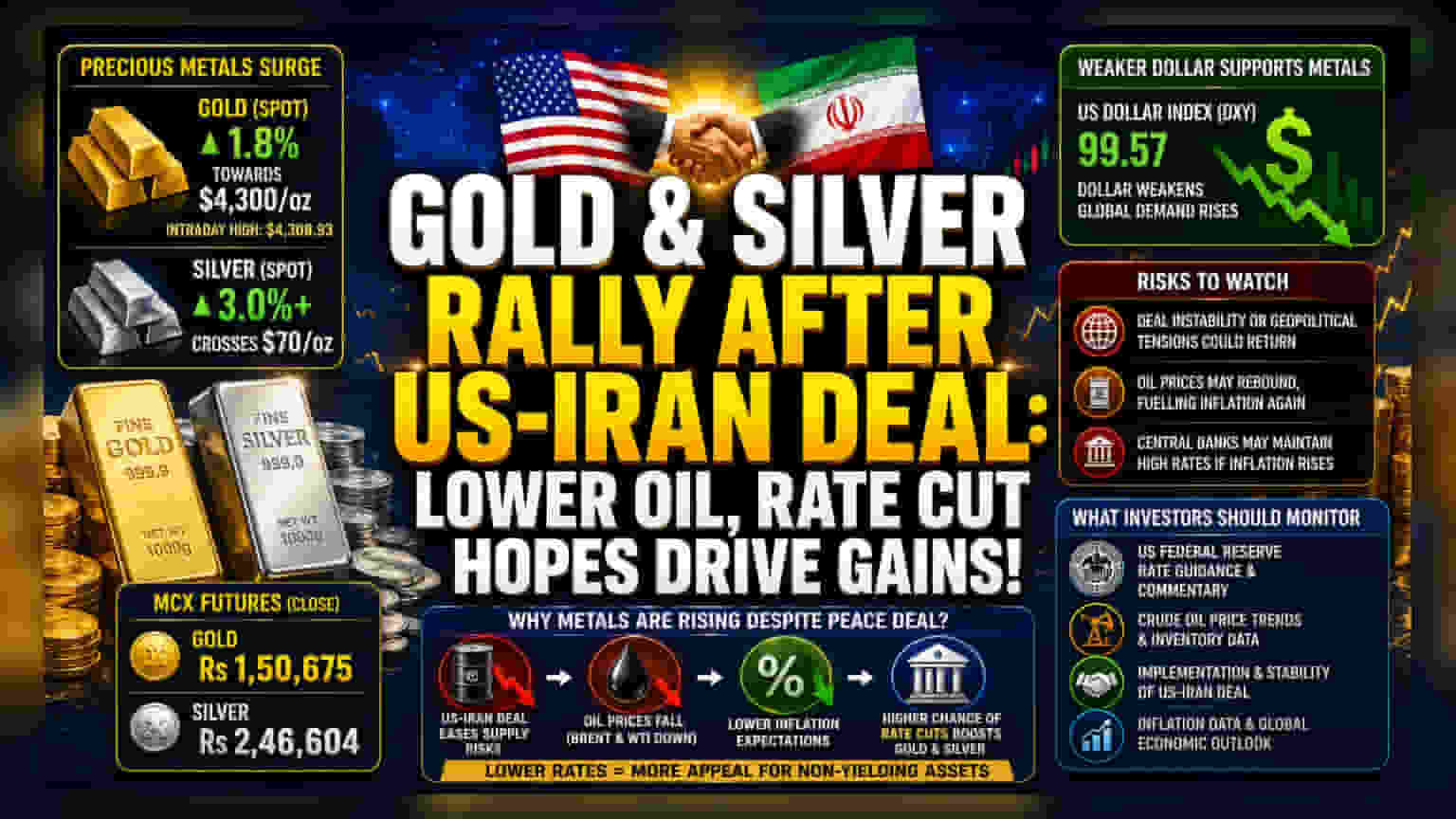


Gold and silver prices rallied as a US-Iran peace deal eased geopolitical concerns. Investors are shifting focus from the traditional 'safe-haven' appeal to the economic benefits of lower oil prices, which may encourage central banks to slow interest rate hikes.
What Happened
Gold and silver prices saw a notable rise following reports of a peace deal between the United States and Iran. Spot gold prices climbed approximately 1.8%, pushing towards the $4,300 per ounce level, with intraday trading reaching as high as $4,308.93. Silver also saw gains, rising more than 3% to cross the $70 mark. In the Indian market, this global trend was reflected on the Multi Commodity Exchange (MCX), where silver futures settled at Rs 2,46,604 and gold futures closed at Rs 1,50,675.
Why Investors Are Watching Inflation and Rates
Typically, when geopolitical tensions ease, investors might sell gold because the 'fear' or 'safe-haven' demand drops. However, the current market reaction is driven by a different economic factor: the price of crude oil. The US-Iran deal is expected to ease concerns about oil supply disruptions in the Strait of Hormuz. Consequently, oil prices, including Brent and West Texas Intermediate, have fallen.
For investors, lower oil prices generally mean lower inflation. If inflation expectations drop, central banks like the US Federal Reserve may not feel the need to keep interest rates high. Gold and silver do not pay interest, so when interest rates are high, they become less attractive compared to bonds or savings accounts. Conversely, when expectations for interest rate cuts rise, gold and silver often become more attractive to investors. This explains why the market is treating the peace deal as a reason to buy precious metals rather than sell them.
The Impact of a Weaker Dollar
Another significant factor influencing the price of precious metals is the movement of the US Dollar Index. Following the news of the agreement, the US dollar weakened, falling to approximately 99.57. Gold and silver are priced in dollars in the international market. When the dollar is weaker, these metals become more affordable for buyers using other currencies, which typically boosts global demand and supports prices.
The Risks to This Trend
While the current sentiment is positive for precious metals, investors should be aware of the underlying risks. Commodity markets are highly sensitive to geopolitical developments. If the peace deal proves unstable, or if there is any resurgence in supply chain concerns, oil prices could rebound quickly. A sudden increase in energy costs would likely fuel inflation again, forcing central banks to rethink their interest rate strategy. This would change the outlook for gold and silver, potentially reversing the current gains.
What Investors Should Monitor Next
Investors should keep a close watch on future communications from the US Federal Reserve, as their stance on interest rates remains a key driver for precious metals. Additionally, movements in crude oil prices will be a critical indicator of inflation trends. The stability and implementation of the US-Iran deal are also important, as any shift in the geopolitical landscape could alter the current market environment. Tracking these factors will help provide clarity on whether the current upward trend in gold and silver prices can be sustained.