

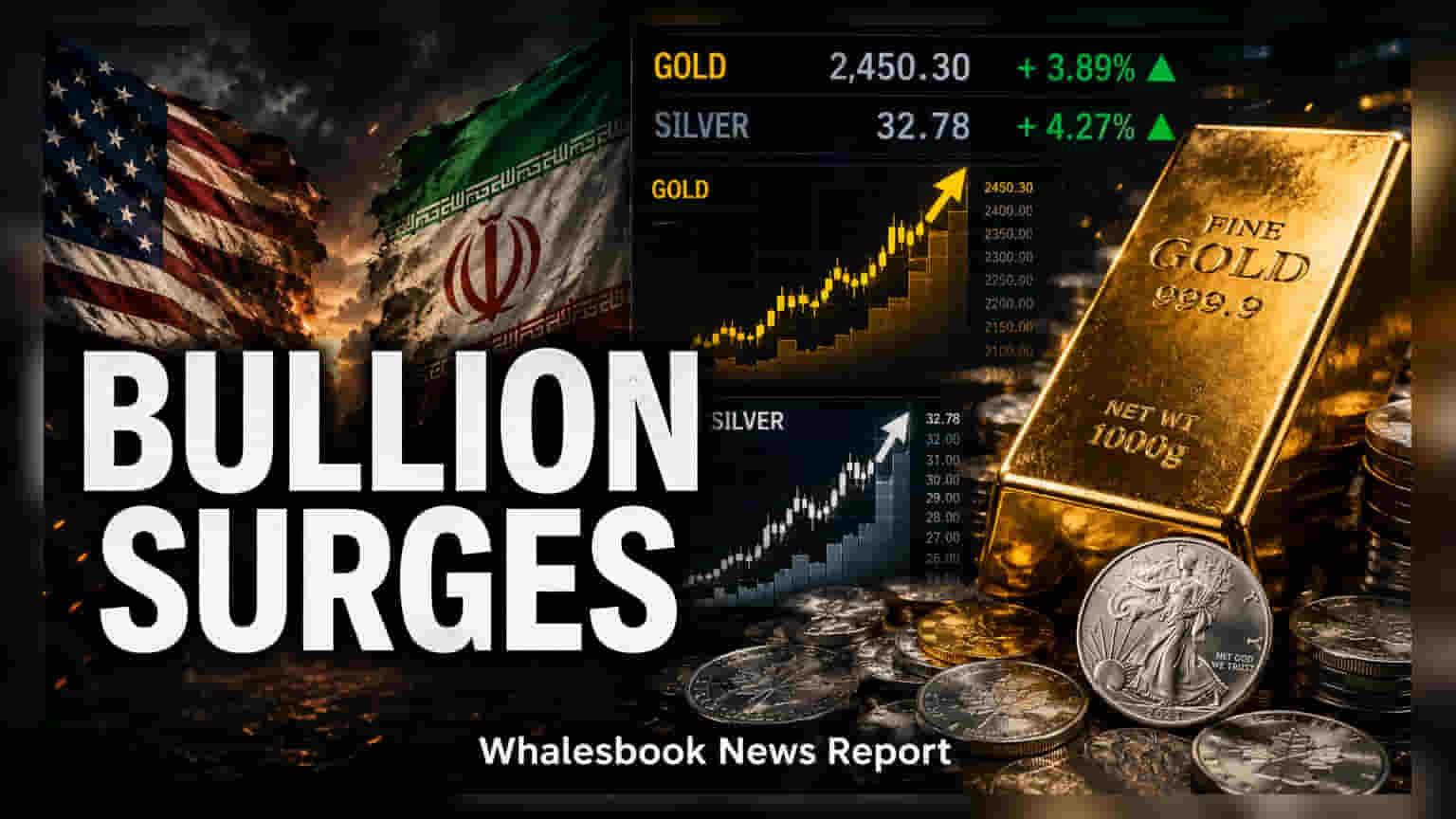
Gold and silver prices increased on Wednesday as market participants reacted to cooling US-Iran tensions and prepared for upcoming US employment data. International gold prices reached $4,177.30 per ounce, while domestic gold futures rose to Rs 1,44,168 per 10 grams. Investors are now focused on US jobs reports to gauge potential changes in interest rate policies.
Gold and silver prices experienced an upward trend in early trading on August 5, 2026, as the market reacted to easing geopolitical tensions between the United States and Iran. While increased geopolitical risk typically drives investors toward gold as a safe-haven asset, the current price movement suggests that broader economic factors, including fluctuations in the US dollar and anticipation of central bank policies, are currently guiding market sentiment.
In international markets, spot gold prices saw a 0.59 percent increase to reach $4,177.30 per ounce. Silver also followed this positive trend, with prices climbing 0.84 percent to $60.75 per ounce. Domestic markets in India mirrored these gains. Gold futures for the October contract settled at Rs 1,44,168 per 10 grams, marking a 0.88 percent rise. Meanwhile, silver futures for the September contract saw a minor adjustment, closing at Rs 2,21,410 per kilogram.
The Focus on US Economic Data
Market attention has now shifted toward upcoming US labor market releases, including the non-farm payrolls and unemployment rate data. These economic indicators are crucial for investors trying to predict the Federal Reserve's next steps regarding interest rates. If the upcoming data suggests that the US economy is cooling, it may support expectations for lower interest rates, which often benefits non-yielding assets like gold. Conversely, if the employment data remains robust, it could lead to a stricter interest rate environment, which historically puts pressure on bullion prices.
For Indian investors, gold prices are influenced not only by global trends but also by the strength of the Indian rupee against the US dollar. Because gold is imported, a weaker rupee often makes the metal more expensive for domestic buyers, regardless of what happens in international markets. As such, the currency exchange rate remains a key monitorable alongside global commodity trends.
Risks and Market Outlook
While the current trend is upward, the precious metals market remains sensitive to macroeconomic shifts. Analysts have noted that gold has been in a consolidation phase recently, and short-term price direction will likely depend on the clarity provided by US economic reports. A stronger-than-expected jobs report could act as a deterrent for gold prices by strengthening the dollar and reducing the urgency for interest rate adjustments. Investors should continue to monitor the upcoming data releases for signs of how the global economic environment may impact gold and silver pricing in the coming weeks.